Description
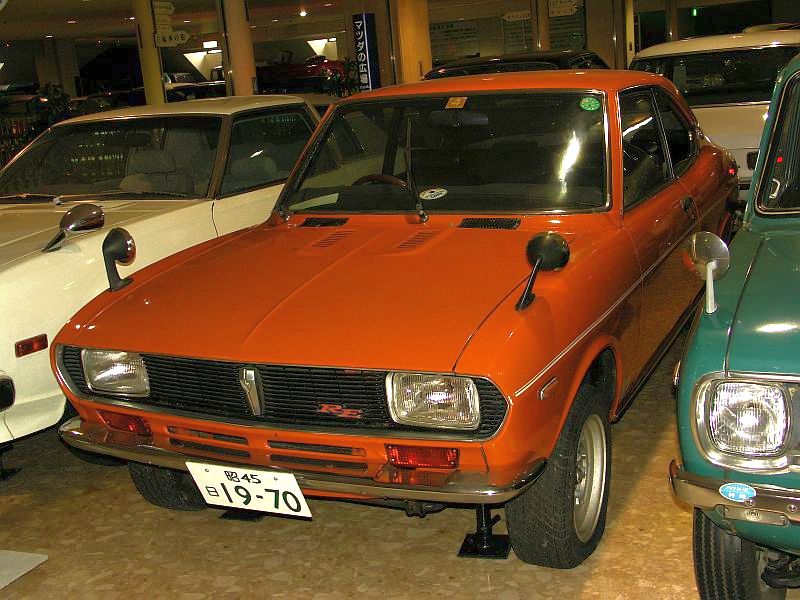
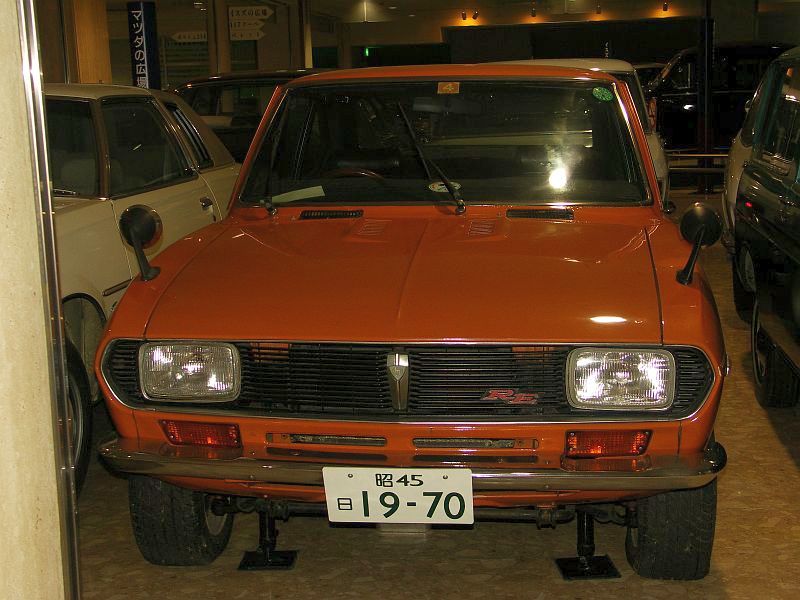
The Mazda Capella Rotary Coupé was one of the most distinctive and technically forward-looking models in Mazda’s early rotary era, offering the smooth power and compact engineering of the Wankel engine in a stylish, refined two-door body. Introduced in the early 1970s as part of the Capella (616/618) family, the Rotary Coupé took Mazda’s growing expertise with rotary technology and wrapped it in a car aimed at customers wanting something more sophisticated than the sporty RX-2 yet more elegant and mature than the rawer RX-3. It quickly became known as a refined, smooth-running grand-touring-style coupé with a uniquely Mazda personality.
Power came from Mazda’s 12A rotary engine, a lightweight twin-rotor unit delivering around 120 horsepower depending on market tune. Unlike piston engines of similar capacity, the rotary gave the Capella a completely different character: smooth, free-revving and eager, with an almost vibration-free feel across the entire rev band. It made the Coupé surprisingly quick for its size and displacement, and its compactness allowed Mazda to maintain good weight distribution and a low bonnet line. The 12A’s willingness to rev cleanly to high engine speeds provided a refined but spirited driving experience. A four-speed or optional five-speed manual gearbox allowed drivers to make full use of the rotary’s powerband, while an automatic version appeared in some markets, emphasising comfort and smoothness.
The chassis was based on the conventional Capella platform but tuned specifically for the rotary model. Independent front suspension with MacPherson struts and a well-located rear axle provided stable, predictable handling. The car’s light nose — a benefit of the rotary engine — helped the Coupé feel agile and responsive on winding roads, with a balanced and composed ride that suited both enthusiastic driving and long-distance touring. Steering effort was low, body control was tidy for the period, and the brakes were upgraded to cope with the higher performance of the rotary variant. The result was a car that felt more refined and cohesive than many contemporaries in its class.
Styling was one of the Capella Rotary Coupé’s major strengths. Mazda gave it a cleaner, more elegant appearance than the sportier RX-2 or RX-3, with a long bonnet, a delicate roofline, and a neatly tapered rear. Subtle chrome detailing, a restrained grille, and distinctive twin round headlamps (or rectangular units in some markets) gave it a sophisticated look while avoiding the excess of many 1970s coupés. The proportions were excellent, and the combination of the long front end and compact rotary engine created a distinctive silhouette. Many examples featured period-correct wheel designs, discreet rotary badging and a tidy, well-balanced stance that still appeals today.
Inside, the Capella Rotary Coupé offered a comfortable and stylish cabin with a more luxurious feel than Mazda’s overtly sporting rotary cars. The dashboard was cleanly arranged with clear instruments, including a prominent tachometer essential for rotary driving. High-quality materials, supportive seats and attractive trim choices gave the interior a refined tone, and equipment levels were generous for a car in this price class at the time. The Coupé was practical for a two-door model, with usable rear seating and a useful boot, making it suitable for touring as well as daily use.
On the road, the Capella Rotary Coupé delivered the uniquely smooth sensation that only a rotary engine could provide. Acceleration was strong and linear, with no mechanical harshness or vibration. The car cruised effortlessly at higher speeds, benefiting from the rotary’s flexibility, and the quietness of the drivetrain gave it a refined character unmatched by many contemporary four-cylinder rivals. The chassis tuning made it enjoyable to drive, with a blend of comfort and composure that fit its grand-touring orientation. While fuel consumption was high — a common rotary trait — the Coupé repaid its owners with a driving experience few similarly priced cars could match.
The Capella Rotary Coupé played an important role in Mazda’s early rotary strategy, sitting between the mainstream Capella lineup and the dedicated rotary-sport RX series. It demonstrated Mazda’s ability to integrate advanced rotary engineering into a more sophisticated, broader-appeal package. Although production numbers were modest compared with piston-engined Capellas, the car helped build Mazda’s reputation for innovation, engineering creativity and distinctive design.
Today, the Mazda Capella Rotary Coupé is a rare and collectible classic. Surviving examples are prized by rotary enthusiasts for their elegance, smooth performance and the early-generation rotary character that defined Mazda’s identity during the 1970s. As a stylish, refined and historically significant model, it stands as one of the more understated but deeply appealing rotary Mazdas — a grand-touring coupé with engineering unlike anything else of its era.