Description
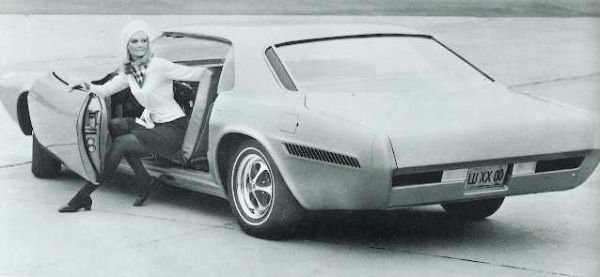
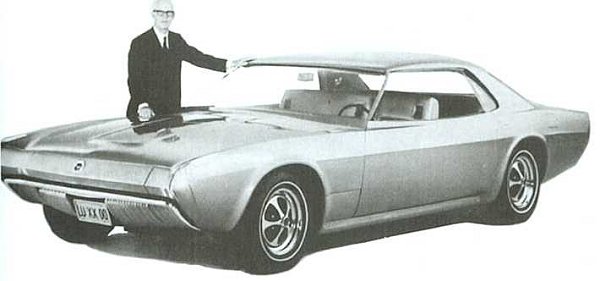
The Ford Techna was a forward-looking concept car built in 1969, designed to showcase advanced safety and technology features at a time when both government regulations and consumer awareness were pushing automakers to rethink how cars could protect their occupants. Unlike Ford’s flashy performance- or styling-led dream cars of the 1960s, the Techna was a functional prototype, intended as a laboratory on wheels to test new ideas that might eventually filter into production vehicles.
From the outside, the Techna was unconventional and futuristic, with a boxy, wedge-like profile that prioritized visibility and structural strength over sleek aesthetics. Its proportions were compact, with large windows and thin pillars to maximize outward vision. The nose was short and flat, while the body sides were upright and purposeful. Unlike Ford’s sporty concepts of the same era, the Techna looked more like a serious piece of experimental engineering than a styling showpiece, underlining its role as a safety study.
Inside, the Techna was designed entirely around protecting passengers. It featured heavily padded interior surfaces, energy-absorbing steering components, and improved restraint systems, including early versions of seatbelt technology. The cabin layout emphasized ergonomics and control accessibility, with clear, simple instruments and an emphasis on driver visibility. It was meant not only to reduce injuries in the event of a crash but also to reduce the likelihood of an accident in the first place by making the driver’s environment safer and easier to use.
Mechanically, the Techna was less about performance and more about experimentation with safety systems. It incorporated crumple-zone engineering, side-impact protection, and reinforced structures to absorb energy in collisions—features that were years ahead of what most production cars of the late 1960s offered. The car also explored innovations like collapsible steering columns and advanced braking systems, many of which would become standard industry practice in later decades.
The Ford Techna was displayed at auto shows and engineering demonstrations as part of Ford’s broader effort to position itself as a leader in automotive safety. In the late 1960s, public pressure and new regulations from the U.S. government were driving automakers to address safety more seriously, and the Techna gave Ford a platform to demonstrate its commitment.
Though it never entered production, the Techna had a lasting influence. Many of the ideas it embodied—reinforced passenger compartments, collapsible controls, crumple zones, and improved restraint systems—eventually became widespread in Ford’s production vehicles and across the industry as a whole. It was less a preview of a specific model than a rolling laboratory that helped shape the safety standards of the 1970s and beyond.
Today, the Ford Techna is remembered as one of Ford’s more obscure but important concept cars. While it lacked the glamour of the GT40 or the flash of the Mustang-based show cars, it represented a turning point in automotive design philosophy, where safety and technology began to share the stage with style and performance. Its legacy is reflected not in collectible rarity but in the countless safety features we now take for granted in modern vehicles.