Description
The Isuzu 117 Coupé PA90 was one of the most elegant and distinctive Japanese cars of the late 1960s and 1970s — a car that combined Italian design, Japanese craftsmanship, and refined engineering in a way few others achieved. Introduced in 1968 and remaining in production for more than a decade, the 117 Coupé became a symbol of sophistication and artistic restraint. It was Japan’s first mass-produced car styled by an Italian designer and one of the earliest Japanese vehicles to embrace the concept of the grand touring coupé — a car designed not merely for transport, but for beauty and enjoyment.
The origins of the 117 Coupé date to the mid-1960s, when Isuzu sought to create a flagship car that would demonstrate its engineering and design maturity following its successful Bellett range. The company turned to the legendary Italian stylist Giorgetto Giugiaro, then working for Ghia, to design the prototype. The result, unveiled at the 1966 Geneva Motor Show as the Isuzu 117 Coupé prototype, was widely praised for its sculptural proportions and understated elegance. Its name was derived from the Isuzu design project number, “117,” and when the production version arrived two years later, the basic shape of Giugiaro’s design was retained almost entirely — a rare testament to how perfectly balanced the original concept had been.
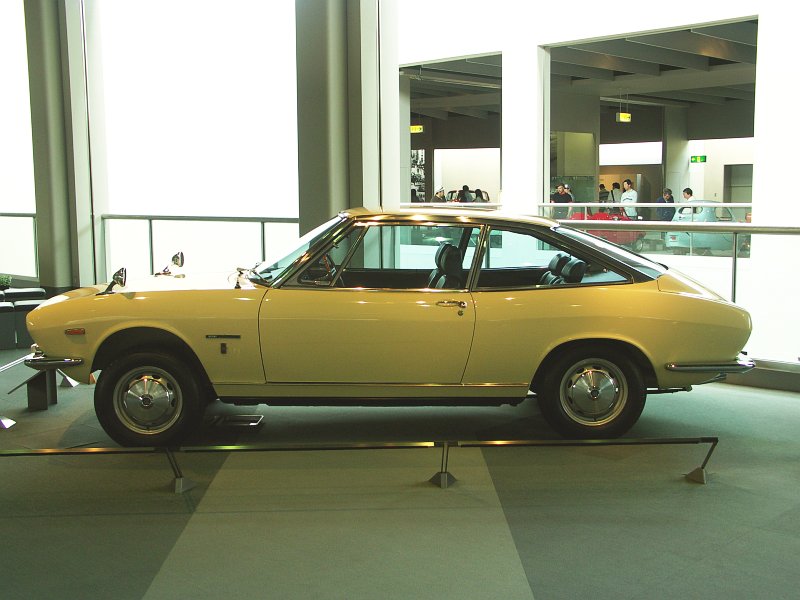
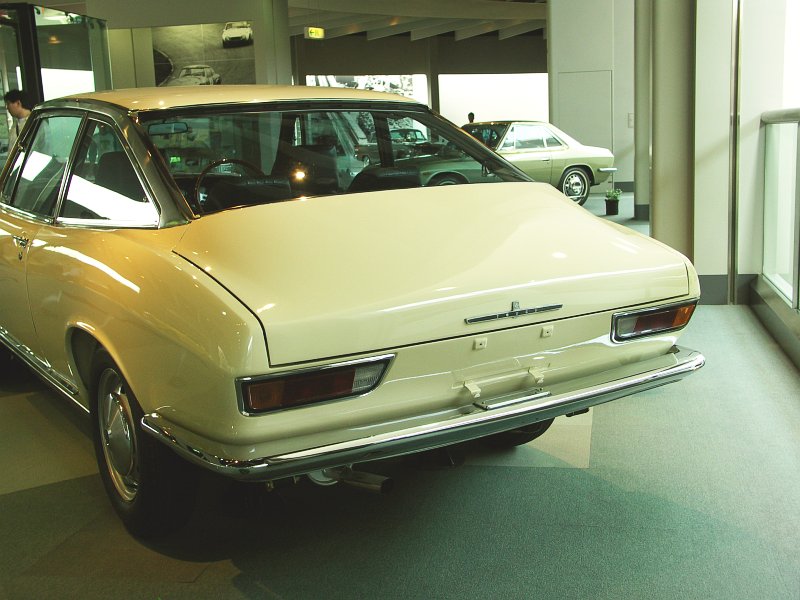
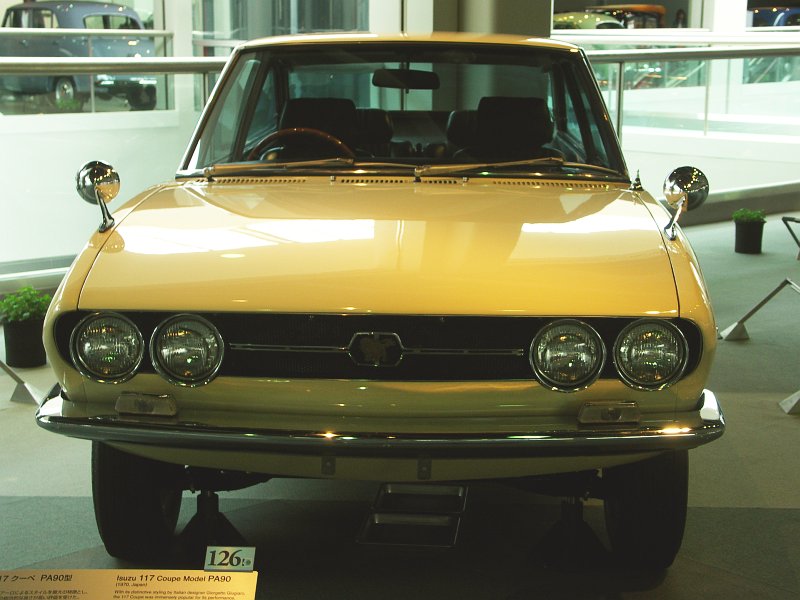
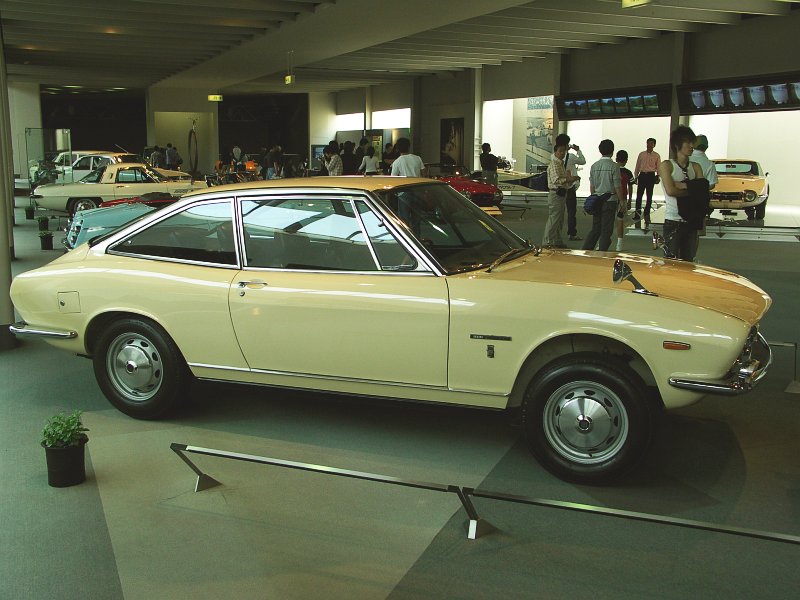
The production 117 Coupé, coded PA90, was built on a shortened version of the Isuzu Florian platform, giving it compact yet balanced proportions. Its styling was graceful and timeless. The long bonnet, gently curved waistline, and sweeping roofline gave the car an almost hand-drawn delicacy. The front end featured twin round headlamps set in a simple horizontal grille, framed by slender chrome bumpers. From the side, the car’s proportions were flawless: a low beltline, slender pillars, and a glasshouse that gave the cabin an airy, light appearance. The rear tapered smoothly, with subtle contours that hinted at speed without excess. In an era of increasingly ornate designs, the 117 stood apart as an object of pure form — elegant, restrained, and European in sensibility.
Under the bonnet, the PA90 version of the Isuzu 117 Coupé was powered by the G161 engine, a 1,587 cc inline four-cylinder with twin overhead camshafts and a crossflow cylinder head — one of the first Japanese cars to offer a DOHC engine in regular production. This advanced power unit produced around 120 horsepower in its high-performance form, allowing the car to reach speeds of up to 185 km/h. It was a smooth, free-revving engine with a distinctly sporting character, featuring hemispherical combustion chambers and twin carburetors for precise fuel delivery. Power was transmitted to the rear wheels through a close-ratio four-speed manual gearbox, with a five-speed available in later models.
The 117 Coupé’s chassis and suspension were designed for both comfort and control. The front featured independent wishbones and coil springs, while the rear used a live axle located by trailing arms and coil springs — a configuration chosen for its combination of ride comfort and predictability. Braking was handled by discs at the front and drums at the rear, later upgraded to discs all around on higher-performance models. The steering was precise and light, and the car’s handling was supple and balanced, with a ride quality that matched its luxurious aspirations.
Inside, the 117 Coupé was a revelation for a Japanese car of its time. The cabin was trimmed with a level of craftsmanship that rivaled European grand tourers. Early hand-built examples featured leather upholstery, deep carpeting, and wood veneer across the dashboard and door panels. The instrument cluster was comprehensive, with round dials framed by chrome bezels and logically arranged controls. The seating was low and supportive, giving a sense of intimacy appropriate to a coupé, while visibility remained excellent thanks to the thin pillars and expansive glass area. The overall impression was one of elegance and refinement rather than ostentation — a car designed for comfort and contemplation as much as for performance.
When it debuted, the Isuzu 117 Coupé was hand-assembled in small numbers, making it one of the most exclusive Japanese cars of its era. Each unit was carefully built at Isuzu’s Fujisawa plant, and production remained limited through the late 1960s. In 1971, Isuzu introduced a more automated production process to increase availability while maintaining quality. Throughout its life, the 117 range evolved with new engines and trim levels, including the later 1.8-litre and 2.0-litre versions, but the PA90 1.6-litre model remained prized for its purity and originality.
Driving the 117 Coupé was an experience defined by smoothness and composure. The DOHC engine delivered its power with a silken surge, the gearbox shifted with mechanical precision, and the suspension absorbed imperfections with grace. It was not a sports car in the raw sense, but a refined grand tourer that invited its driver to cover long distances effortlessly. At the same time, its compact size and finely tuned chassis made it agile and engaging on winding roads. The car’s serenity at speed and its impeccable build quality earned it a reputation as one of the finest-driving Japanese coupés of the 1970s.
The 117 Coupé’s influence extended far beyond its modest production numbers. It established Isuzu as a maker of sophisticated, design-led cars and proved that Japanese manufacturers could build vehicles with the same style and craftsmanship as their European counterparts. It also laid the groundwork for Isuzu’s later collaboration with Giugiaro, which would continue with the Piazza (Impulse) in the 1980s.
Today, the Isuzu 117 Coupé PA90 is regarded as a landmark in Japanese automotive design — an early fusion of Italian aesthetics and Japanese engineering precision. Its clean lines and timeless proportions have aged with remarkable grace, and it remains one of the most admired Japanese classics of its period.
The 117 Coupé PA90 stands as both a technical achievement and a work of art. It embodied a moment when Japan’s car industry turned from imitation to individual expression, and when Isuzu’s name became synonymous with craftsmanship, innovation, and understated elegance. It remains one of the purest examples of a grand touring coupé ever to emerge from Japan — serene, beautifully made, and perpetually modern in its quiet confidence.