

Description
The Lincoln Continental 4-Door Convertible was one of the most extraordinary automobiles ever built—an elegant fusion of modern engineering, minimalist design, and open-air luxury that has never been replicated since. Produced from 1961 to 1967, it remains the only true four-door convertible manufactured by a major American automaker in the postwar era. The car’s beauty and rarity made it an instant classic, but it was its quiet authority and timeless design that elevated it to an enduring symbol of sophistication and power.
The 1961 Lincoln Continental marked a complete reinvention of the brand. After years of oversized and heavily adorned models, Lincoln introduced a car that was clean, refined, and meticulously proportioned. Designed under the direction of Elwood Engel, the new Continental was shorter, narrower, and lower than its predecessors, yet exuded a sense of strength and presence that few cars could equal. The 4-Door Convertible shared its chassis and proportions with the Continental Sedan, but its transformation into an open-air luxury car required some of the most complex engineering ever attempted in a production automobile.
Power came from Lincoln’s robust 7.0-litre (430 cubic inch) MEL V8 engine, producing 300 horsepower and immense torque. It was paired with the smooth, reliable three-speed Turbo-Drive automatic transmission, which delivered seamless power delivery and refined performance. Despite its size—stretching over 18 feet in length and weighing more than two and a half tons—the car accelerated with effortless smoothness and cruised at highway speeds with total composure. Hydraulic power steering and power-assisted brakes came standard, making the 4-Door Convertible remarkably easy to handle.
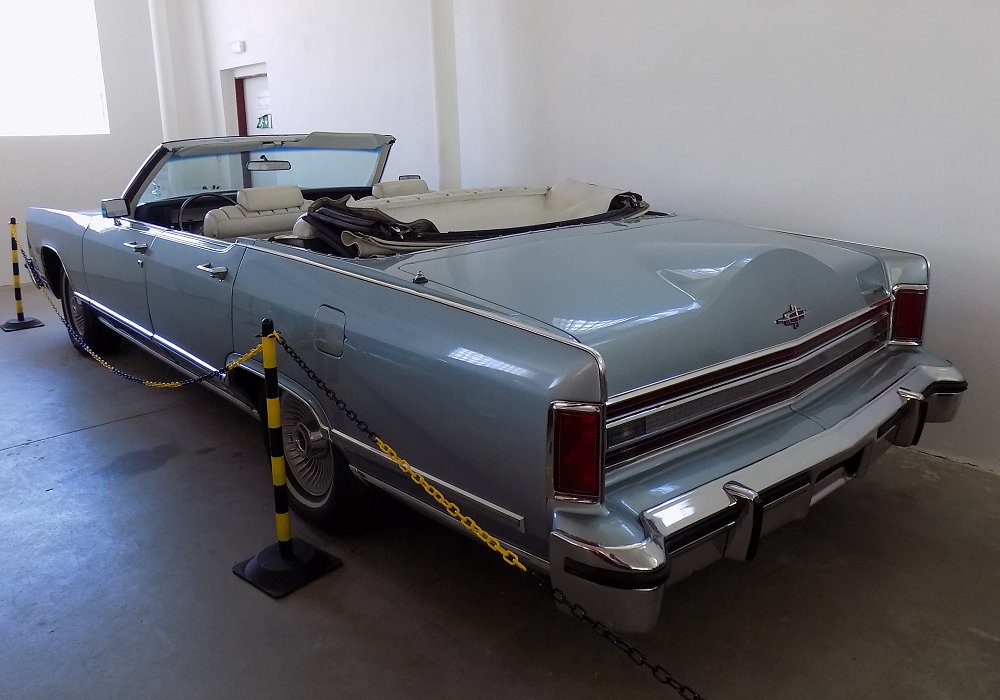
The convertible top mechanism was a marvel of mid-century engineering. Because of the car’s pillarless four-door design, the roof structure required complete automation. When the driver pressed a switch, a series of hydraulic pumps, motors, and relays folded the fabric roof and retracted it into a rear compartment beneath the decklid. The decklid itself opened in reverse—hinged at the rear—to allow the roof to stow neatly inside before closing flush with the body. The entire process took less than a minute and was both mesmerizing and mechanically complex. Each car used nearly a dozen electric motors and relays to coordinate the operation, and Lincoln’s engineers ensured the system worked with the same smoothness expected from the rest of the car.
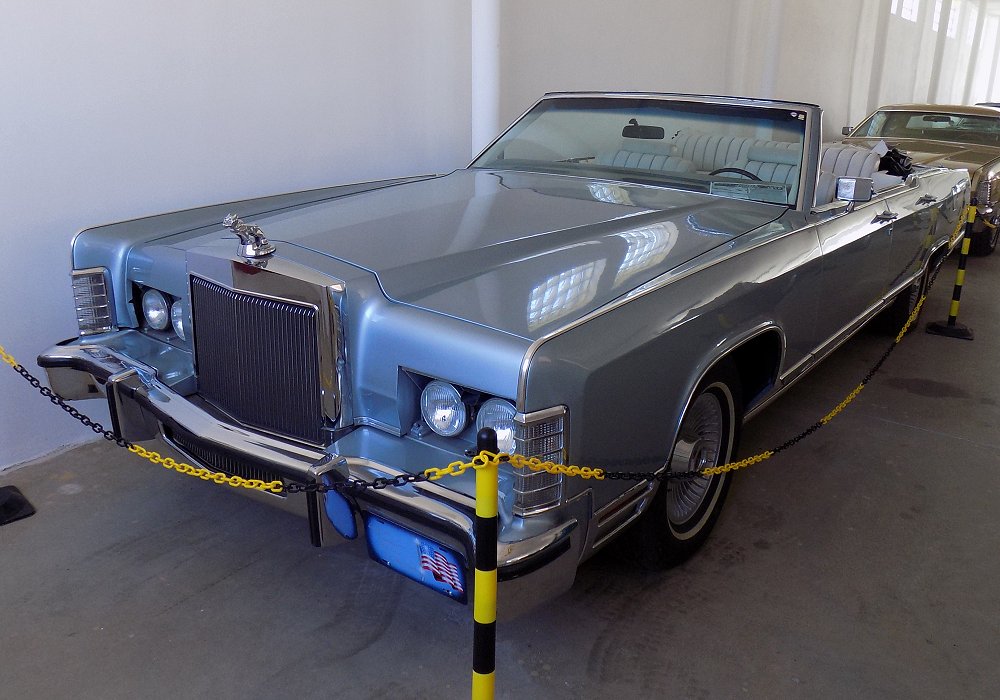
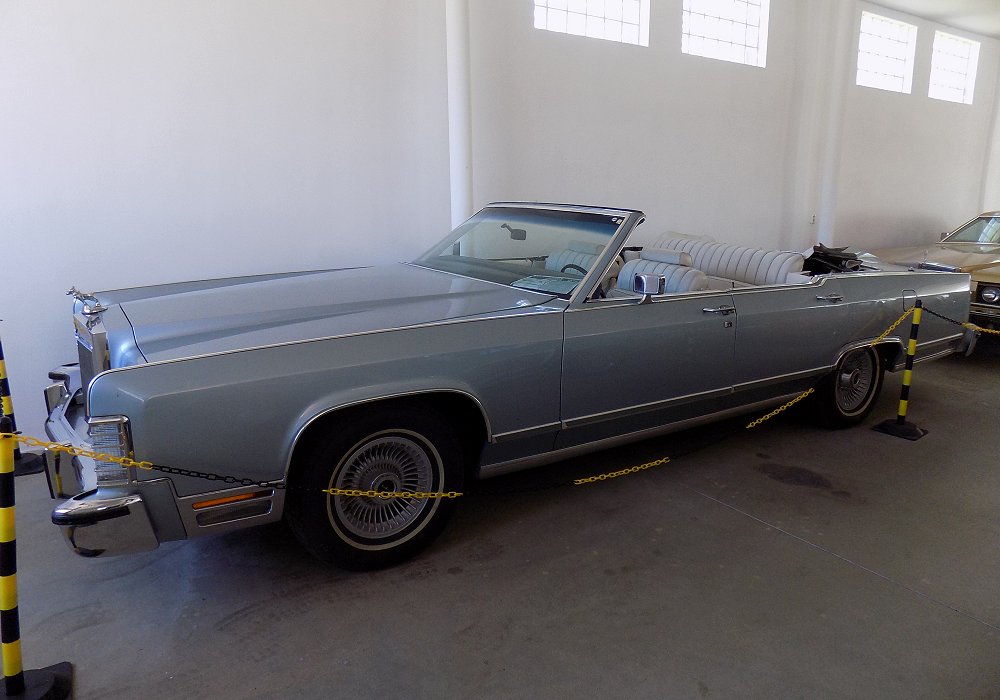
Visually, the 4-Door Convertible was an exercise in restrained perfection. Its design was built on balance and proportion: long horizontal lines, a low beltline, and a flat hood and deck connected by unbroken surfaces. The grille was simple and rectangular, flanked by neatly integrated quad headlamps. The sides were clean, with subtle chrome detailing along the upper body line, and the rear featured full-width taillights that reinforced the car’s sense of scale and precision. With the top down, the silhouette was pure and architectural—there was no clutter or ornamentation, just a single, continuous form.
One of the car’s most distinctive features was its rear-hinged “suicide” doors. Opening from the center without a fixed B-pillar, the doors allowed easy entry and exit while giving the car an air of ceremonial grandeur. The engineering challenges of maintaining structural rigidity in a four-door convertible without a central pillar were immense, but Lincoln achieved it through an exceptionally strong floorpan and reinforced sills. The result was a car that felt solid, even with the roof lowered.
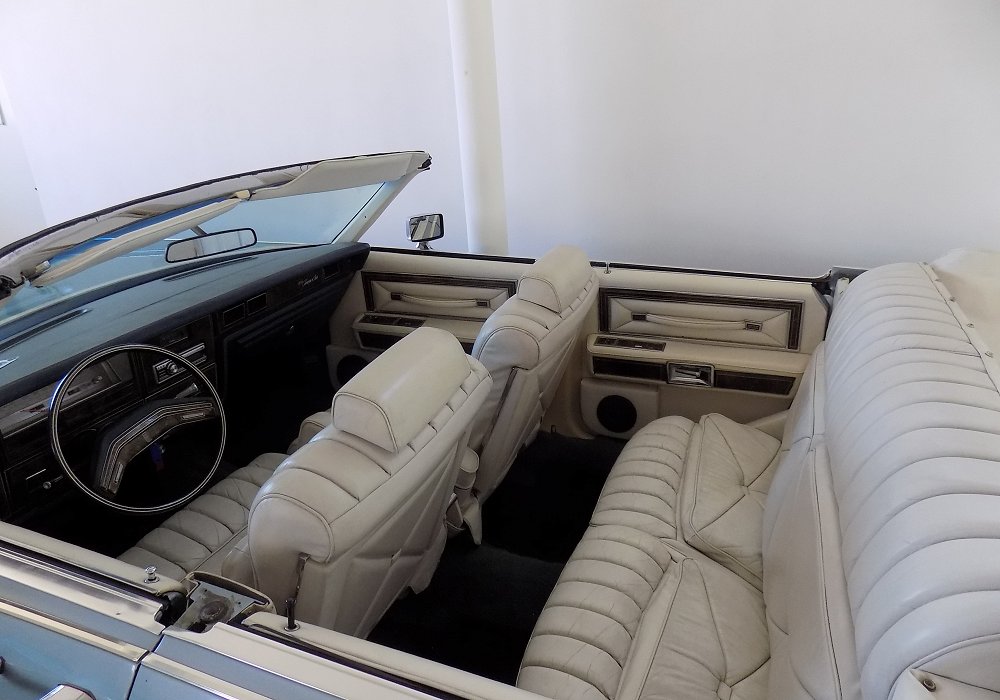
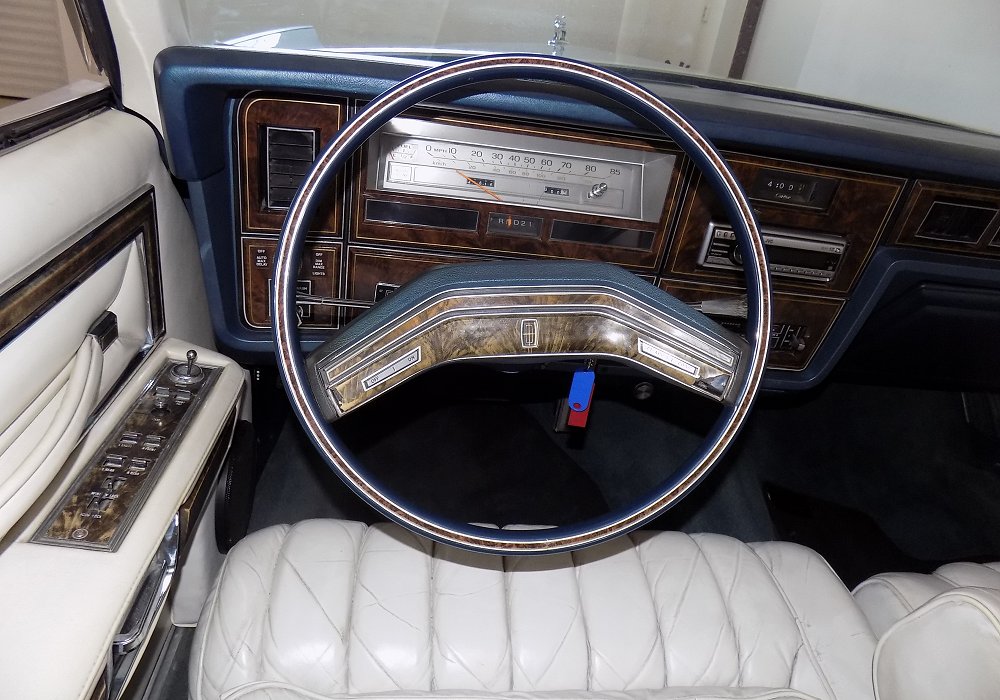
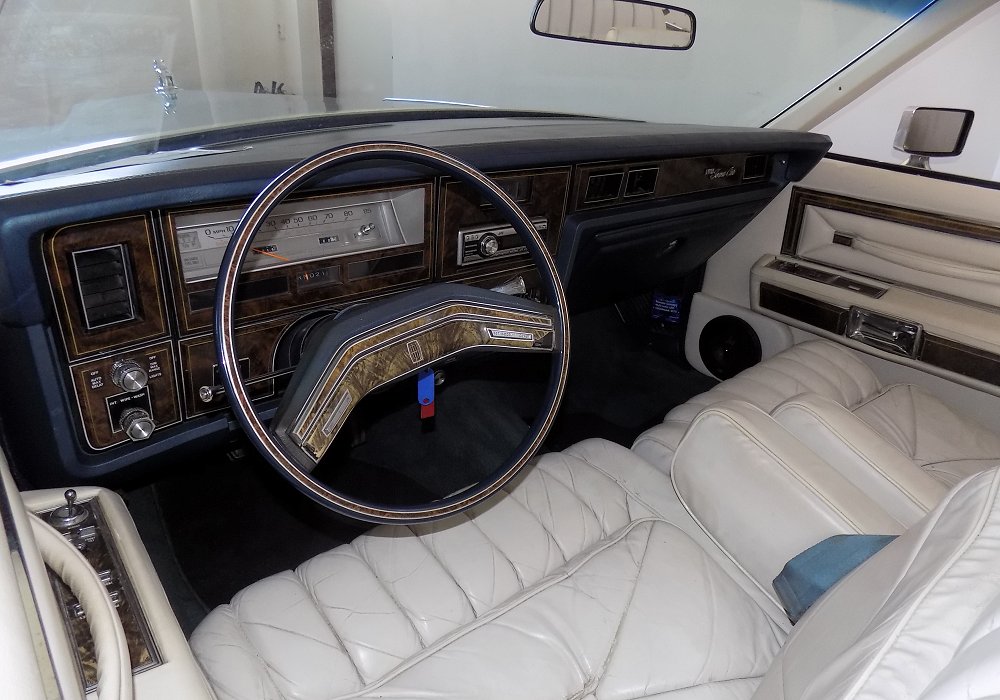
Inside, the Lincoln Continental 4-Door Convertible was a showcase of craftsmanship and refinement. The interior was simple yet elegant, mirroring the clean geometry of the exterior. The dashboard featured horizontal instrumentation and fine metal accents, with switches and dials arranged with intuitive precision. Upholstery was available in high-grade leather, often in sophisticated colors such as parchment, black, or deep blue, complemented by rich carpeting and wood-grain trim. Power windows, power seats, and automatic temperature control were standard, while the cabin’s insulation ensured that even with the top raised, noise levels remained impressively low.
Driving the car was an experience of absolute serenity. The 430 V8 provided effortless torque, allowing the car to move with quiet authority. The suspension, with its long wheelbase and carefully tuned springs, absorbed bumps with ease, creating a ride that was smooth, controlled, and almost silent. Steering was light but steady, and the brakes—though requiring gentle modulation—were strong and progressive. Whether gliding through city streets or cruising along open highways, the 4-Door Convertible exuded calm power and dignity.
The Lincoln Continental 4-Door Convertible also achieved immortality through its place in American history. It was the official White House car during the early 1960s and became forever linked with President John F. Kennedy, whose specially modified 1961 model, customized by Hess & Eisenhardt, remains one of the most famous automobiles in the world. The car’s association with state occasions, parades, and dignitaries reinforced its image as the ultimate symbol of authority and refinement.
Production of the 4-Door Convertible remained limited throughout its run. Each example was hand-finished, and the complex top mechanism made it one of the most expensive American cars of its time. In total, only around 15,000 were produced between 1961 and 1967, and the model was discontinued after that year due to cost, complexity, and changing safety regulations. No manufacturer has built a true four-door convertible since, cementing the Lincoln’s place as a one-of-a-kind achievement.
Today, the Lincoln Continental 4-Door Convertible is revered as one of the greatest automotive designs of the 20th century. Collectors prize it for its rarity, craftsmanship, and timeless elegance. Its clean lines and understated presence continue to inspire designers more than sixty years later, and well-preserved examples are among the most sought-after American classics ever built.
The Lincoln Continental 4-Door Convertible was more than a car—it was an era captured in metal and motion. It symbolized a time when American luxury was defined by grace, confidence, and innovation. With its perfect proportions, sophisticated engineering, and dignified restraint, it remains a masterpiece of design—a car that represents not only the height of Lincoln’s achievement, but one of the most beautiful automobiles ever made.