Description
The Lincoln Continental Mark V 6.6 was one of the final grand expressions of the American luxury coupe era, a car that perfectly captured the elegance, refinement, and commanding presence that defined Lincoln in the late 1970s. Produced between 1977 and 1979, it shared the same opulent design and craftsmanship as its more powerful 7.5-litre sibling but was fitted with a slightly smaller and more fuel-efficient engine—a response to the shifting priorities of a post–fuel-crisis world. Yet despite this nod to practicality, the Mark V 6.6 retained every bit of the composure, dignity, and sheer scale that made the Mark series legendary.
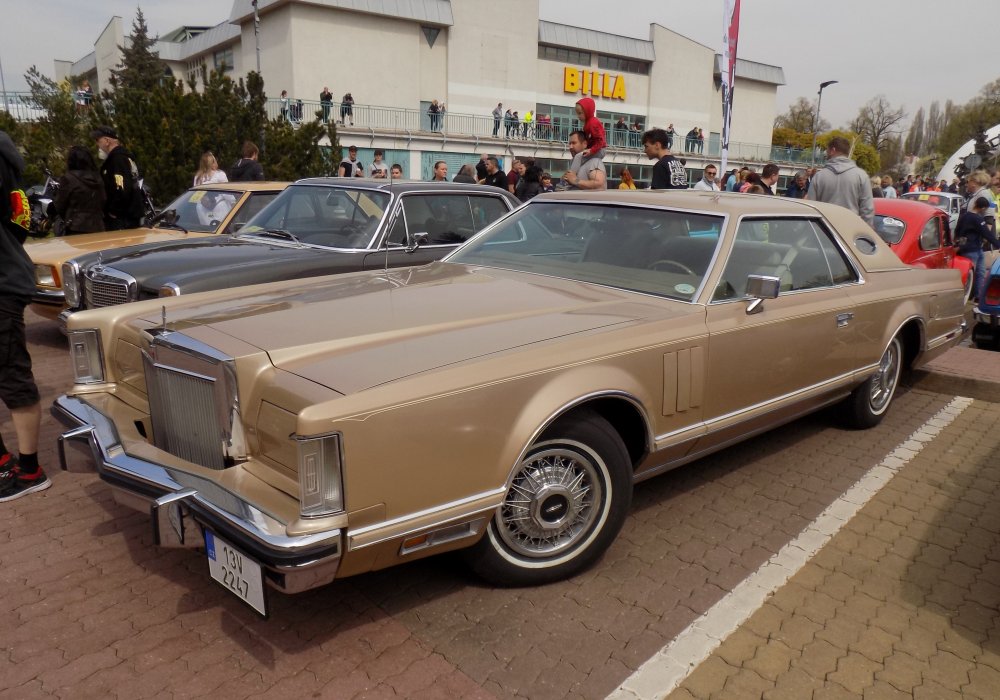
By the late 1970s, the Lincoln Continental Mark V stood at the pinnacle of American personal luxury. At over 19 feet long, nearly 6.5 feet wide, and weighing close to 4,900 pounds, it was one of the most imposing coupes ever produced. The car’s proportions were unmistakably grand: a vast hood, a formal roofline, and a short rear deck balanced by sharp edges and smooth body planes that gave the design a restrained sense of power. It was Lincoln’s ultimate statement of prestige—an automobile built for comfort, craftsmanship, and effortless cruising.
Power for the 6.6 version came from Ford’s 6.6-litre (400 cubic inch) Cleveland V8, a robust and smooth engine designed to deliver ample torque with minimal effort. In 1977, it produced around 166 horsepower and 320 lb-ft of torque—modest figures by earlier standards, but more than sufficient to move the Mark V’s considerable mass with calm authority. The engine was paired with the C6 three-speed automatic transmission, long celebrated for its durability and silk-smooth operation. The 6.6-litre engine provided slightly better fuel economy than the optional 7.5-litre (460 cubic inch) V8, making it the preferred choice for many buyers concerned about rising fuel prices without wanting to sacrifice the Lincoln experience.
On the road, the Mark V 6.6 performed with the same serene composure as its larger-engined counterpart. The big V8 delivered power in a steady, unhurried wave, and the transmission shifted almost imperceptibly. The car’s ride quality was exceptional—soft, level, and utterly detached from road imperfections. Independent front suspension with coil springs and a solid rear axle with leaf springs, combined with extensive sound insulation and heavy body construction, made the car one of the quietest vehicles of its time. Steering was light and effortless, and braking was smooth and progressive thanks to power-assisted front discs and rear drums.
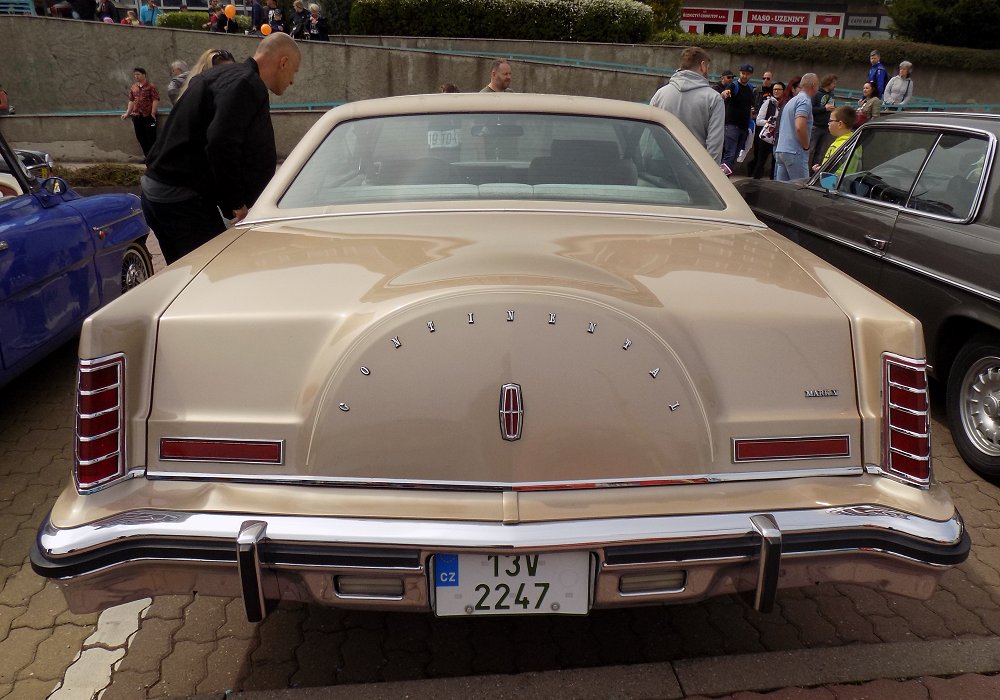
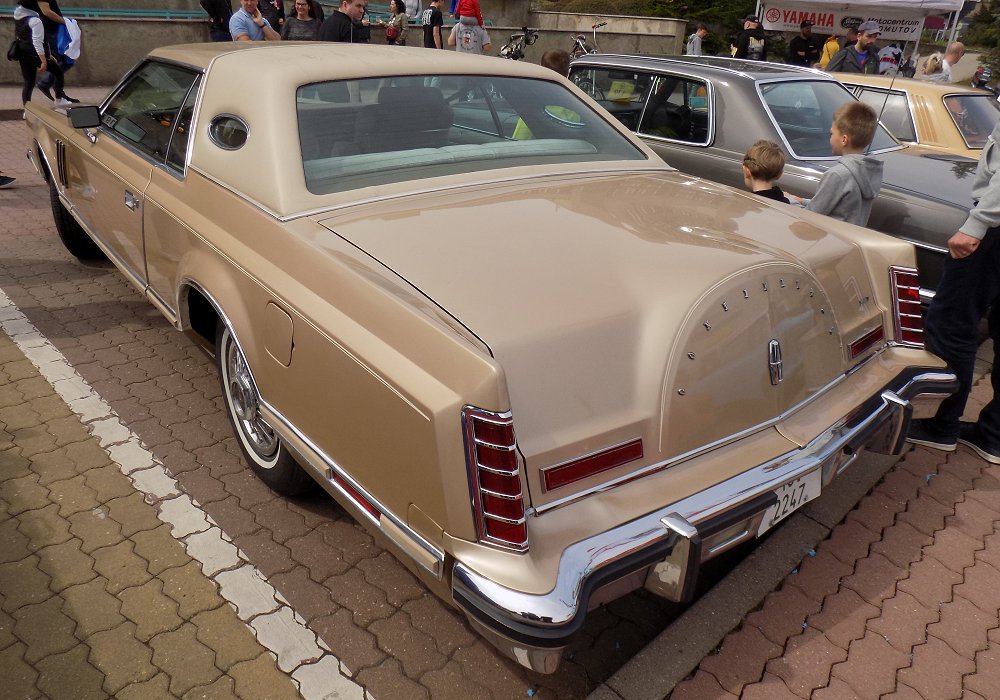
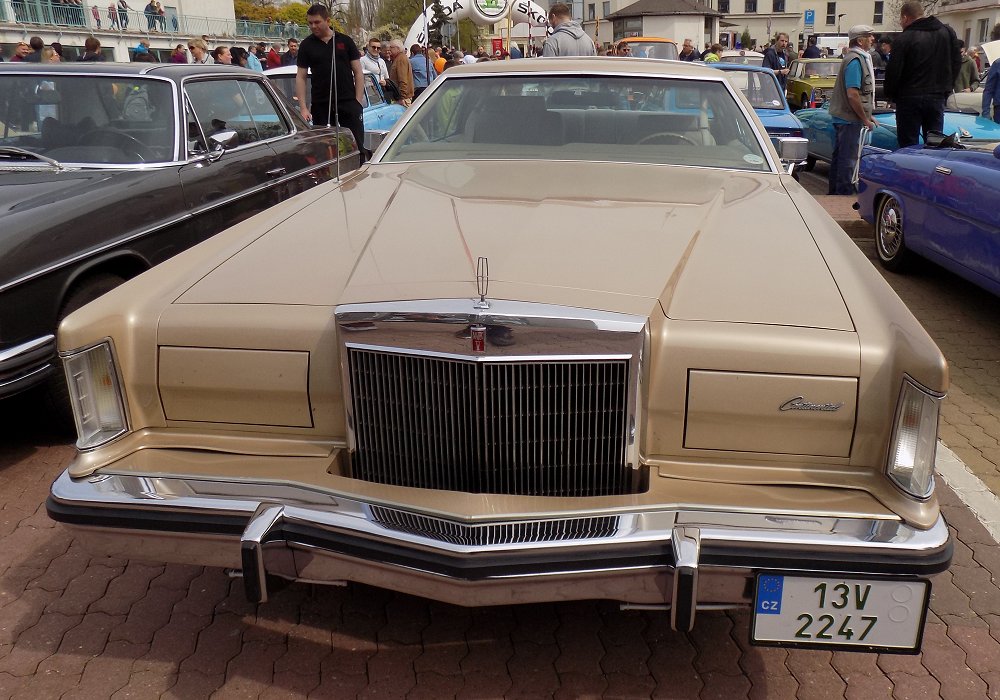
The styling of the Mark V was unmistakable—a masterclass in formal luxury design. The front end was dominated by the tall, Rolls-Royce–inspired grille flanked by hidden headlamps, a signature feature of the Mark series. The hood stretched nearly six feet forward, ending in a finely sculpted chrome peak. Along the sides, the car’s clean surfaces were accented by subtle body creases and polished stainless trim that emphasized its length. The roofline was formal and squared-off, often finished in contrasting vinyl with the distinctive oval opera windows set into the C-pillars. The rear deck featured the famous “Continental hump,” a sculptural reference to the spare-tire carrier of the 1940 Continental, flanked by long horizontal taillights integrated into the bumper. Every line and detail spoke of composure and refinement.
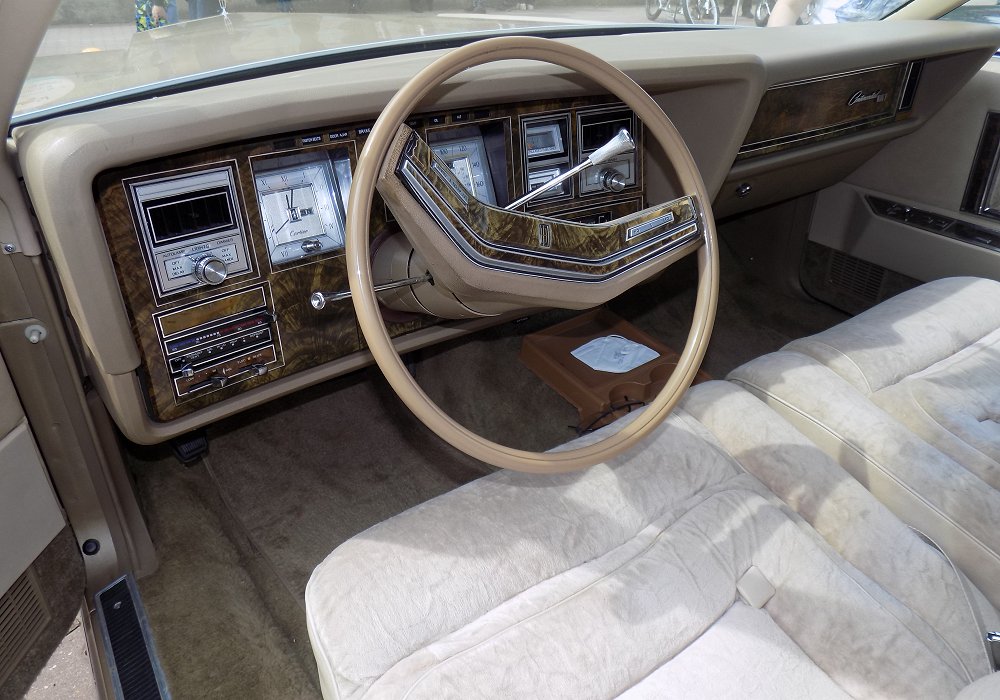
The interior of the Lincoln Continental Mark V 6.6 was a sanctuary of comfort and opulence. The cabin was enormous, trimmed in rich materials and designed to isolate its occupants from the outside world. Seats were broad, deeply cushioned, and trimmed in either premium leather or Lincoln’s luxurious “Media Velour” fabric, offered in a palette of warm, deeply saturated colors such as dark red, navy blue, jade green, and champagne. The dashboard was wide and symmetrical, featuring elegant wood-grain trim, softly illuminated instruments, and controls that operated with smooth, deliberate precision.
Standard equipment included automatic climate control, power windows, power seats, cruise control, and a sophisticated AM/FM stereo system with an optional 8-track player. Optional features included a power moonroof, CB radio, power antenna, and automatic headlamp dimming. The focus was always on refinement—every switch, knob, and mechanism was designed to operate silently and effortlessly. Driving a Mark V was as much about the experience of tranquility as it was about transportation.
Behind the wheel, the Lincoln Continental Mark V 6.6 delivered the quiet power and serenity that defined Lincoln’s character. The V8 operated almost inaudibly at cruising speed, and the car’s immense weight and soft suspension made for a sense of floating along the road rather than driving on it. At highway speeds, the Mark V settled into a smooth, unhurried rhythm, its long hood stretching toward the horizon while passengers relaxed in near silence. This was not a car for spirited driving; it was built for comfort, prestige, and the effortless glide that only a full-sized American luxury coupe could provide.
Lincoln also offered the Mark V in a series of highly exclusive Designer Editions, each created in collaboration with celebrated fashion houses. The Bill Blass, Cartier, Givenchy, and Emilio Pucci editions each featured unique paint schemes, interior colors, and trim details, turning the already luxurious Mark V into a personalized statement of style and sophistication. These versions became some of the most collectible and admired models of the decade.
Production of the Mark V ended in 1979, bringing to a close the era of truly full-sized Lincoln personal luxury coupes. The succeeding Mark VI, introduced for 1980, was significantly smaller and more efficient, reflecting the changing automotive landscape. Yet the Mark V remained the last Lincoln to fully embody the grandeur and scale of classic American luxury—its smooth, unhurried power, and imposing design marking the end of an era.
Today, the Lincoln Continental Mark V 6.6 is cherished by enthusiasts and collectors for its elegance, craftsmanship, and unmistakable presence. While the 7.5-litre version is often noted for its performance, the 6.6-litre model offers an ideal balance of power, refinement, and economy, making it especially appealing for those who appreciate the art of relaxed motoring.
The Lincoln Continental Mark V 6.6 was a car that defined luxury by silence, space, and grace. It was built for those who valued comfort over speed, understatement over flash, and craftsmanship over compromise. With its vast proportions, smooth V8 power, and serene composure, it remains a timeless symbol of Lincoln’s golden age—an automobile that turned every journey into a statement of calm authority and enduring style.