Description
The Lincoln Continental Mark VI 2-Door was the final evolution of Lincoln’s great personal luxury coupes—a car that combined traditional American grandeur with the new priorities of the 1980s: efficiency, refinement, and advanced technology. Produced from 1980 to 1983, it carried the heritage of the legendary Mark series into a new era of downsized platforms and digital sophistication while maintaining the stately presence and craftsmanship that had long defined the Lincoln name.
Replacing the enormous Mark V, the Mark VI was the first Lincoln built on Ford’s new Panther platform, which emphasized lighter construction and improved fuel economy. Although smaller in size, the Mark VI still retained the long hood, formal roofline, and dignified stance that characterized every Mark before it. At just over 17 feet in length, it was more manageable than its predecessor but still commanded the road with the unmistakable authority of a true Lincoln.
Under its refined, square-edged hood lay either the standard 5.0-litre (302 cubic inch) V8 or the optional 5.8-litre (351 cubic inch) Windsor V8, both known for their reliability and smooth operation. Most buyers selected the 5.0-litre version, which, despite its smaller displacement compared to earlier Marks, delivered respectable performance thanks to electronic fuel injection and improved efficiency. Power was transmitted through Ford’s new 4-speed automatic overdrive transmission (AOD), which allowed for relaxed, low-rpm cruising and significantly better fuel economy than the older 3-speed units. The combination of these updates gave the Mark VI the effortless, quiet power expected of a Lincoln while reflecting the realities of the changing automotive landscape.
The Mark VI 2-Door was engineered to preserve Lincoln’s hallmark smoothness and composure. The suspension featured coil springs at all four corners, tuned for a soft, floating ride that absorbed imperfections with ease. Power steering and power brakes came standard, calibrated for minimal effort and maximum comfort. The result was a car that glided over the road in near silence, isolating its occupants from noise and vibration while still maintaining a sense of control and stability that earlier Lincolns sometimes lacked.
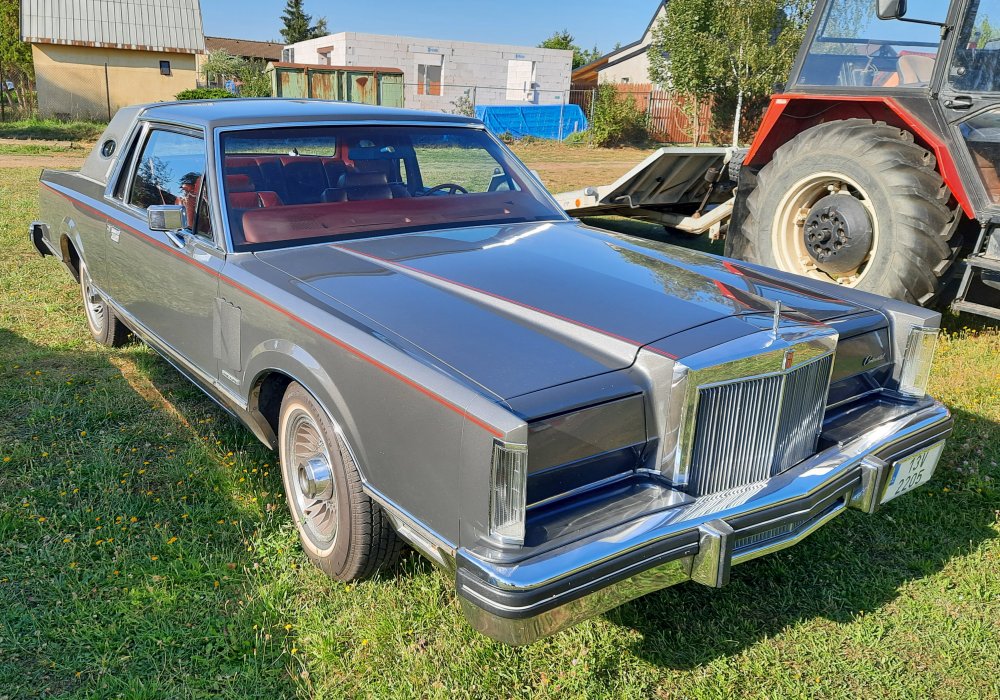
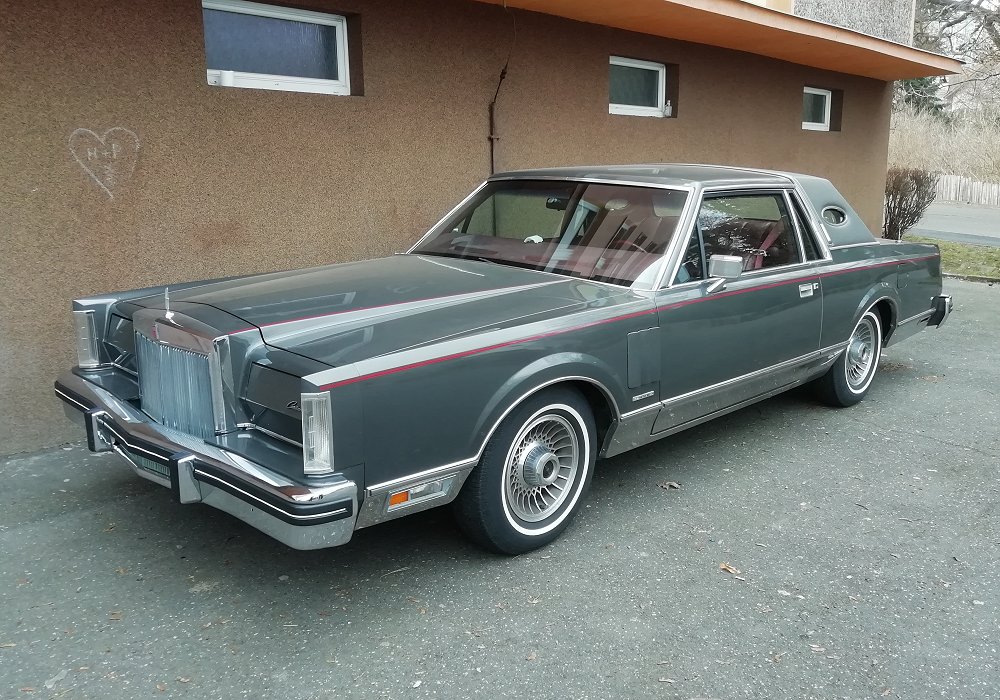
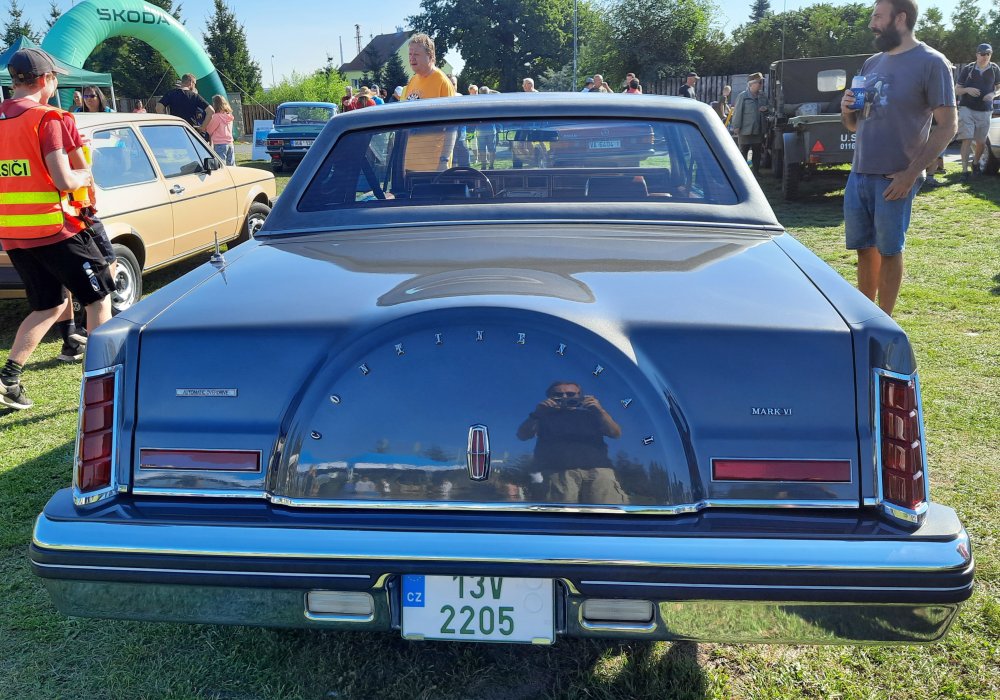
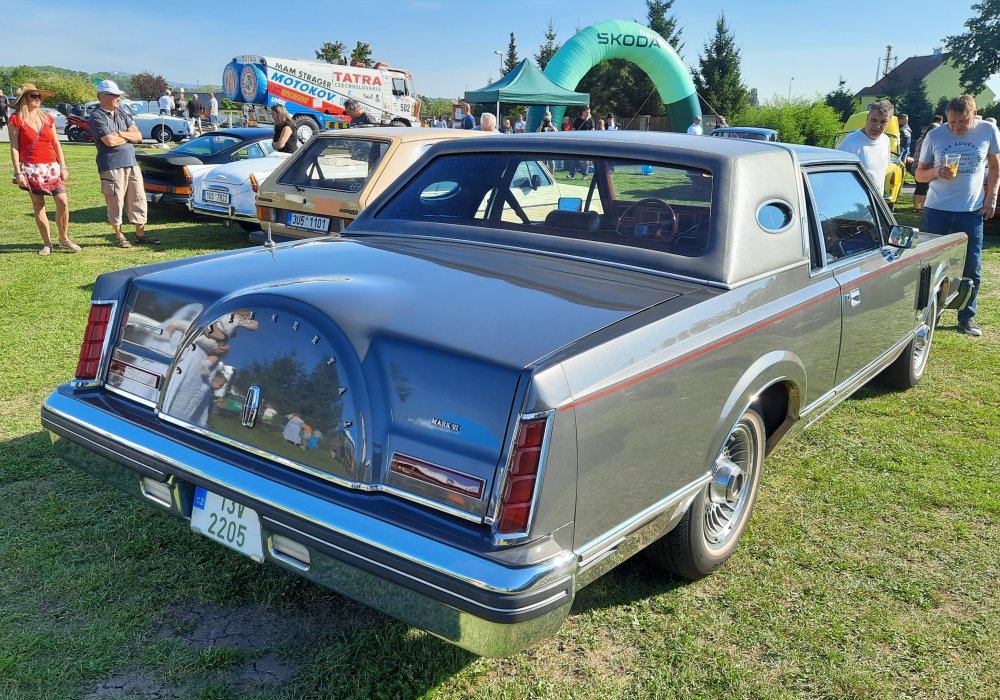
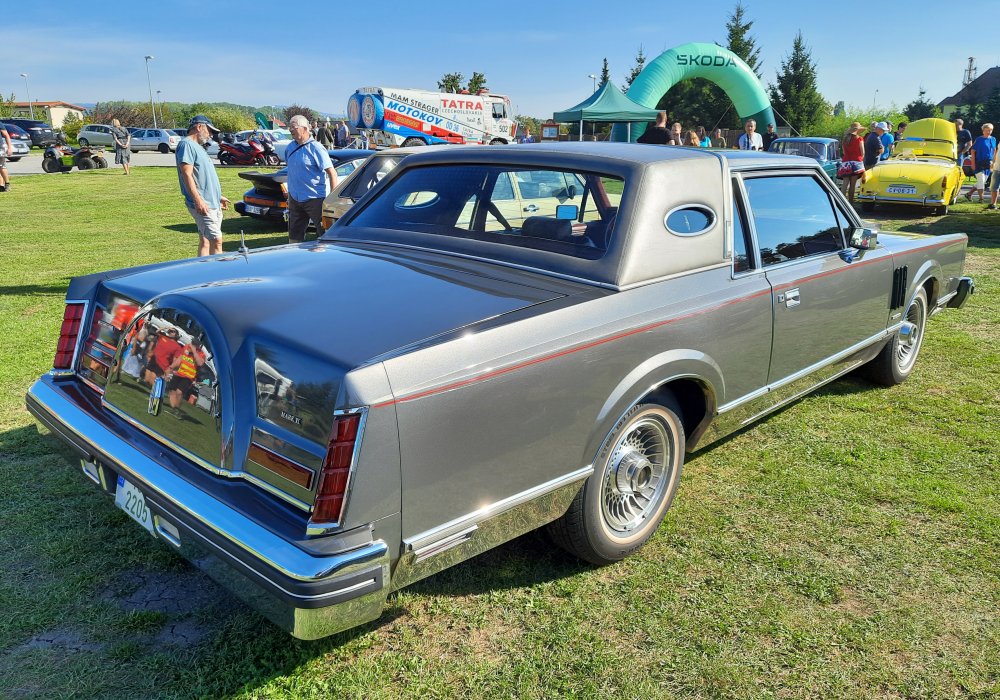
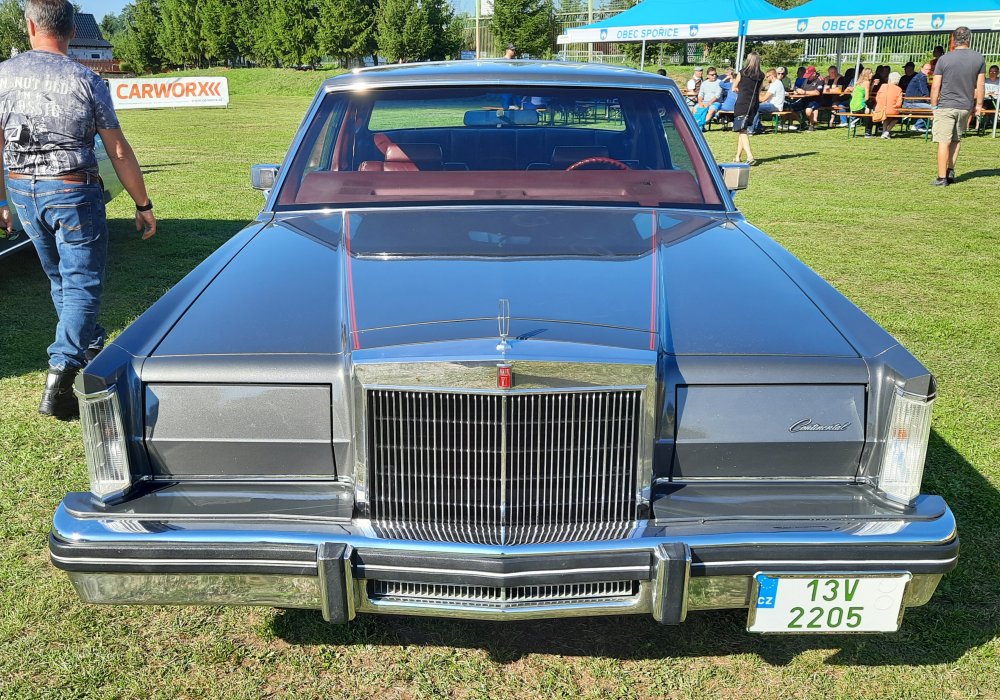
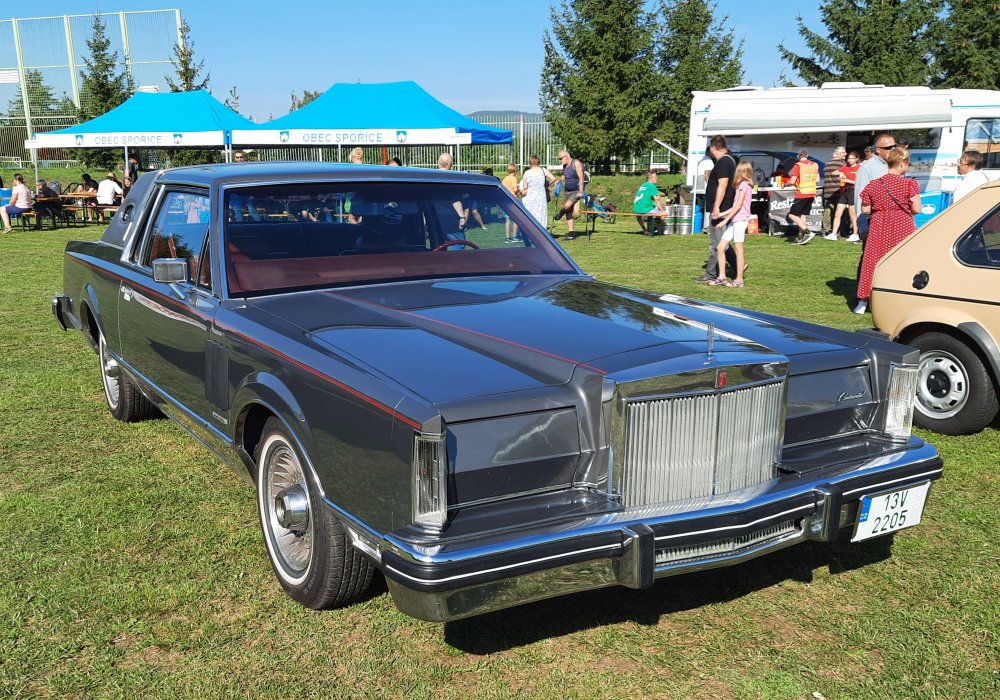
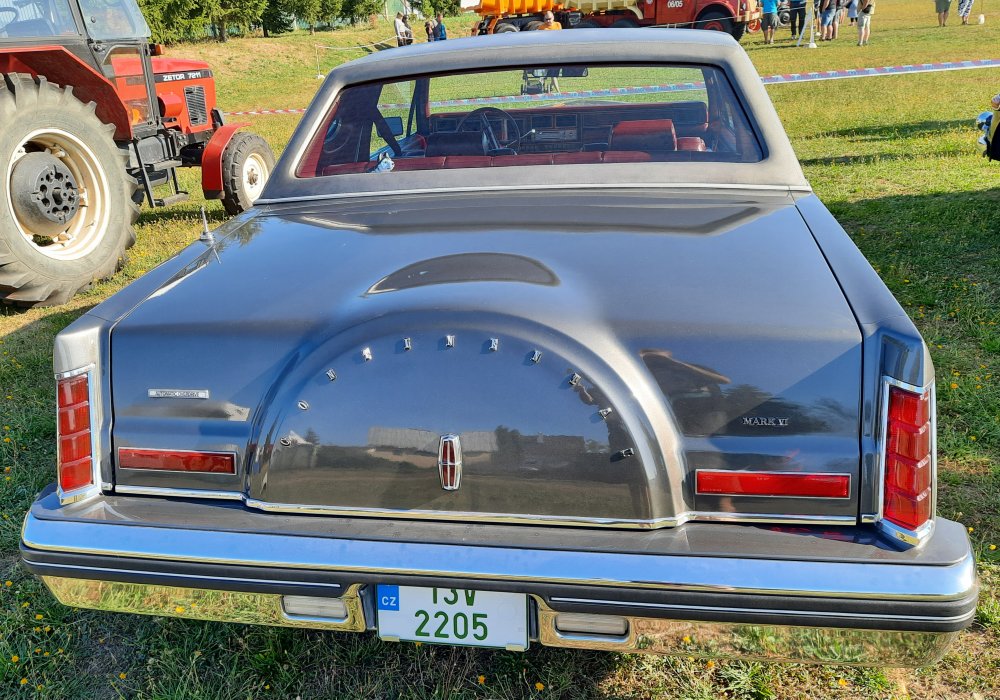
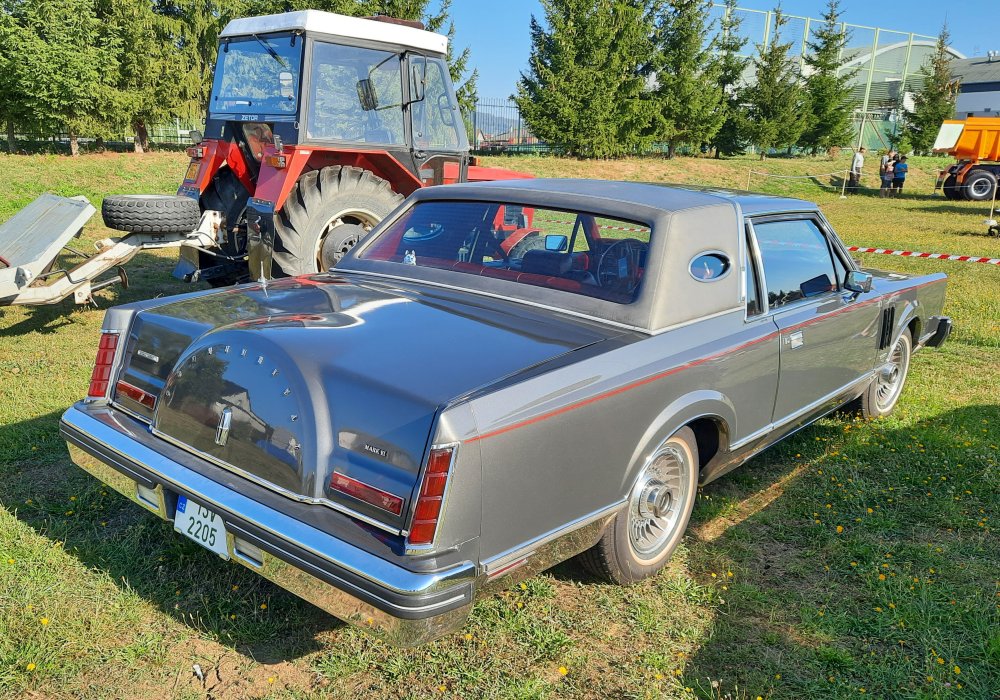
Stylistically, the Mark VI represented a subtle yet significant shift toward cleaner, more formal lines. The design was unmistakably Lincoln: the tall, upright grille, inspired by the classic Continentals of the 1940s, gave the car a stately, almost architectural appearance. Rectangular quartz-halogen headlamps flanked the grille, framed by polished chrome surrounds. The body sides were smooth and unadorned, broken only by fine chrome accents and a thin protective molding that ran along the beltline. The rear deck retained the traditional “Continental hump,” a nod to the brand’s heritage, while the rear taillamps were elegantly integrated into the bumper line. The roofline, squared and formal, often came with a half or full vinyl covering and the signature oval opera windows that had become a Lincoln hallmark.
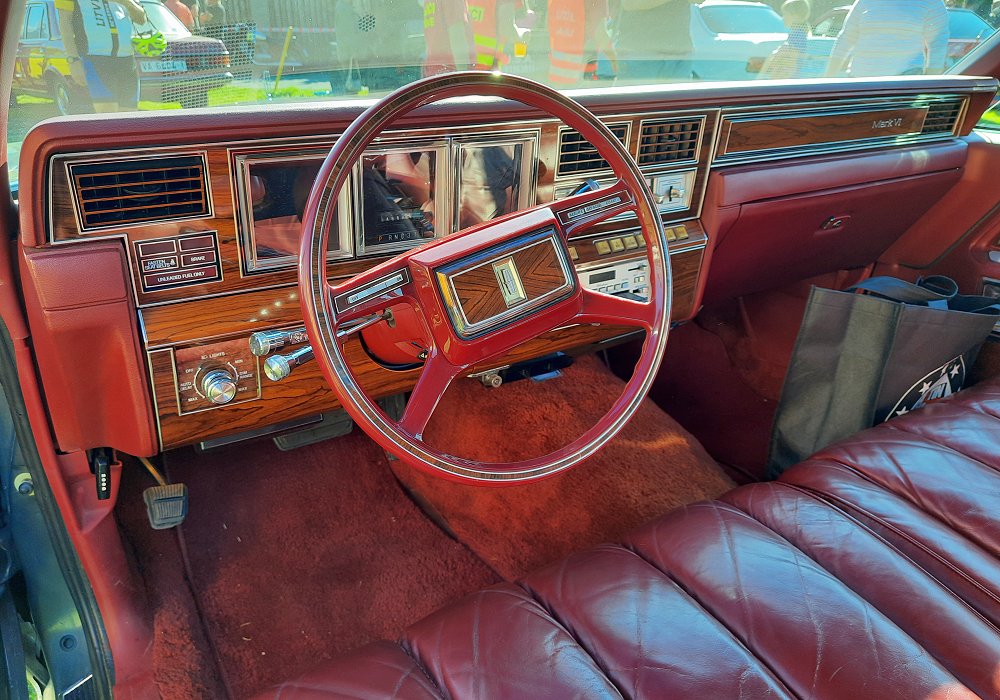
Inside, the Lincoln Continental Mark VI 2-Door offered a cabin that was as advanced as it was luxurious. The interior was designed as a sanctuary of comfort, trimmed in the finest materials and crafted with exceptional attention to detail. Deep, overstuffed seats were available in premium leather or Lincoln’s signature crushed velour upholstery, offered in rich colors such as dark cordovan, midnight blue, and silver gray. The seating position was commanding yet relaxed, and both front seats were power-adjustable to ensure perfect comfort. The dashboard design was elegant and forward-looking, featuring one of the first digital instrument clusters ever fitted to an American car. The glowing green digital speedometer and fuel readouts gave the interior a futuristic feel, setting the Mark VI apart from every competitor in its class.
The Mark VI also introduced several groundbreaking technologies that would become standard in later luxury cars. It featured the world’s first factory-installed keyless entry system, operated via an illuminated numeric keypad on the driver’s door, allowing owners to unlock the car without a key. Automatic climate control, cruise control, and power everything—windows, locks, mirrors, and seats—were standard. Optional features included a power moonroof, automatic headlamp dimming, and a premium audio system with cassette or 8-track player. Every element of the cabin was designed to make driving effortless and serene.
On the road, the Mark VI 2-Door was a study in refinement. The V8 engine delivered smooth, linear power, while the overdrive transmission kept engine revs low at highway speeds, contributing to the car’s remarkable quietness. The suspension absorbed imperfections without drama, and the steering—though light—offered precise control. The brakes provided confident, progressive stopping power. It was not a car for spirited driving, but rather for calm, composed travel in total comfort. At 60 mph, the car felt nearly motionless, gliding along with an ease that defined Lincoln’s concept of luxury.
The Mark VI also continued Lincoln’s tradition of Designer Series editions, which had begun with the Mark IV. These special editions—Bill Blass, Cartier, Givenchy, and Pucci—each featured unique exterior colors, interior trims, and detailing inspired by the aesthetics of the fashion houses that lent their names. For the Mark VI, these editions added distinctive two-tone paint schemes, embroidered insignias, and custom interiors that gave each car a personality of its own. These models remain among the most collectible examples of the Mark VI today.
Production of the Lincoln Continental Mark VI 2-Door ran through 1983, after which it was replaced by the radically different Mark VII—a more aerodynamic, performance-oriented coupe that reflected the design trends of the 1980s. The Mark VI, in contrast, was the last of the stately, upright Lincolns, preserving the classic formal look and feel that had defined the brand for decades.
Today, the Lincoln Continental Mark VI 2-Door is recognized as a car of transition—an automobile that bridged two eras of American luxury. It combined the craftsmanship and comfort of the great 1970s Lincolns with the innovation and efficiency of the modern age. Collectors and enthusiasts value it for its understated elegance, digital sophistication, and serene driving character.
The Lincoln Continental Mark VI 2-Door was more than a coupe—it was a statement of refined confidence. With its timeless proportions, advanced technology, and smooth V8 power, it represented the evolution of Lincoln’s philosophy of luxury. Graceful, quiet, and meticulously crafted, it stood as the last great expression of traditional American elegance before the world of luxury cars changed forever.