Description
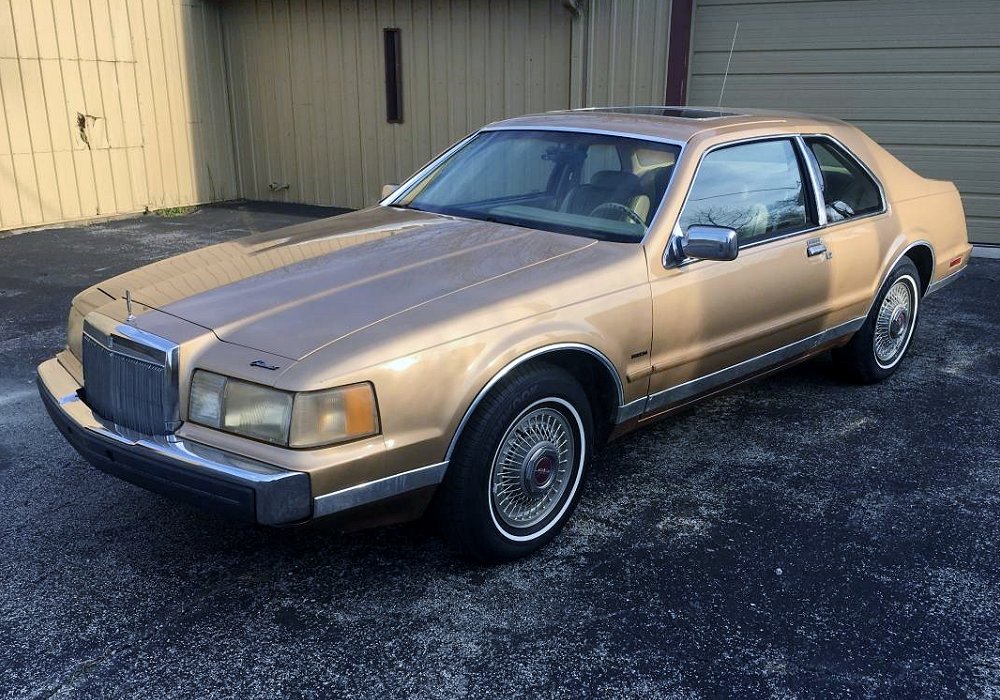
The Lincoln Continental Mark VII Turbo Diesel was one of the most unusual and ambitious models ever offered by Lincoln—a bold attempt to merge American luxury with European efficiency. Produced between 1984 and 1985, it was the only Mark-series car ever fitted with a diesel engine and represented Lincoln’s response to the economic and environmental realities of the 1980s. While short-lived, the Mark VII Turbo Diesel remains one of the rarest and most intriguing chapters in Lincoln’s history, blending traditional American comfort with a distinctly European mechanical character.
The Mark VII itself, introduced in 1984, marked a complete reimagining of Lincoln’s flagship coupe. It replaced the stately, formal Mark VI with a sleek, aerodynamic body that reflected the new design philosophy of the 1980s. Built on Ford’s Fox platform, which also underpinned the Mustang and Thunderbird, the Mark VII was lower, lighter, and more dynamic than any of its predecessors. Its smooth, wind-tunnel-tested shape—characterized by a long hood, sloping rear deck, and sharply cut rear fascia—gave it a modern, refined presence that stood apart from the boxy silhouettes of earlier Lincolns.
In the spirit of the era’s global thinking, Lincoln sought to introduce a diesel option to appeal to buyers who wanted the prestige of an American luxury coupe with the fuel efficiency and longevity associated with European engineering. To achieve this, Lincoln turned to BMW, whose proven inline-six diesel engine was already in use in the BMW 524td. The result was the Lincoln Continental Mark VII Turbo Diesel—a car that combined Detroit luxury with Munich precision.
The engine was a 2.4-litre BMW M21 inline-six turbo diesel, an advanced unit for its time. It featured an overhead camshaft, Bosch fuel injection, and a turbocharger, producing around 114 horsepower and 155 lb-ft of torque. While these figures were modest compared to the gasoline V8s offered in other Mark VII models, the engine provided smooth, consistent power delivery and excellent fuel economy—up to 30 miles per gallon on the highway, a remarkable figure for a Lincoln of the period. The engine was paired with a four-speed automatic transmission, tuned for low-rpm cruising and quiet operation.
The character of the Mark VII Turbo Diesel was entirely different from that of its gasoline-powered counterparts. Where the 5.0-litre V8 version offered effortless American torque and a subdued growl, the diesel delivered its power with a steady, turbine-like hum. Acceleration was leisurely, with 0–60 mph taking over 13 seconds, but once up to speed, the car cruised smoothly and quietly. The combination of the BMW engine’s refinement and Lincoln’s extensive sound insulation meant that, inside the cabin, the diesel clatter was barely noticeable. The car was designed for relaxed, unhurried driving—an executive express rather than a performance coupe.
The chassis and suspension of the Mark VII were among the most advanced in Lincoln’s history. The car featured four-wheel air suspension—a first for an American production car—providing an exceptionally smooth ride and automatic load leveling. The system adjusted ride height according to speed and load, enhancing both comfort and aerodynamics. The Mark VII also featured four-wheel disc brakes, anti-lock braking (ABS), and precise rack-and-pinion steering, giving it levels of handling and control far beyond earlier Lincolns. The result was a car that combined traditional luxury with a newfound agility and sophistication.
Visually, the Mark VII Turbo Diesel was nearly indistinguishable from its gasoline siblings. Its styling was sleek and contemporary, featuring flush-mounted headlamps (the first on any American car), aerodynamic bumpers, and minimal chrome trim. The front end retained Lincoln’s signature vertical grille, now integrated seamlessly into the bodywork, and the long, flowing profile gave the car a sense of motion even at rest. The rear design was particularly distinctive, with sharply cut taillights and a subtle rear lip that contributed to its 0.38 drag coefficient—a respectable figure for the time.
Inside, the Mark VII Turbo Diesel offered the same level of comfort and craftsmanship as the rest of the range. The cabin was a blend of classic Lincoln opulence and contemporary technology. Deep, sculpted seats were trimmed in fine leather or plush velour, with multiple power adjustments and available lumbar support. The dashboard was dominated by a digital instrument cluster, displaying speed, fuel level, and trip information in glowing green numerals. The car featured automatic climate control, power windows and locks, cruise control, and a premium sound system. Optional features included a trip computer, digital compass, and onboard message center. The interior was hushed, spacious, and unmistakably luxurious.
On the road, the Mark VII Turbo Diesel delivered a unique blend of refinement and economy. The steering was light and accurate, the suspension absorbed imperfections with grace, and the air suspension maintained composure over long distances. The diesel engine, while not powerful, provided excellent range and smooth torque for highway cruising. It was a car designed for long, comfortable journeys rather than quick acceleration or cornering thrills.
Despite its engineering sophistication, the Mark VII Turbo Diesel struggled in the marketplace. American buyers were not accustomed to associating diesel power with luxury coupes, and the modest performance numbers deterred those who expected the effortless acceleration of a V8. Furthermore, diesel fuel availability in the U.S. was inconsistent at the time, limiting its practicality. As a result, very few were sold—estimates suggest fewer than 500 examples were produced over its brief two-year run, making it one of the rarest Lincolns ever built.
Today, the Lincoln Continental Mark VII Turbo Diesel is a true collector’s curiosity—a fascinating blend of American design and European engineering. Its rarity, distinctive powertrain, and historical significance have made it a sought-after model among enthusiasts who appreciate its quiet innovation and understated character.
The Lincoln Continental Mark VII Turbo Diesel stands as a symbol of experimentation and adaptation. It represented a moment when Lincoln dared to look beyond tradition, embracing efficiency and technology without abandoning luxury or grace. Though short-lived, it remains a remarkable example of Lincoln’s willingness to evolve—a car that brought together two worlds, combining the precision of BMW engineering with the grandeur of classic American comfort.