Description
The Lincoln Continental Town Car was the ultimate expression of American luxury in the 1970s and early 1980s—a car designed to deliver effortless comfort, dignified style, and a sense of prestige that few automobiles could match. As the flagship of the Lincoln lineup, the Town Car embodied everything the brand stood for: refined power, spacious elegance, and quiet confidence. It was a car that didn’t need to shout its importance; it simply commanded respect wherever it went.
The Town Car name first appeared in the early 1950s, referencing a traditional coachbuilding term for chauffeur-driven vehicles with enclosed passenger compartments. However, it was in the 1970s that the name became synonymous with Lincoln’s most luxurious Continental models. Introduced as a high-trim variant of the full-sized Continental in 1970, the Town Car—and its two-door counterpart, the Town Coupé—offered a higher level of craftsmanship, materials, and equipment than any other Lincoln of the period. By 1981, the Town Car would become a model in its own right, but its roots lay firmly in the classic Lincoln philosophy of understated luxury.
Under its long, imposing hood, the Lincoln Continental Town Car of the 1970s was powered by Lincoln’s massive 7.5-litre (460 cubic inch) V8 engine. Early models produced around 365 horsepower and nearly 500 lb-ft of torque, though later versions were detuned for emissions compliance. Power was transmitted through Ford’s C6 three-speed automatic transmission, known for its smooth operation and durability. Despite its enormous size—stretching over 19 feet in length and weighing close to 5,000 pounds—the Town Car moved with remarkable grace. Acceleration was smooth and unhurried, while cruising at highway speeds felt almost effortless, the big V8 barely audible beneath the car’s heavy insulation.
The chassis was built for comfort above all else. The suspension used a combination of coil springs at the front and leaf springs at the rear, tuned to absorb road imperfections with total serenity. Hydraulic shock absorbers and thick rubber bushings isolated passengers from vibration, while the long wheelbase (127 inches on most models) gave the car a stately, limousine-like ride. Steering was power-assisted and extremely light, requiring minimal effort, and the car’s braking system combined front discs and rear drums for smooth, predictable stops. The result was a driving experience defined not by agility or speed, but by an overwhelming sense of calm.
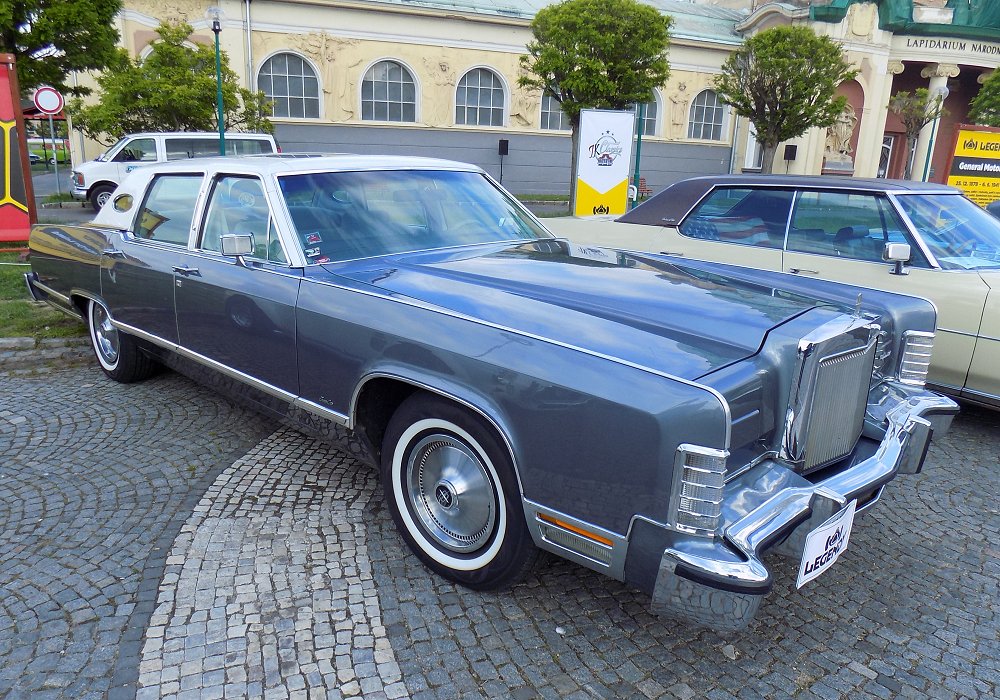
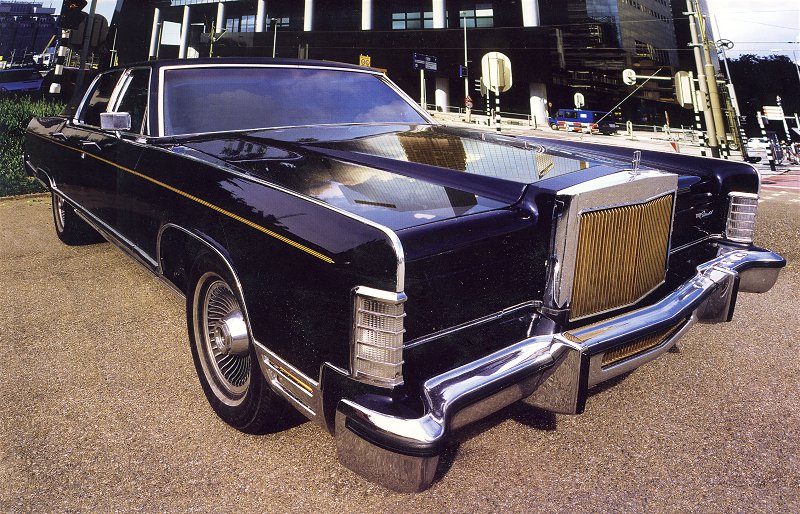
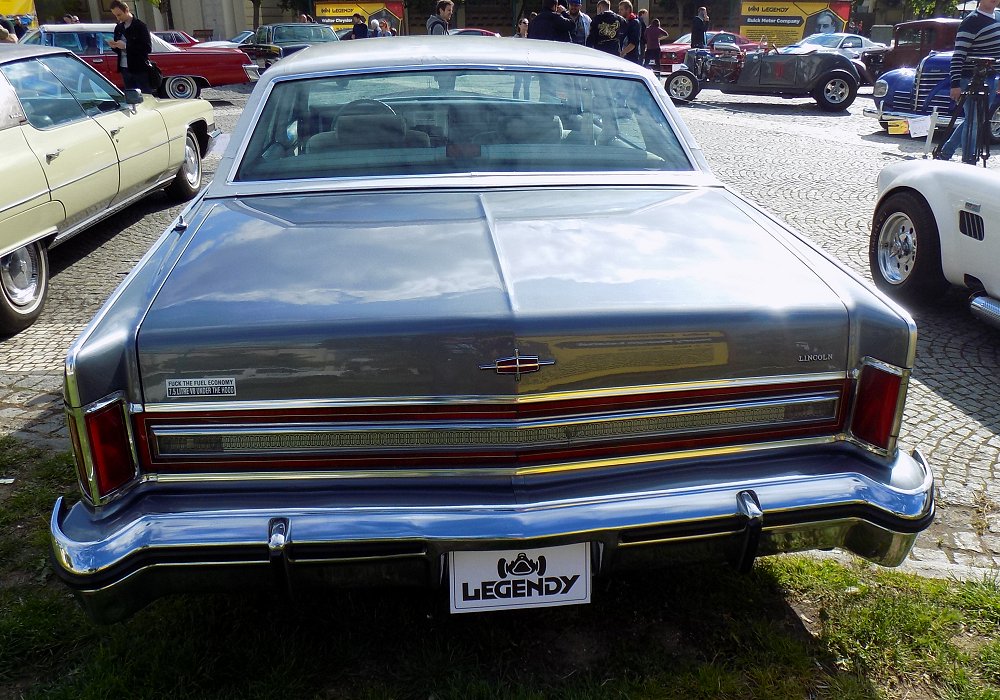
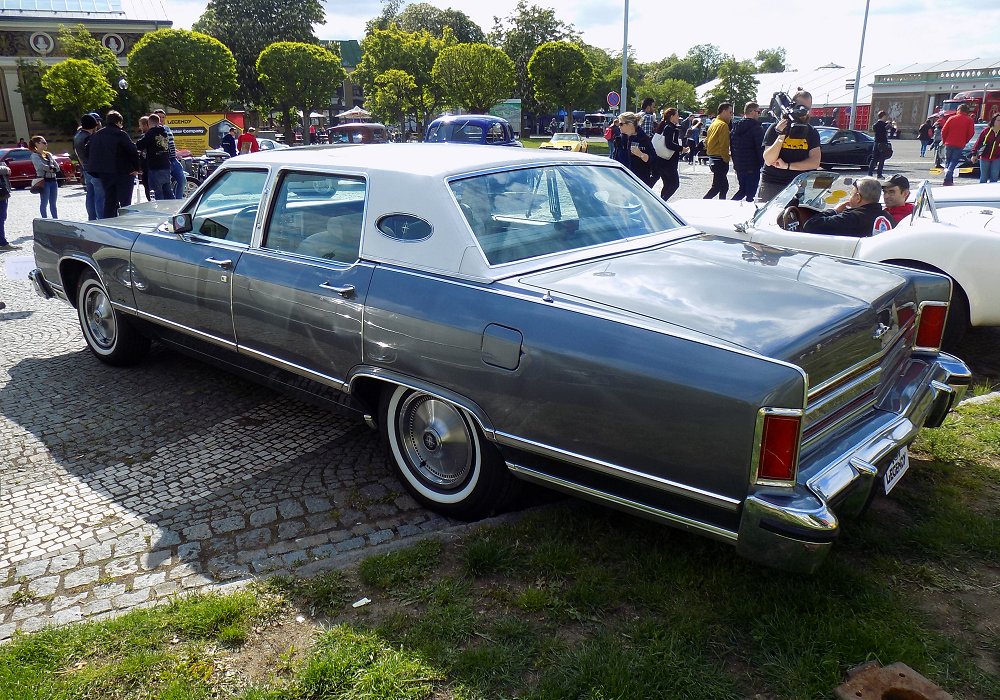
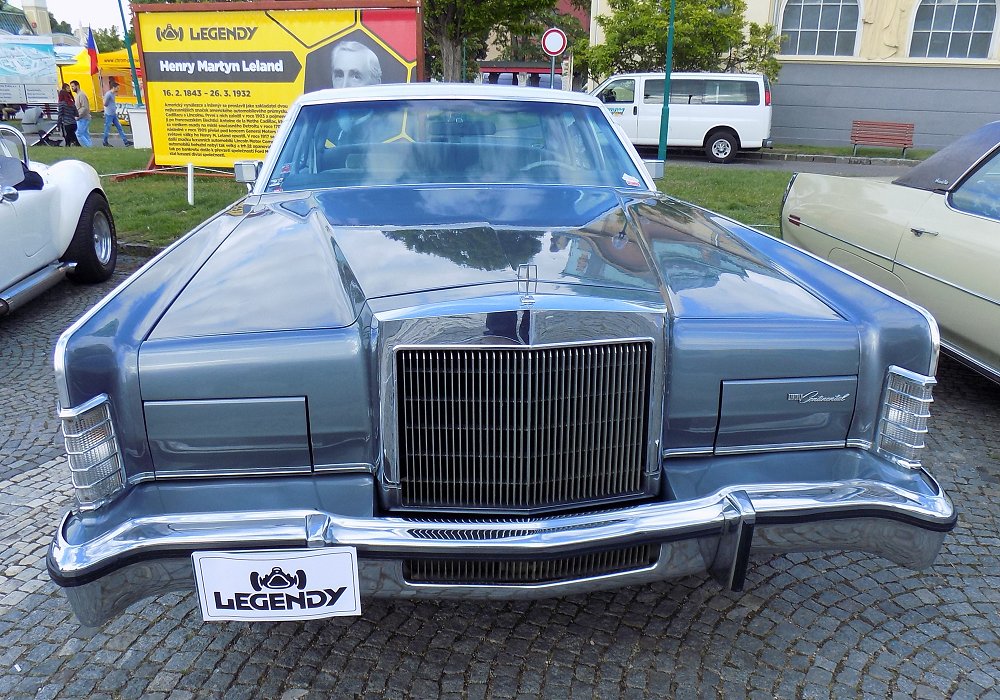
Stylistically, the Continental Town Car was the very definition of formal elegance. Its design was crisp and linear, emphasizing straight horizontal lines, a long hood, and a short rear deck. The front featured a tall, upright grille—an evolution of the Continental Mark series design—framed by concealed headlamps that retracted behind metal doors when not in use. The flanks were clean, with minimal ornamentation save for a fine chrome beltline trim and optional body-side moldings. The rear was equally composed, with full-width taillamps and a subtle “Continental hump” hinting at the brand’s heritage.
One of the Town Car’s most distinctive visual features was its vinyl-covered roof, often paired with a formal rear window treatment. In typical Lincoln fashion, a wide range of roof styles and colors were available, from full-length vinyl coverings to the more elegant “Landau” half-roof, which framed a small opera window in the C-pillar. This design element became a hallmark of Lincoln luxury throughout the decade, symbolizing refinement and exclusivity.
Inside, the Lincoln Continental Town Car was nothing short of sumptuous. The cabin was vast, quiet, and beautifully appointed, with an emphasis on comfort and craftsmanship. The seats were large, pillow-soft, and deeply cushioned, trimmed in rich leather or Lincoln’s signature crushed velour upholstery. The color combinations were pure 1970s indulgence—burgundy, dark jade, navy blue, and champagne among them—and complemented by thick carpeting, wood-grain trim, and polished chrome accents.
Every control and switch was designed to operate with smooth precision. The dashboard was symmetrical and expansive, with clear instruments set in a padded fascia. Features such as automatic climate control, power windows, power seats, cruise control, and an AM/FM stereo were standard or optional, while later models introduced digital displays, automatic headlamps, and even keyless entry systems. The interior was a place of serenity—completely insulated from the outside world, where road and wind noise were almost nonexistent.
On the road, the Town Car delivered the quintessential Lincoln experience. The suspension floated gracefully over any surface, isolating occupants from every bump or vibration. The big V8 provided effortless torque, moving the car forward with quiet authority, while the transmission shifted with seamless smoothness. The steering was light and precise enough for urban maneuvering, yet relaxed at highway speeds, allowing for long journeys without fatigue. In the 1970s, few cars matched the Town Car’s ability to make even the most ordinary drive feel distinguished.
As the 1970s gave way to the early 1980s, the Town Car underwent an important transformation. In 1980, Lincoln introduced a completely new Continental Town Car on the Panther platform—a lighter, more efficient chassis that preserved the comfort and dignity of its predecessor while improving fuel economy and handling. The new generation retained the long, formal styling and luxurious interior appointments that buyers expected, while adopting cleaner lines and more advanced technology. In 1981, the Town Car became a standalone model, replacing the Continental as Lincoln’s flagship sedan and cementing its identity as the definitive expression of American luxury motoring.
Throughout its evolution, the Lincoln Continental Town Car remained a symbol of success, status, and taste. It was favored by executives, statesmen, and celebrities alike—people who valued quiet prestige over flamboyance. It became an enduring presence in American culture, appearing in films, television, and public life as the ultimate car for those who had truly “arrived.”
Today, the Lincoln Continental Town Car is remembered as one of the last great full-sized luxury sedans of the classic American era. Collectors admire it for its build quality, serene driving experience, and commanding road presence. Well-preserved examples continue to draw admiration for their craftsmanship and the unique sense of tranquility they provide behind the wheel.
The Lincoln Continental Town Car represented the peak of traditional American luxury—elegant, powerful, and profoundly comfortable. It was a car built for an era when prestige meant silence, space, and serenity. More than just transportation, it was a moving statement of dignity and refinement, a rolling embodiment of the Lincoln creed: that true luxury is not about speed or flash, but about grace, composure, and enduring class.