Description
The Lincoln Cosmopolitan Sport Sedan was one of the most advanced and elegant American luxury cars of the late 1940s, a model that marked Lincoln’s confident reemergence after World War II and its first real step into the modern age of postwar automotive design. Introduced in 1949, the Cosmopolitan represented a new era for Lincoln—technically sophisticated, sleekly styled, and built to compete head-to-head with Cadillac and Packard. With its smooth V8 power, clean proportions, and refined appointments, the Cosmopolitan Sport Sedan combined understated luxury with modern engineering in a way that firmly redefined Lincoln’s identity for the postwar world.
The Cosmopolitan replaced the prewar-derived Zephyr and Continental lines, both of which had carried Lincoln through the 1930s and 1940s with distinction but were by then outdated. The new model was the result of a complete design overhaul under the direction of Edsel Ford’s successor, William Clay Ford, and reflected the influence of European streamlining and aviation aesthetics that had emerged during the war years. The Sport Sedan, with its pillarless styling and long, flowing roofline, was the most graceful and contemporary of the range, positioned as the embodiment of modern American luxury.
Power came from Lincoln’s newly developed 5.5-litre (337 cubic inch) flathead V8 engine, producing 152 horsepower and over 260 lb-ft of torque—making it the most powerful flathead V8 ever built for a production passenger car. Originally designed for Ford’s heavy-duty trucks, it was re-engineered for luxury duty with a focus on smoothness and refinement. The engine’s broad torque band delivered strong, effortless acceleration, while a new automatic transmission, the Hydra-Matic (introduced shortly afterward through an agreement with General Motors), allowed relaxed, one-handed driving. Power steering and power brakes became available later, making the car one of the most comfortable and sophisticated Lincolns to drive.
The Cosmopolitan’s chassis was equally advanced for its time. It used a sturdy body-on-frame construction with a 125-inch wheelbase, giving it both rigidity and generous interior room. The front suspension employed independent coil springs and wishbones, while the rear used semi-elliptic leaf springs for a smooth, stable ride. Hydraulic brakes provided confident stopping power, and the car’s low center of gravity gave it impressive composure for a full-sized luxury sedan. The steering was light but precise, allowing the big car to handle with surprising grace.
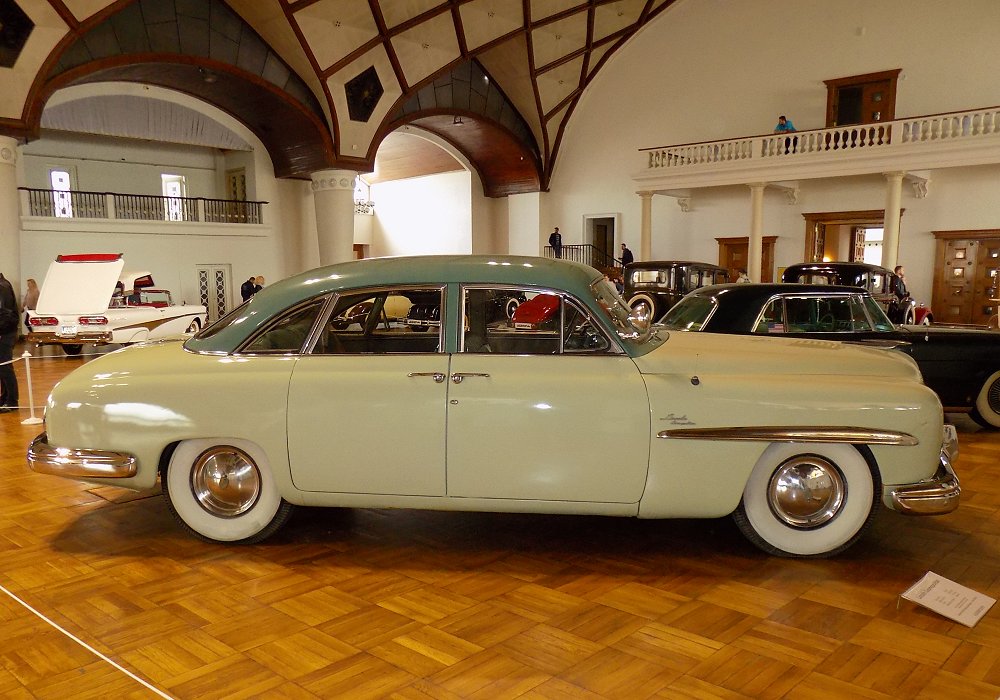
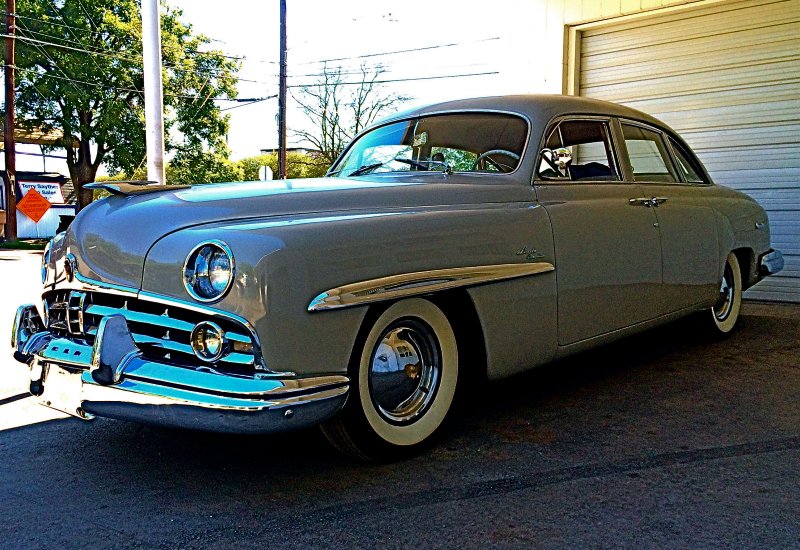
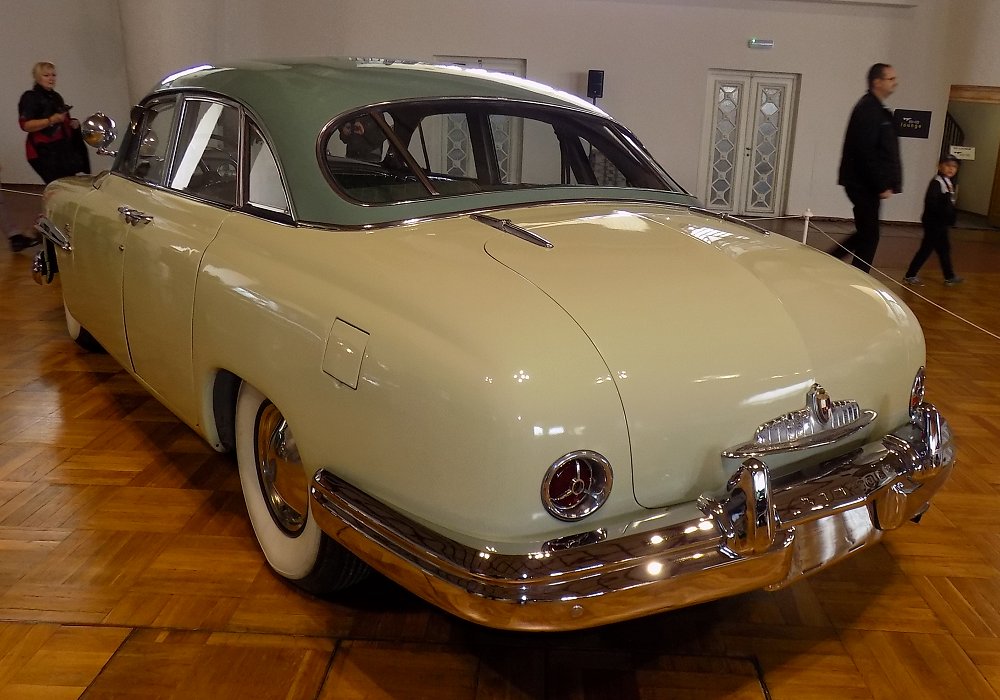
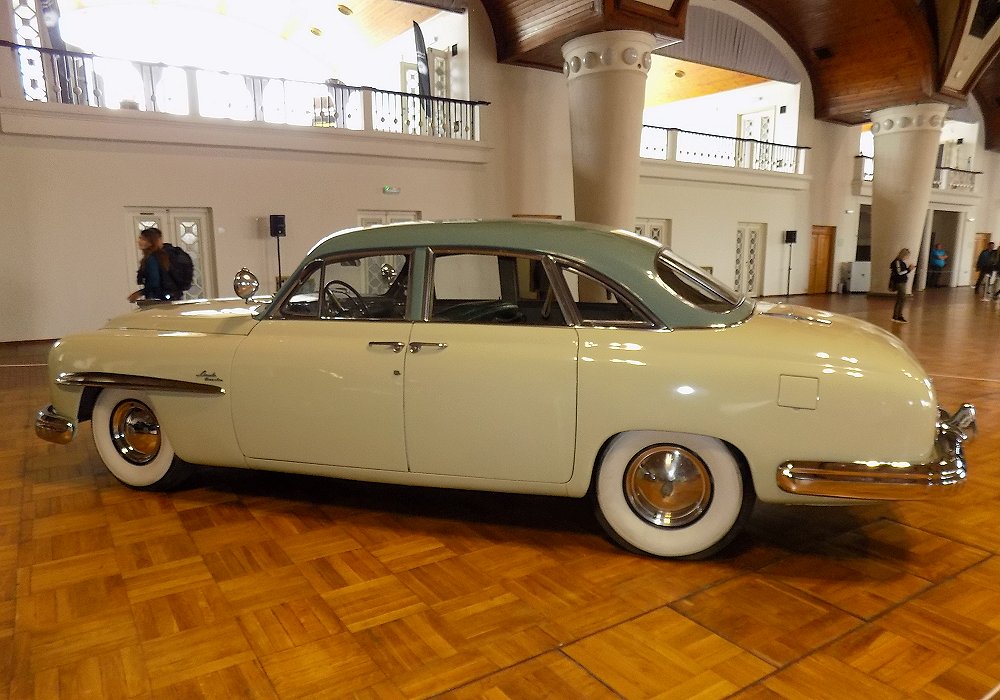
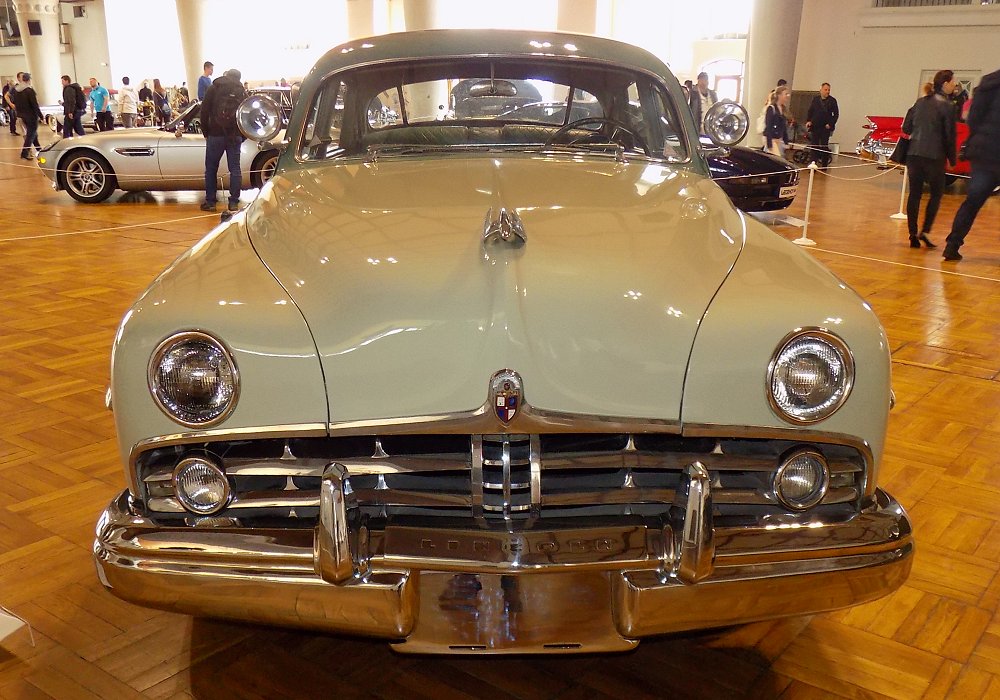
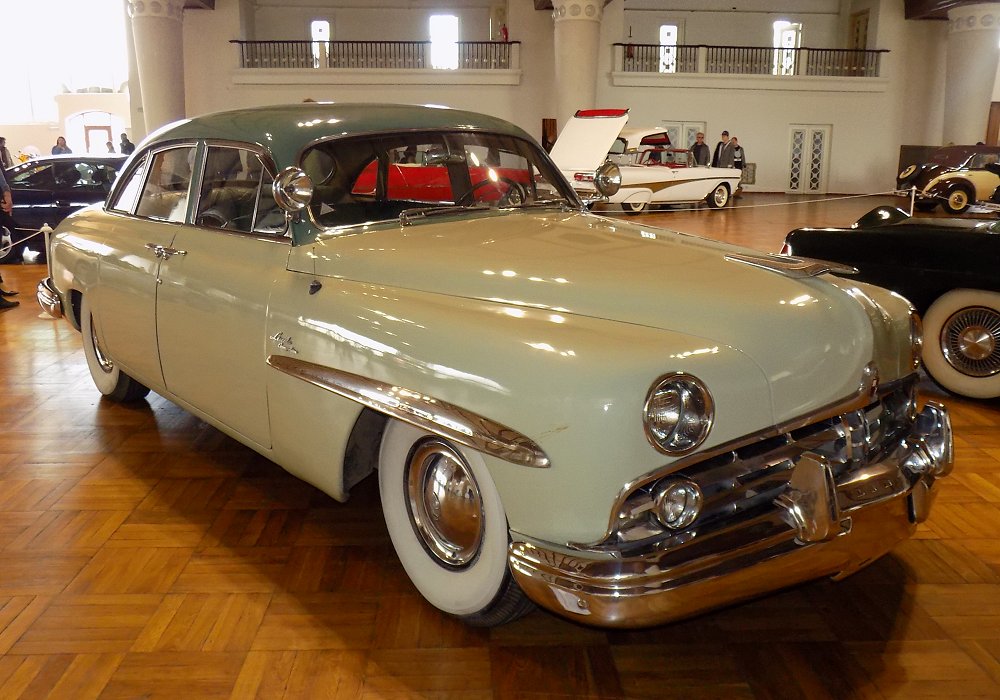
Stylistically, the Lincoln Cosmopolitan Sport Sedan was a statement of sleek modernity. Its body was clean and devoid of the heavy ornamentation that had characterized many prewar designs. The front end featured a low, wide grille flanked by integrated headlights set into rounded fenders, creating a sense of width and power. The long hood and short rear deck reflected the new “three-box” design language that would dominate the 1950s. Chrome was used sparingly but effectively, accentuating the car’s beltline and window frames without overwhelming its form. The Sport Sedan’s roofline flowed smoothly into the rear fenders, giving it a continuous, aerodynamic silhouette that exuded elegance and motion.
Inside, the cabin of the Cosmopolitan Sport Sedan was both spacious and luxuriously appointed. The dashboard was a masterpiece of late-1940s design—broad, symmetrical, and finished in polished metal or painted enamel with chrome trim. Large, circular instruments provided clear visibility, while the controls were arranged logically for ease of operation. The front bench seat could comfortably accommodate three passengers, and the rear seat offered ample legroom and exceptional comfort. Upholstery options included fine broadcloth or leather, complemented by tasteful woodgrain or metallic accents. Every surface and fitting reflected Lincoln’s emphasis on craftsmanship and refinement.
On the road, the Cosmopolitan Sport Sedan delivered a driving experience defined by quiet confidence. The big flathead V8 provided abundant torque, allowing the car to glide through traffic or climb hills with minimal effort. Its low-revving smoothness created a sensation of effortless power, while the suspension soaked up bumps and uneven surfaces with serene composure. The combination of hydraulic brakes and the emerging automatic transmission technology gave the driver an unusual sense of ease—luxury not just in appearance, but in operation. Passengers were enveloped in silence and comfort, making long journeys remarkably relaxing.
The Cosmopolitan range quickly established itself as Lincoln’s flagship, and the Sport Sedan became a symbol of prestige in postwar America. It was chosen as the official White House limousine for President Harry S. Truman, with several specially built examples featuring extended wheelbases and convertible parade configurations. The association with presidential use added to the model’s aura of authority and refinement.
Although the Cosmopolitan remained in production only until 1951, its influence was lasting. It redefined Lincoln’s image from a maker of traditional, coachbuilt luxury cars into a modern manufacturer of technologically advanced automobiles that could stand alongside Cadillac in innovation and performance. The 1949–1951 Cosmopolitans also paved the way for Lincoln’s success in the 1950s, culminating in the introduction of the Continental Mark II—a spiritual successor to Edsel Ford’s prewar masterpiece.
Today, the Lincoln Cosmopolitan Sport Sedan is celebrated as one of the landmark designs of postwar American luxury motoring. Collectors admire its clean styling, mechanical sophistication, and historical significance as the car that ushered Lincoln into the modern era. Well-restored examples highlight its fluid lines, subdued detailing, and smooth V8 performance, all of which make it a pleasure to drive even decades later.
The Lincoln Cosmopolitan Sport Sedan captured a rare balance of grace and strength. It was neither flamboyant nor conservative, but perfectly poised between innovation and tradition—a car that reflected America’s optimism in the years after the war. In its quiet power, restrained design, and superb craftsmanship, it embodied the enduring Lincoln ideal: luxury not measured by excess, but by integrity, refinement, and timeless style.