Description
The Lincoln KA 514 Town Sedan was one of the most elegant and finely engineered luxury automobiles of the early 1930s, representing the transition of Lincoln from the stately engineering purity of the Henry Leland era to the sophisticated design aesthetic championed by Edsel Ford. Introduced for the 1932 model year, the KA series ran alongside the flagship KB V12 cars and offered buyers a slightly smaller, more affordable Lincoln that retained the same craftsmanship, refinement, and prestige for which the marque had become renowned. The KA 514 Town Sedan, in particular, captured the essence of understated American luxury during one of the most challenging economic periods in history.
The 1932 model year marked an important turning point for Lincoln. That year, the company introduced two distinct series: the KA, powered by a V8, and the KB, powered by a new V12. Both shared similar chassis layouts, body designs, and levels of finish, but the KA was lighter, shorter in wheelbase, and more accessible in price, broadening Lincoln’s appeal to a clientele who desired the marque’s excellence without the expense of a full twelve-cylinder car.
Under the hood, the KA 514 Town Sedan was powered by a refined 6.3-litre (384 cubic inch) L-head V8 engine, a development of Lincoln’s earlier powerplants. This smooth and durable engine produced around 125 horsepower at 3,400 rpm—ample power for a car of its size—and was paired with a three-speed manual transmission featuring synchromesh on the upper gears. The powertrain delivered an effortless, almost silent surge of torque, capable of propelling the car to a top speed near 85 mph. Its refinement and smoothness were so remarkable that many contemporary drivers mistook it for a twelve-cylinder unit.
The chassis of the KA 514 featured a wheelbase of 136 inches—slightly shorter than the KB’s 145-inch frame—but retained the same robust ladder-type construction. The suspension consisted of semi-elliptic leaf springs and hydraulic shock absorbers, tuned to deliver an exceptionally supple ride. Four-wheel mechanical brakes with vacuum assist provided strong, consistent stopping power, and steering was precise and light for a car of its weight. Lincoln’s emphasis on solid engineering and fine detailing made the KA feel remarkably stable and well-balanced, even on rough or unpaved roads.
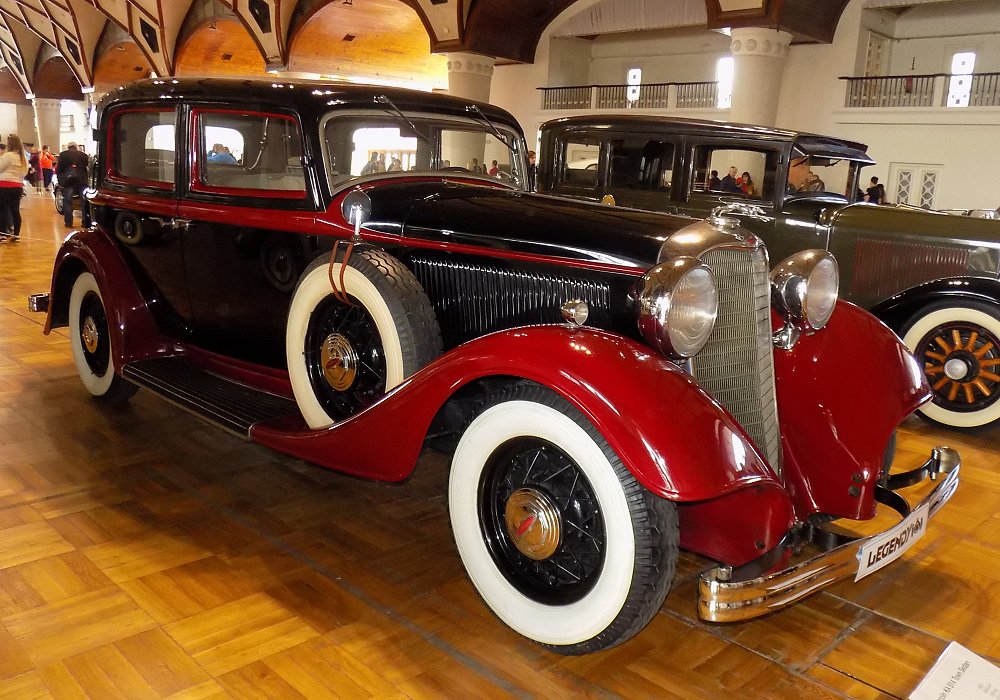
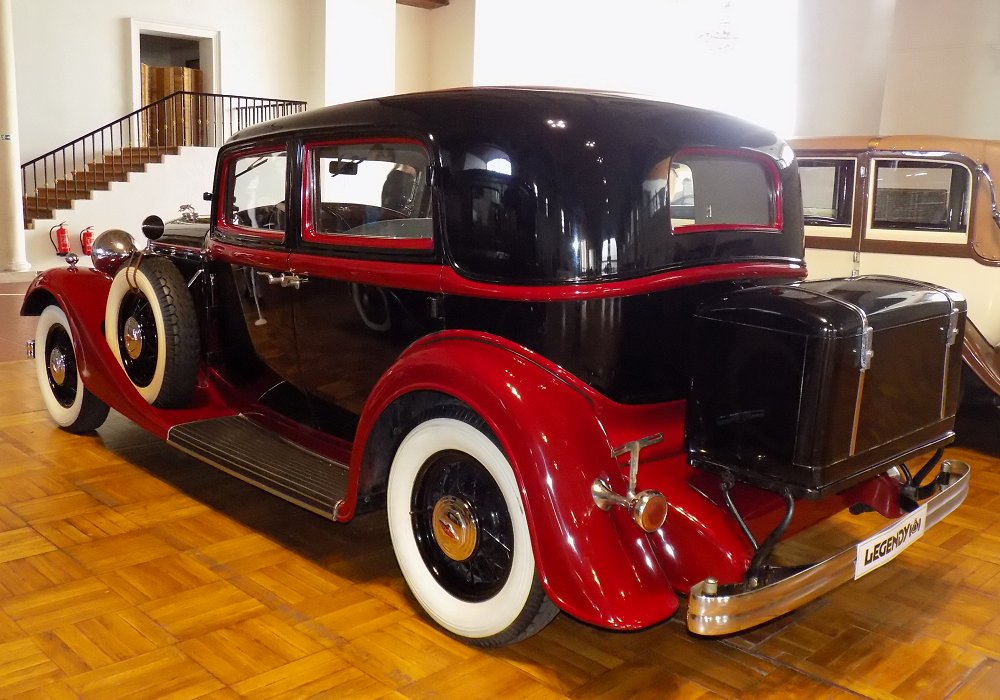
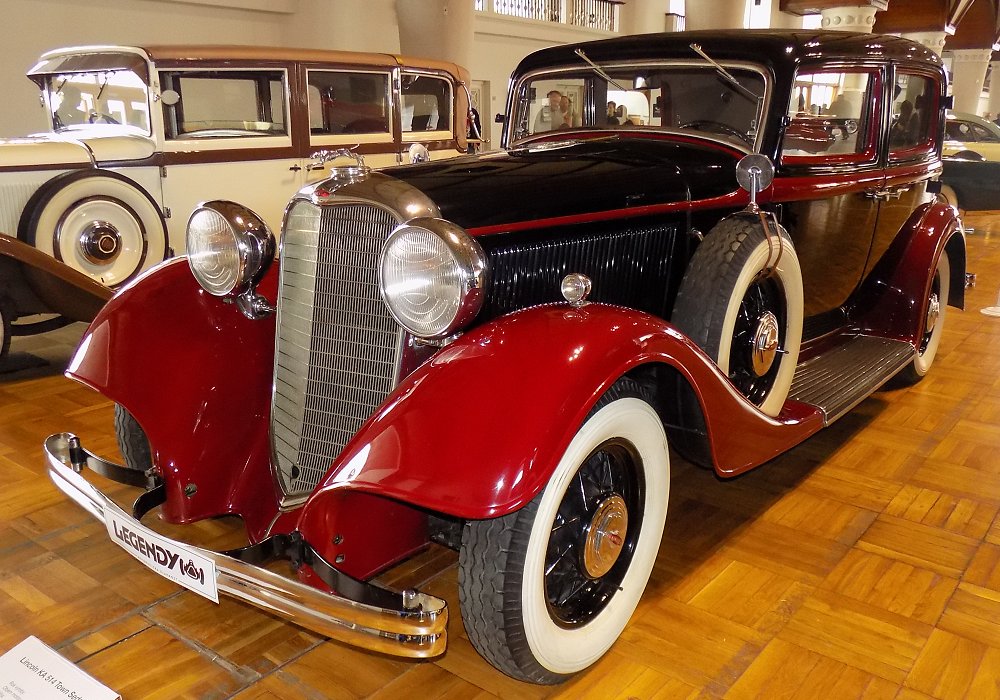
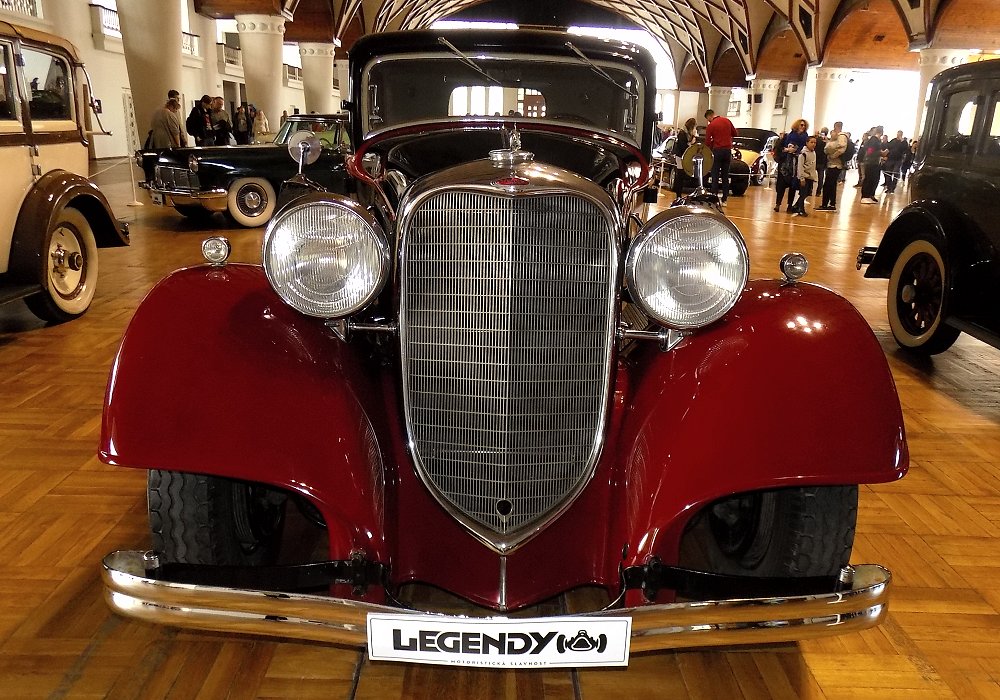
The Town Sedan body style was among the most graceful and popular configurations offered on the KA chassis. Its proportions were elegant and dignified, characterized by a long bonnet, gently curving front wings, and a sweeping roofline that flowed harmoniously into the rear quarters. The upright radiator grille, flanked by large chromed headlamps and often topped by Lincoln’s distinctive greyhound mascot, gave the car a commanding presence. The Town Sedan’s semi-formal design featured a fixed roof and fully enclosed passenger compartment, making it ideal for both owner-drivers and those who preferred to employ a chauffeur.
The bodywork was built to the highest standards, often by Lincoln’s in-house craftsmen at the Ford-owned plant, though many cars were also delivered with custom bodies by renowned American coachbuilders such as Judkins, Brunn, and LeBaron. The fit and finish were impeccable—doors closed with a reassuring solidity, panels were flawlessly aligned, and chrome trim was tastefully applied. The level of craftsmanship reflected Edsel Ford’s belief that a true luxury automobile should be elegant, not ostentatious.
Inside, the KA 514 Town Sedan offered an environment of refined comfort and quiet sophistication. The cabin was richly appointed with broadcloth or leather upholstery, deep carpeting, and polished wood veneer accents. The dashboard was a model of understated Art Deco elegance, featuring an array of finely detailed gauges and switches housed within a symmetrical metal fascia. Seating for five was spacious and deeply cushioned, and the large windows provided excellent visibility. Every control was designed for smoothness and precision, from the light clutch pedal to the easy-turning steering wheel.
On the road, the KA Town Sedan exemplified Lincoln’s philosophy of “graceful power.” The V8 engine delivered strong acceleration with minimal effort, and the car cruised serenely at highway speeds, the engine’s sound barely audible above the whisper of wind. The ride quality was supple and controlled, absorbing road imperfections with ease, while the handling inspired confidence—balanced, predictable, and surprisingly agile for such a substantial vehicle.
In the marketplace, the Lincoln KA appealed to a discerning clientele who appreciated quality and engineering excellence over flamboyance. Priced at around $4,200—still a considerable sum during the Great Depression—it was aimed at business executives, professionals, and government officials who required a car that conveyed authority without ostentation. The Town Sedan’s blend of formality, comfort, and reliability made it especially popular among conservative buyers who preferred traditional luxury.
Production of the KA 514 lasted only for the 1932 model year, as Lincoln transitioned toward an all-V12 lineup in subsequent years. However, its influence endured. The refinement of its V8 engine, the sophistication of its chassis, and the elegance of its design helped define the standards that would carry Lincoln through the 1930s as one of America’s foremost luxury marques.
Today, the Lincoln KA 514 Town Sedan is recognized as a classic of the early Depression era—a car that balanced mechanical excellence with timeless design. Collectors admire it for its engineering integrity, smooth V8 performance, and graceful coachwork. Restored examples are prized for their quiet dignity and for representing a period when Lincoln, under Edsel Ford’s direction, created cars that embodied refinement and restraint rather than excess.
The Lincoln KA 514 Town Sedan remains a symbol of an era when luxury was measured not by extravagance, but by precision, craftsmanship, and poise. It was a car that defined Lincoln’s maturity as a manufacturer of fine automobiles—powerful, elegant, and built with a level of care that has ensured its place among the most distinguished American cars of the Classic Era.