Description
The Lincoln KB Sedan was one of the most luxurious and technically sophisticated automobiles of the early 1930s—a grand, imposing machine that represented the pinnacle of American automotive design and craftsmanship during the height of the Classic Era. Introduced in 1932, the KB succeeded the earlier Model K series and embodied Lincoln’s commitment to building cars of exceptional refinement, performance, and dignity. With its powerful V12 engine, exquisite coachwork, and smooth, effortless performance, the KB was a car that could stand proudly beside the finest offerings from Packard, Pierce-Arrow, and Cadillac.
The KB was launched during a time of immense economic uncertainty. The Great Depression had devastated the luxury car market, yet Lincoln—under the leadership of Edsel Ford—continued to build automobiles that reflected artistry and engineering excellence rather than mere opulence. The KB was designed as a statement of confidence: a car for those who demanded the very best even in difficult times. It replaced the K-series Model KA and continued to serve as Lincoln’s top-of-the-line model until 1934.
At the heart of the KB lay a magnificent 7.3-litre (448 cubic inch) 65-degree V12 engine, designed and built entirely in-house by Lincoln. This smooth and silent powerplant produced 150 horsepower, a figure that placed it among the most powerful American engines of its era. The V12’s design emphasized refinement as much as performance, with a long stroke providing tremendous torque and near-perfect balance. It was coupled to a three-speed manual gearbox with synchromesh on the upper gears, ensuring smooth gear changes and relaxed cruising. On the open road, the KB could easily achieve speeds over 90 mph, with effortless acceleration and uncanny smoothness.
The chassis was a robust, beautifully engineered piece of work, featuring a rigid ladder frame with a wheelbase of 145 inches for the sedan and up to 147 inches for custom-bodied versions. Suspension consisted of semi-elliptic leaf springs at both ends, paired with hydraulic shock absorbers that gave the car a supple, composed ride. The braking system employed large, mechanically operated drum brakes on all four wheels, with vacuum assist for improved modulation and stopping power. Steering was light and accurate for a car of its size, reflecting the refinement that had become a Lincoln hallmark.
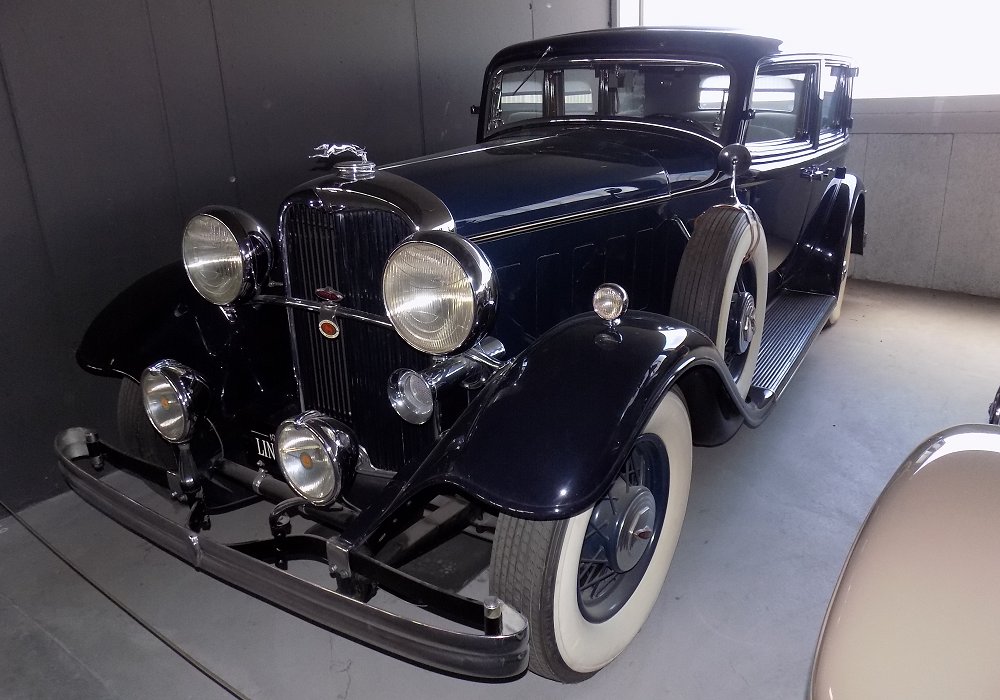
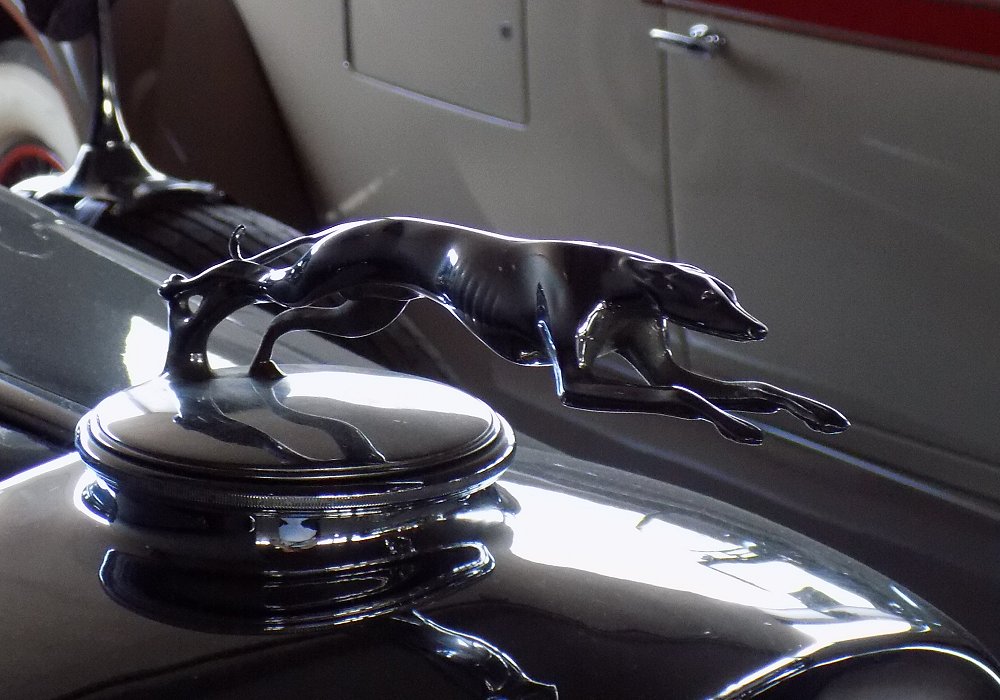
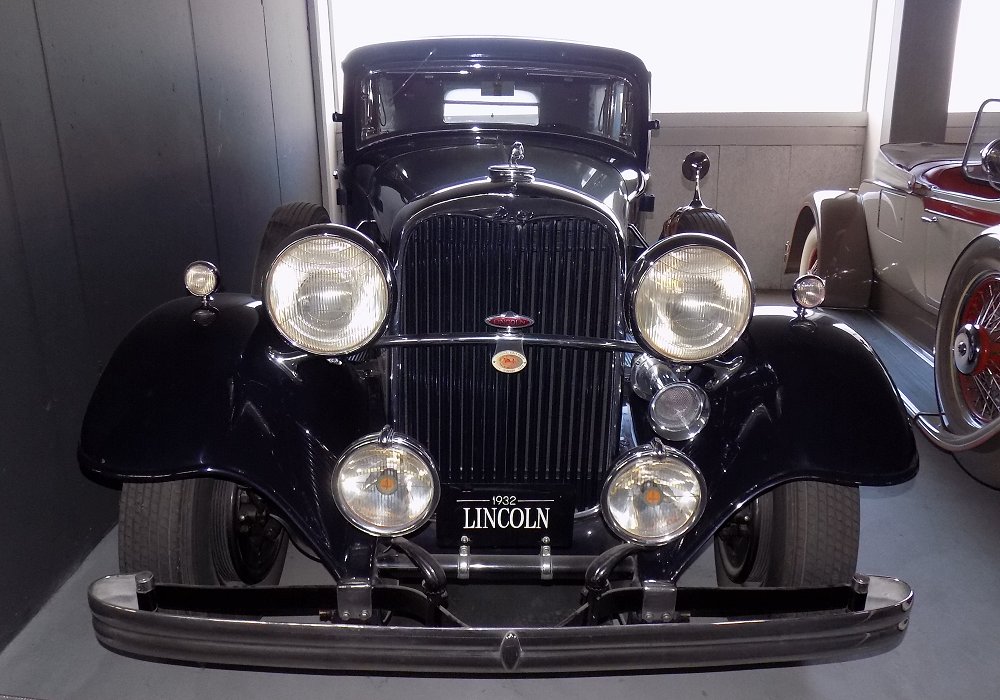
Stylistically, the Lincoln KB Sedan was a masterpiece of understated elegance. While Ford had the financial means to equip Lincoln with advanced manufacturing facilities, Edsel Ford’s personal influence ensured that the marque’s aesthetic direction remained distinctively tasteful. The KB’s long, sweeping bonnet, tall upright radiator grille, and flowing fenders gave it a commanding presence. The car’s proportions were perfectly judged: low in stance yet grand in scale. The radiator grille was flanked by large chromed headlamps and often topped with the graceful greyhound mascot, one of the most recognizable symbols of Lincoln during the 1930s.
The bodywork for the KB was supplied by some of America’s most renowned coachbuilders, including Brunn, Judkins, Dietrich, and LeBaron. Each offered bespoke interpretations of the KB chassis, ranging from formal limousines to sporty coupés and elegant convertibles. The sedan body style, one of the most popular, was typically characterized by its balanced proportions, flowing roofline, and finely detailed trim. The quality of fit and finish was extraordinary, with doors that closed solidly, glass that sealed perfectly, and interiors that exuded quiet luxury.
Inside, the KB Sedan was an environment of calm sophistication. The cabin was trimmed in the finest materials available—hand-polished wood veneers, supple leather or broadcloth upholstery, thick carpeting, and gleaming chrome accents. The dashboard was simple but elegant, housing beautifully designed gauges and controls. The car offered seating for up to five passengers in exceptional comfort, with deep, spring-cushioned seats, generous legroom, and a sense of serenity enhanced by the near-total absence of vibration or mechanical noise from the engine.
On the road, the Lincoln KB delivered an experience that defined the American luxury ideal of the early 1930s. The massive V12 engine produced power so smoothly that passengers often described the car as gliding rather than driving. Acceleration was effortless, the gear changes almost imperceptible, and the ride quality unmatched for the period. The KB could cruise for hours at high speeds with minimal driver fatigue—a testament to Lincoln’s mastery of mechanical refinement.
The KB was also notable for its understated prestige. While competitors like Cadillac and Duesenberg often emphasized flamboyant styling and performance, Lincoln cultivated an image of quiet dignity and craftsmanship. It was a car chosen by industrialists, diplomats, and statesmen who valued substance over spectacle. The White House used Lincoln KBs as official vehicles during the early 1930s, reinforcing the model’s association with refinement and authority.
Despite its excellence, the KB’s timing was unfortunate. Introduced during the depths of the Depression, it was priced beyond the reach of most buyers—around $4,000 to $6,000 depending on body style, at a time when a typical family car cost less than $1,000. Only a few hundred KBs were built between 1932 and 1934, making it one of the rarest and most collectible Lincolns today.
When production ended, the KB gave way to the Lincoln K V12, which retained the same chassis and engine but was gradually simplified and restyled to reflect changing tastes and economic realities. Yet the KB remains the definitive example of pre-war Lincoln craftsmanship—the car that best expressed the company’s vision of what a luxury automobile could be.
Today, the Lincoln KB Sedan is revered by collectors and historians as one of the great classics of its age. Its combination of beauty, performance, and refinement represents the zenith of Lincoln’s early achievements. Restored examples command high regard at concours events, celebrated for their engineering purity and quiet grandeur.
The Lincoln KB was more than a car; it was a statement of confidence and artistry at a time when such qualities were rare. Built with precision, styled with restraint, and powered by one of the finest engines of its generation, it stands as a testament to Edsel Ford’s belief that true luxury lies not in excess, but in excellence.