Description
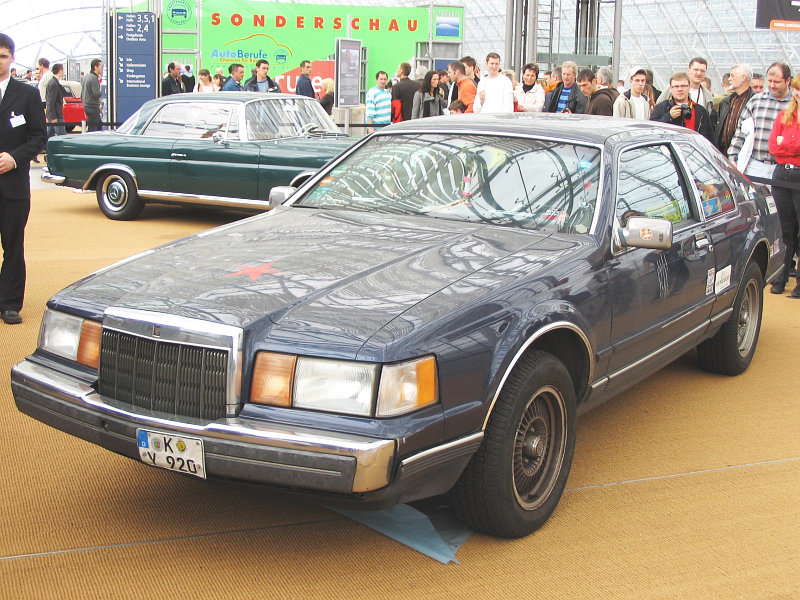
The Lincoln Continental Mark VII marked one of the most significant turning points in Lincoln’s history—a complete reimagining of what an American luxury coupe could be. Produced from 1984 to 1992, it represented the shift from the stately, heavy luxury of the 1970s to a leaner, more modern interpretation of prestige that embraced technology, performance, and aerodynamic design. It was the first Lincoln engineered for the contemporary age: efficient, refined, and distinctly American, yet with a distinctly European sense of proportion and purpose.
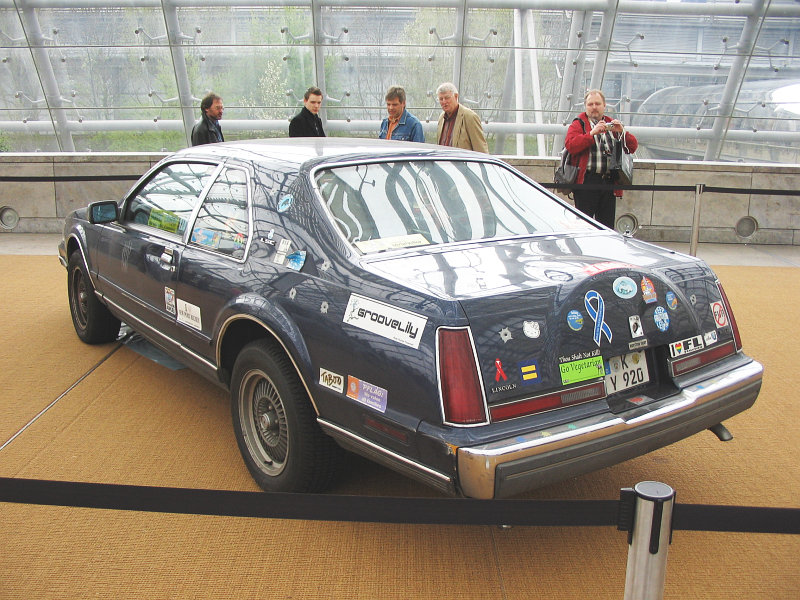
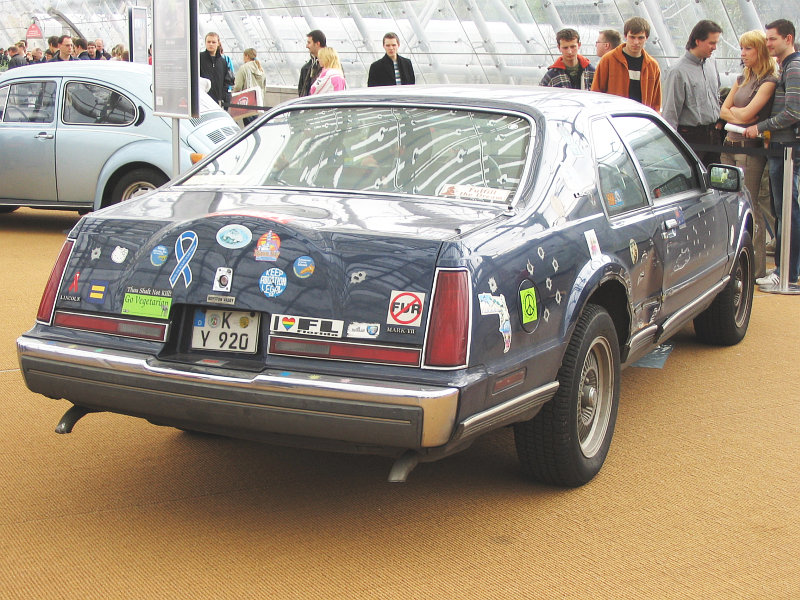
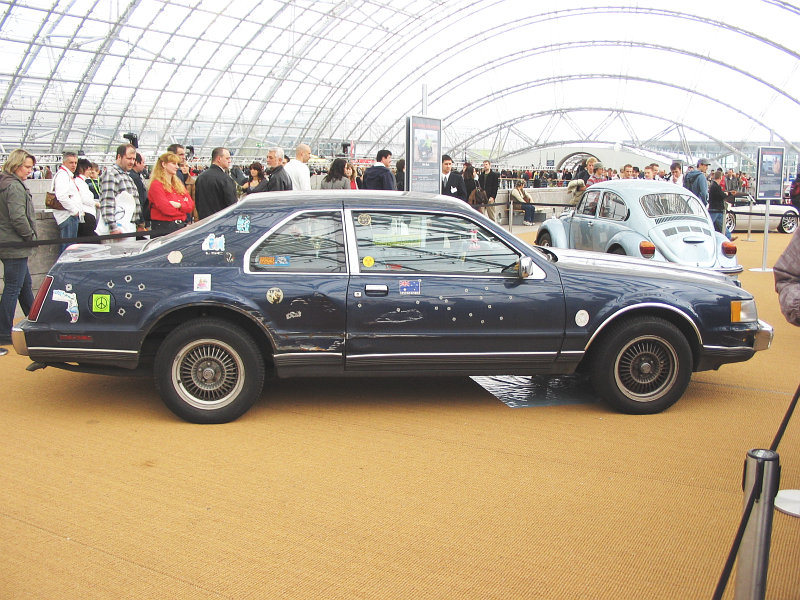
The Mark VII was developed from the Ford Fox platform, shared with the Mustang and Thunderbird, giving it a lighter, more agile foundation than any previous Lincoln coupe. But while it shared its underpinnings with more mainstream models, it was built to a far higher standard of sophistication and refinement. Measuring over 17 feet long, the Mark VII was still substantial, yet its smooth, flowing lines and low roofline gave it a modern, almost understated elegance. Gone were the upright grilles, vinyl roofs, and squared-off edges of the Mark V and VI—replaced by a sleek, wind-tunnel-tested body that prioritized aerodynamics and efficiency.
Power came from a range of engines over its production run, but the most famous and enduring was Ford’s 5.0-litre (302 cubic inch) V8, which became the backbone of the Mark VII lineup. Early models offered around 140 horsepower, but by 1986 Lincoln introduced a high-output version—the same engine found in the Mustang GT—delivering 225 horsepower and 300 lb-ft of torque. This made the Mark VII one of the fastest American luxury coupes of its day. Power was transmitted through a smooth-shifting four-speed automatic overdrive transmission that allowed for low-rev highway cruising and strong midrange performance. A small number of early Mark VIIs were also offered with BMW’s 2.4-litre turbo diesel inline-six, a rare and short-lived experiment that combined European efficiency with American luxury.
The Mark VII was notable for its advanced engineering. It was the first American production car to feature four-wheel anti-lock disc brakes (developed in collaboration with Teves of Germany) and one of the first to offer four-wheel air suspension. The air springs automatically adjusted to maintain ride height and stability regardless of load, and the system gave the car a uniquely smooth, level ride over uneven surfaces. Combined with precise rack-and-pinion steering and an independent front suspension, the Mark VII handled with a composure and agility that were revolutionary for a Lincoln. It was a car that could cruise serenely one moment and respond confidently the next—an ideal balance of comfort and control.
Stylistically, the Mark VII was a masterclass in understated elegance. The front end was defined by flush-mounted composite headlamps—the first ever used on an American production car—flanking a narrow, vertical Lincoln grille. The hood and fenders flowed cleanly into the doors, and the body sides were free of excess trim. Chrome was used sparingly, highlighting key lines rather than dominating them. The rear featured sharply cut tail lamps integrated into the bumper, with a subtle lip on the trunk lid to improve aerodynamics. The car’s drag coefficient of just 0.38 was a dramatic improvement over its predecessors and helped both performance and fuel efficiency.
Inside, the Mark VII reflected Lincoln’s tradition of luxury but with a modern, technological focus. The cabin was spacious, refined, and carefully crafted. Deep, comfortable seats—available in fine leather or plush velour—offered excellent support for long journeys. The driver’s environment was advanced for its time: early models featured a fully digital instrument cluster displaying speed, fuel, and other key data in glowing green numerals, while later versions returned to more conventional analog gauges with classic styling. Standard equipment included automatic climate control, cruise control, power-adjustable seats, power windows and locks, and a premium sound system. Optional features included a trip computer, keyless entry system, and onboard diagnostics—all cutting-edge amenities in the 1980s.
Lincoln also offered several distinct variants of the Mark VII to cater to different tastes. The base model provided traditional Lincoln luxury, while the Versace edition emphasized high fashion and interior opulence. The Bill Blass edition added special color schemes and fine detailing, continuing Lincoln’s collaboration with renowned designers that began with the Mark IV. The performance-oriented LSC (Luxury Sport Coupe) became the flagship, combining the most powerful V8 with a sport-tuned suspension, alloy wheels, and body-colored trim. The LSC’s blend of refinement and athleticism earned it respect even among European luxury coupe owners.
On the road, the Mark VII offered a driving experience unlike any previous Lincoln. The ride was smooth and composed, yet the chassis provided an uncommon level of control and confidence. The V8 delivered a deep, refined surge of power, the transmission shifted seamlessly, and the cabin remained serenely quiet. The air suspension soaked up imperfections without isolating the driver completely, allowing a sense of connection rare among luxury cars of the period. The combination of effortless highway cruising and nimble handling gave the Mark VII a dual character—part grand tourer, part high-speed cruiser.
Throughout its production run, the Mark VII continued to evolve. The 1986 introduction of the high-output V8 transformed its performance profile, and a 1988 refresh added subtle styling updates, improved interiors, and enhanced electronics. By the early 1990s, the car had matured into one of the most refined and technologically advanced American coupes available.
Production of the Lincoln Continental Mark VII ended in 1992, replaced by the more aerodynamic Mark VIII—a car that continued Lincoln’s move toward modern luxury. But the Mark VII remains a standout, not only for its design and engineering but for what it represented: the reinvention of the American luxury car.
Today, the Lincoln Continental Mark VII is recognized as a milestone in Lincoln’s evolution. It combined the brand’s traditional craftsmanship and comfort with a newfound emphasis on performance, technology, and modern design. Collectors and enthusiasts prize the LSC versions in particular, but all Mark VIIs are appreciated for their rarity, elegance, and innovative spirit.
The Lincoln Continental Mark VII was more than a new model—it was a new philosophy. It proved that American luxury could be both graceful and dynamic, blending timeless refinement with contemporary performance and technology. Sleek, poised, and quietly confident, it redefined Lincoln for a new generation and remains one of the most forward-thinking cars the marque ever built.