Description
The Lincoln Sedan V12 was the embodiment of refined American luxury during the late 1930s and early 1940s, a car that combined the serene power of Lincoln’s smooth twelve-cylinder engine with dignified styling and superb craftsmanship. Designed under the guidance of Edsel Ford, it reflected his belief that true luxury should be elegant, understated, and beautifully engineered rather than ostentatious. Positioned above the Zephyr and alongside the Continental in Lincoln’s lineup, the V12 Sedan offered comfortable, formal motoring for those who valued substance and refinement over spectacle.
By the mid-1930s, Lincoln had established a reputation for technical excellence and quiet prestige, but the luxury car market was evolving. The introduction of the streamlined Zephyr in 1936 brought Lincoln into a new era, combining modern aerodynamics with advanced engineering. The Sedan V12, built upon that foundation, offered a more spacious and formal expression of the same principles. It appealed to successful professionals, diplomats, and government officials who required an automobile that projected confidence and authority without excess.
At the heart of the Lincoln Sedan V12 was the company’s renowned 4.8-litre (292 cubic inch) liquid-cooled V12 engine, derived from the Zephyr. Producing around 120 horsepower, it was designed for smoothness rather than sheer speed. The long-stroke configuration and balanced crankshaft gave it a turbine-like quality, with virtually no vibration. Power was transmitted through a three-speed manual gearbox with optional overdrive, allowing relaxed cruising even at higher speeds. On the open road, the car delivered steady, quiet performance, its twelve-cylinder powerplant humming almost imperceptibly beneath the long bonnet.
The Sedan’s chassis used the same advanced unit-body construction introduced with the Zephyr, which integrated the frame and body into one rigid structure. This design gave the car exceptional strength while keeping its weight down, improving handling and comfort. With a wheelbase of 125 inches, the Sedan V12 offered generous cabin space while maintaining balanced proportions. The suspension combined independent front springs with semi-elliptic rears, aided by hydraulic shock absorbers, giving a soft, composed ride. Four-wheel hydraulic brakes provided progressive, reliable stopping power—a technical advantage over many contemporary competitors still using mechanical systems.
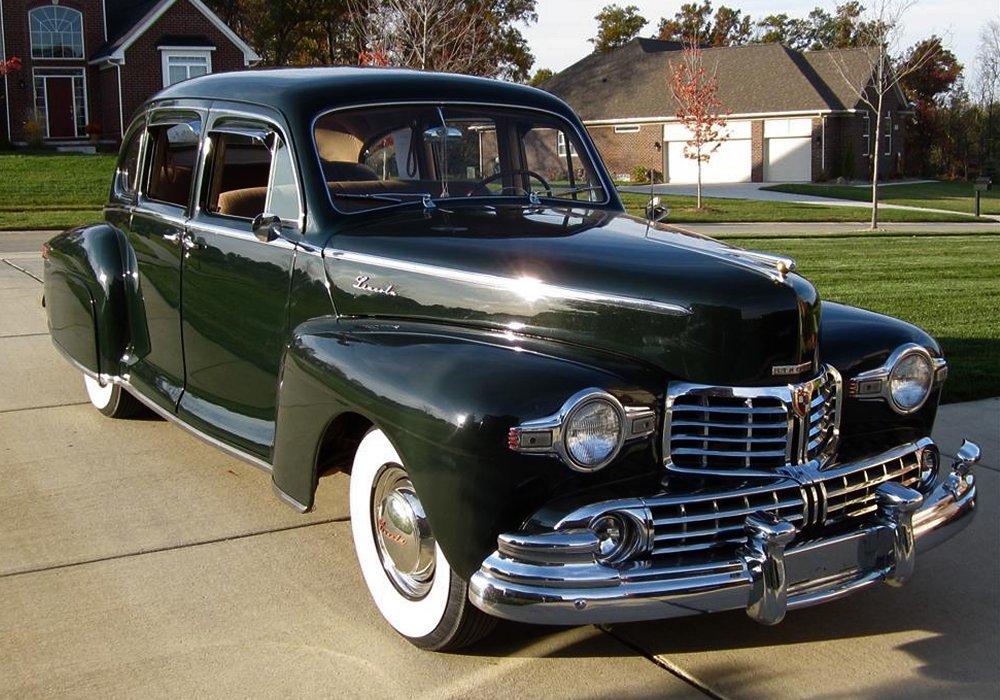
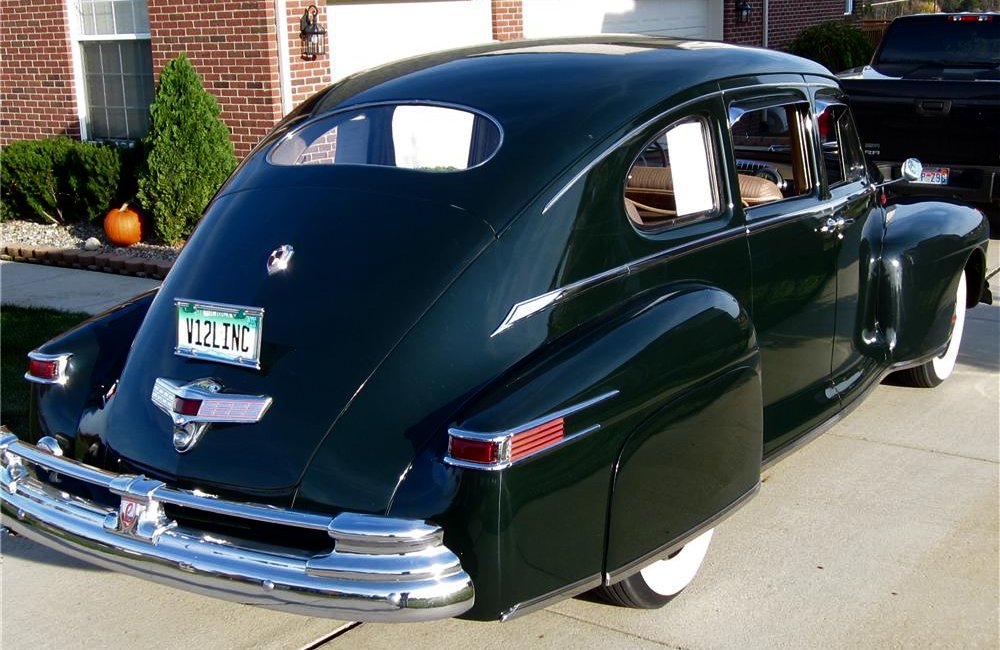
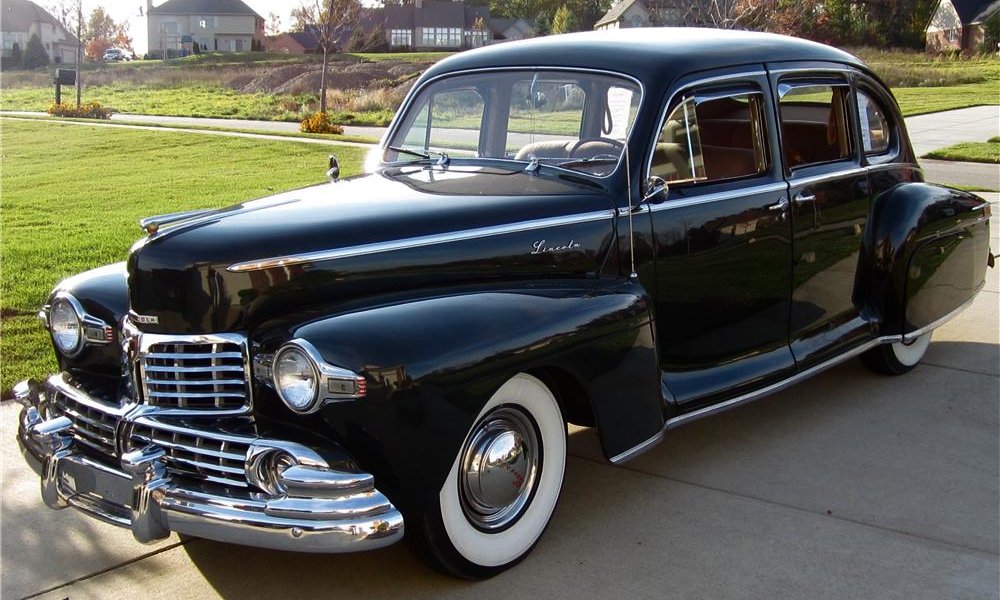
The design of the Lincoln Sedan V12 reflected the aerodynamic principles that defined Edsel Ford’s design philosophy. Its body, shaped in collaboration with designer Eugene “Bob” Gregorie, flowed gracefully from front to rear with minimal ornamentation. The tall but narrow radiator grille, divided vertically by a chrome centerline, created a distinctive Lincoln identity, while the fenders swept smoothly into the body with subtle curvature. The long bonnet, flowing roofline, and gracefully tapered tail all contributed to a sense of motion and poise even when stationary. The car’s proportions were perfectly judged—elegant, modern, and harmonious without extravagance.
Inside, the Sedan was designed to offer a calm and luxurious environment. The interior accommodated five or six passengers, depending on configuration, and was finished to the highest standards of the period. Upholstery options included fine leather or plush broadcloth, complemented by hand-polished wood veneer trim on the doors and dashboard. The instrumentation was neatly arranged in a symmetrical layout, featuring clear, circular gauges and softly illuminated dials. Chrome accents were used sparingly but effectively, adding subtle brilliance without overwhelming the design.
Passenger comfort was a defining feature of the Lincoln Sedan V12. The seating was deep and resilient, the cabin insulated from mechanical and road noise, and the ride smooth enough to make long journeys effortless. Heating and ventilation were thoughtfully integrated, and optional accessories such as radios and cigarette lighters enhanced the car’s sense of quiet sophistication. The attention to detail extended to every element, from the smooth operation of the window cranks to the precise fit of the doors.
Driving the Sedan V12 was an experience of effortless refinement. The car’s steering was light and direct, aided by its balanced chassis, and the V12 engine delivered power with a continuous, velvety flow. Acceleration was steady and unhurried, perfectly suited to the car’s character. On the highway, it cruised comfortably at 70 mph, the engine turning quietly beneath the long hood. The hydraulic brakes provided confident deceleration, and the overall sense was one of composure and control—a car that carried its occupants in complete serenity.
The Lincoln Sedan V12 was offered in several variations during its production run between 1936 and 1948, including the Zephyr-based models of the late 1930s and the postwar redesigns that continued Lincoln’s emphasis on restrained luxury. The prewar Sedans, however, are often considered the most graceful, with their flowing lines and distinctive grilles. In the years leading up to World War II, the car became a favourite among government officials and executives, as well as a symbol of American engineering excellence abroad.
Production numbers remained relatively low compared to Ford’s mass-market cars, ensuring exclusivity. Each Lincoln Sedan was built with meticulous care and attention to finish, reflecting its status as a premium automobile. Even after the war, when Lincoln resumed production with updated styling, the spirit of the V12 cars remained intact—a blend of power, refinement, and modern design that few rivals could match.
Today, the Lincoln Sedan V12 is regarded as one of the quintessential expressions of American prewar luxury. Collectors value its smooth twelve-cylinder performance, elegant proportions, and the craftsmanship that reflects the best traditions of the Lincoln marque. Restored examples are admired for their quiet dignity and timeless style—qualities that make them stand apart from the more flamboyant classics of the same era.
The Lincoln Sedan V12 was more than a luxury automobile—it was a statement of refinement and modernity at a time when the world was changing rapidly. Combining aerodynamic design, advanced engineering, and the effortless grace of its V12 engine, it embodied the ideal of understated excellence. Even today, it remains a lasting symbol of Edsel Ford’s vision: that true luxury is found not in excess, but in elegance, balance, and the pursuit of perfection.