Description
The Lincoln Zephyr V12 Convertible was one of the most striking and influential American automobiles of the late 1930s, representing the perfect balance of aerodynamic design, advanced engineering, and understated luxury. Introduced in 1937 as part of the expanding Zephyr range, the convertible embodied Edsel Ford’s vision of a modern, streamlined Lincoln that combined mechanical refinement with graceful, flowing lines. It stood apart from the more traditional luxury cars of its day, symbolizing a new design philosophy that emphasized elegance through simplicity and efficiency.
The Zephyr line itself debuted in 1936 as a bridge between the Ford V8 Deluxe and the flagship Lincoln K-series. It was conceived to offer Lincoln engineering and prestige at a more accessible price, expanding the brand’s reach during a time when economic recovery was still uncertain. The Convertible model, with its distinctive low-slung profile and smooth, aerodynamic form, became one of the most admired variants and a true style leader of its era.
At the heart of the Lincoln Zephyr Convertible was its smooth and refined 4.4-litre (267 cubic inch) V12 engine, later enlarged to 4.8 litres (292 cubic inches) in subsequent years. This liquid-cooled, 75-degree V12 was designed specifically for the Zephyr and produced between 110 and 120 horsepower, depending on the model year. It delivered power with exceptional smoothness, aided by a long-stroke design and a precision-balanced crankshaft. Coupled with a three-speed manual transmission and a hypoid rear axle, the engine provided effortless, silent acceleration and a top speed approaching 90 mph—impressive performance for a luxury car of the period.
The chassis was a hallmark of modern automotive engineering. The Zephyr featured an advanced unit-body construction, in which the body and frame were integrated into a single rigid structure. This design gave the car improved strength, reduced weight, and greater resistance to vibration. Suspension was independent at the front using transverse leaf springs and wishbones, while the rear used semi-elliptic leaf springs with hydraulic dampers. The result was a car that offered a remarkably smooth ride and excellent stability at speed. Four-wheel hydraulic brakes provided confident stopping power, marking another step forward in safety and refinement.
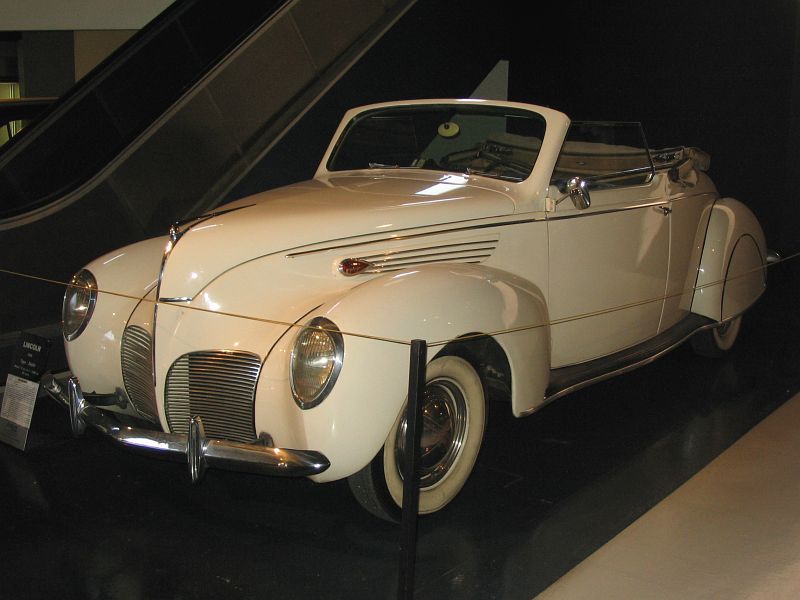
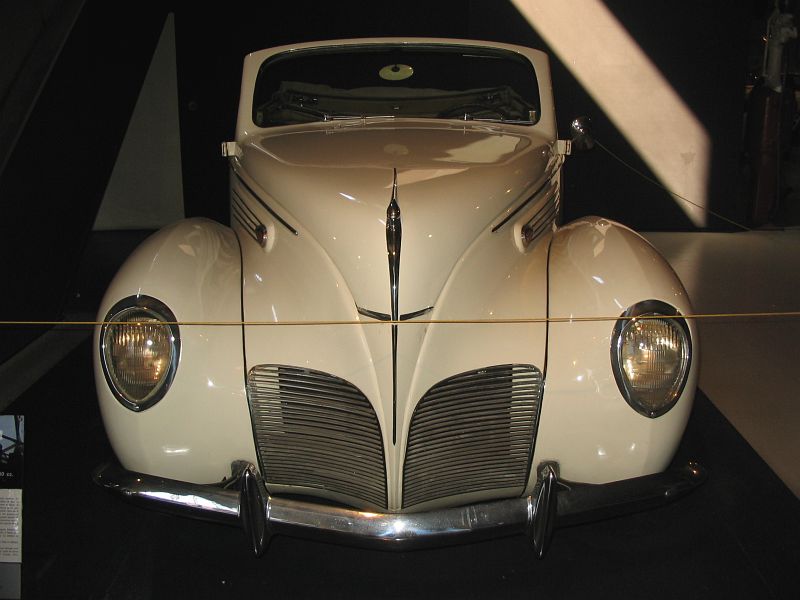
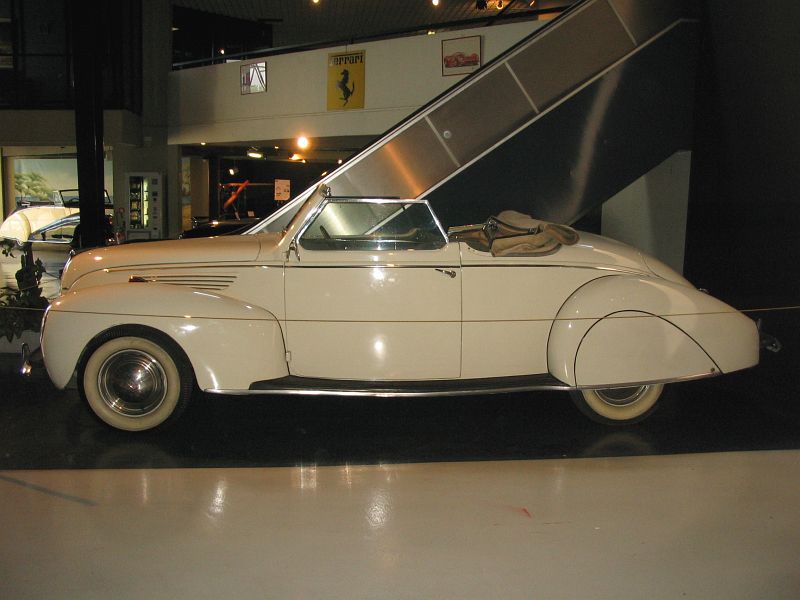
The Lincoln Zephyr Convertible’s styling, overseen by designer John Tjaarda of Briggs Manufacturing and refined under Edsel Ford’s keen eye, was inspired by aircraft aerodynamics and modernist industrial design. The long, tapering front end, teardrop fenders, and smooth, uninterrupted body surfaces gave the car a distinctive streamlined silhouette. The deeply set grille, split vertically by a chrome centerline, became one of Lincoln’s signature design features. The low roofline, gracefully curving beltline, and rear fender skirts contributed to its sleek, flowing appearance—making it one of the most beautiful American convertibles of its time.
When the folding roof was lowered, the Zephyr Convertible revealed its true elegance. The top folded neatly behind the rear seats under a streamlined metal or fabric cover, preserving the car’s graceful profile. With its top down, the Zephyr’s proportions were nearly perfect—long, low, and perfectly balanced, with a hint of European flair that reflected Edsel Ford’s admiration for contemporary design from France and Italy.
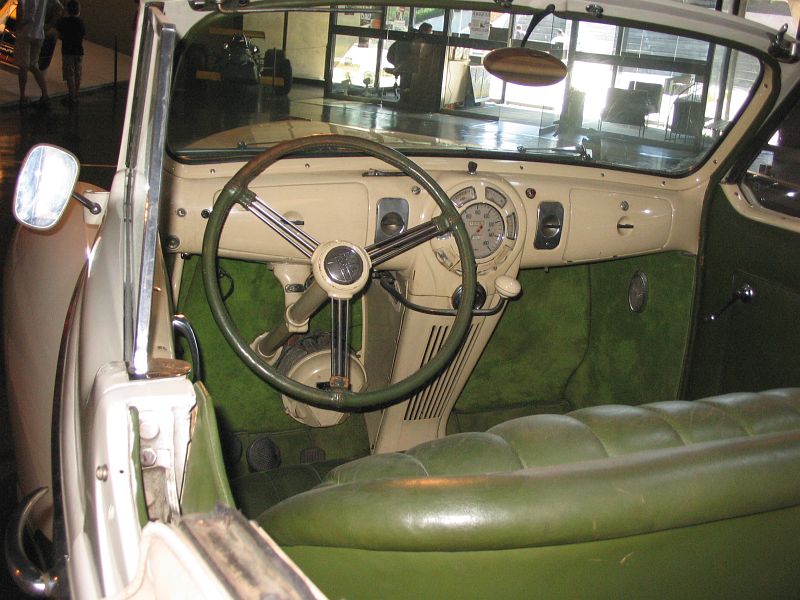
Inside, the Zephyr Convertible was a triumph of modern luxury. The dashboard was a work of art, often finished in brushed metal or rich woodgrain, with symmetrical instrumentation and chrome accents arranged in a clean, horizontal layout. Large, easy-to-read gauges reflected both practicality and style. The steering wheel was slim and elegant, and the cabin was upholstered in fine leather or broadcloth, with careful attention to stitching and trim. The seating was deep and comfortable, offering generous space for four passengers, and the overall feel was one of quiet sophistication.
Driving the Zephyr Convertible was an experience defined by refinement and ease. The V12 engine’s power delivery was smooth and almost silent, and the car accelerated with effortless grace. Its aerodynamic body allowed it to cruise comfortably at highway speeds with minimal wind noise. The steering was precise and light, and the suspension absorbed road imperfections with calm composure. The car’s combination of quietness, smoothness, and stability gave it an almost European feel—something Edsel Ford had specifically encouraged in its design.
The Zephyr’s blend of performance and design innovation made it one of the most successful models in Lincoln’s history. At a time when the traditional luxury car market was shrinking, the Zephyr revitalized Lincoln’s fortunes and redefined what an American luxury car could be. The Convertible model, in particular, became a symbol of glamour and sophistication, often seen in the hands of Hollywood actors, industrialists, and prominent social figures.
Production of the Lincoln Zephyr Convertible continued through 1942, with incremental improvements to styling and performance each year. The later models featured more pronounced grilles, integrated headlights, and a slightly more muscular stance, but the essential character of the car remained unchanged—sleek, elegant, and unmistakably modern. The onset of World War II ended civilian automobile production, but the Zephyr’s influence lived on in the first postwar Lincolns and even in the design language of Ford’s later Mercury models.
Today, the Lincoln Zephyr V12 Convertible is celebrated as one of the masterpieces of prewar American design. Collectors value it not only for its rarity and beauty but for its historical significance as the car that redefined Lincoln’s identity. Restored examples are prized for their graceful proportions, smooth V12 performance, and the serenity of their driving experience.
The Zephyr Convertible was more than just a car—it was a vision of the future. It proved that luxury could be aerodynamic, that beauty could serve function, and that a great American automobile could combine innovation, style, and craftsmanship in perfect harmony. In every sense, it was Edsel Ford’s legacy on wheels—a timeless expression of elegance and forward-thinking design that continues to captivate admirers nearly a century later.