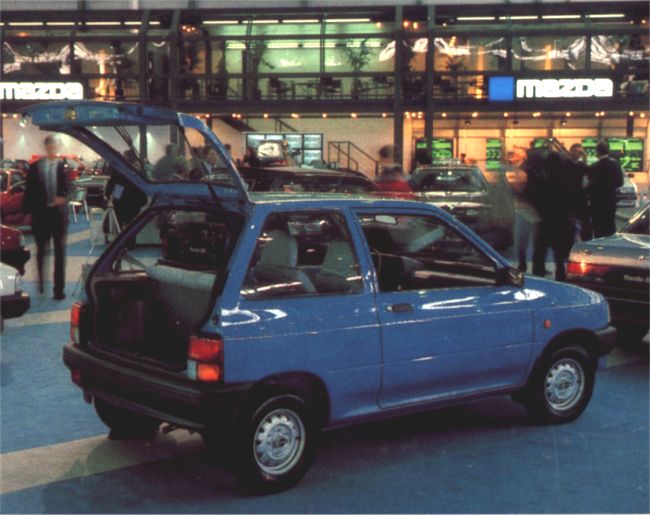
Description
The Mazda 121 nameplate represents one of Mazda’s most successful and longest-running small-car lines, appearing across several generations from the 1970s through to the early 2000s. Although the badge appeared on a variety of platforms over the decades, the spirit of the 121 was consistent: an affordable, compact and friendly urban car engineered with Mazda’s characteristic blend of reliability, efficiency and lightness. Its evolution reflects Mazda’s shifting design philosophy, market ambitions and partnership strategies, making the 121 an unusually diverse but always relevant presence in Mazda’s global story.
The earliest use of the 121 name outside Japan was in the mid-1980s, applied to export versions of the second-generation Mazda Familia. These first 121s were sensible small sedans and hatchbacks, powered by modest but durable four-cylinder engines and aimed squarely at buyers wanting simple, economical transport. They were known for their honesty and ease of ownership, and although not glamorous, they established the 121 badge as a dependable and practical entry-level Mazda.
The most iconic version of the 121 arrived in 1991 with the introduction of the third-generation model, the so-called “bubble” 121. Based on the Ford Festiva platform but heavily re-styled by Mazda, this generation gave the car a distinctive rounded silhouette, tall cabin and unusually spacious interior. The cheerful, curved styling divided opinion when new but soon earned a loyal following for its friendly personality and clever packaging. The tall roofline and upright seating position made the cabin feel airy and generous, and the car’s compact footprint and light steering made it an excellent city companion. Power came from Mazda’s proven B-series four-cylinder engines, most commonly the 1323 cc B3 unit that offered smoothness and admirable fuel economy. The drivetrain was simple but robust, and the 121 earned a reputation for being inexpensive to maintain and remarkably durable in everyday use.
Driving the bubble-shape 121 was a pleasant experience. The suspension tuning gave it a comfortable, compliant ride, and the handling was predictable and forgiving, making it ideal for new drivers. Interior refinement was modest, but the car’s simplicity contributed to its charm. It felt friendly, approachable and always ready for daily duties, and this generation of 121 is remembered fondly today as one of Mazda’s most characterful small cars.
In 1996 Mazda introduced another dramatic change when the 121 nameplate was applied to the European version of the Mazda Demio. This generation abandoned the rounded styling for a tall, upright mini-MPV shape that emphasised practicality above all else. The car maintained the 121’s traditional strengths of reliability and low running costs, but its more pragmatic body style broadened its appeal to families, commuters and urban professionals needing extra luggage space. With a flexible interior, fold-flat seats and a high roofline, this 121 offered remarkable versatility for its size. Engines ranged from small, efficient four-cylinder units to slightly more powerful options depending on market. It was not glamorous, but it was exceptionally useful and demonstrated Mazda’s willingness to rethink small-car design to meet changing customer needs.
Even after the direct use of the 121 name faded in many markets, the spirit of the model endured. The Ford Fiesta-based sedan sold as the Mazda 121 in Australia and some Asian regions in the early 2000s continued the tradition of reliable, entry-level motoring. These later versions were conventional small sedans with efficient multi-valve four-cylinder engines, clean handling characteristics and the same emphasis on low ownership costs that had defined the badge for years.
Across all its iterations, the Mazda 121 was never a performance car or a style leader, but it consistently delivered what buyers in the compact-car segment needed most: simplicity, dependability, low running costs and a friendly personality. Whether in its early Familia-based form, its memorable bubble-shape incarnation or its later more practical versions, the 121 always embodied Mazda’s commitment to smart, user-focused engineering.
Today, earlier generations of the Mazda 121 — especially the 1991–1996 bubble model — are increasingly recognised as charming and distinctive representatives of 1990s Japanese automotive design. Many survived long service lives thanks to their mechanical durability, and enthusiasts now value them for their character, affordability and nostalgia. The Mazda 121 may have worn different shapes through the years, but its legacy as one of Mazda’s most approachable and enduring small cars remains firmly intact.