
Description
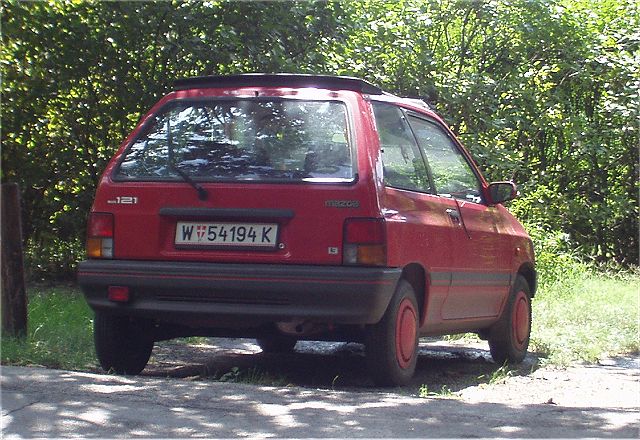
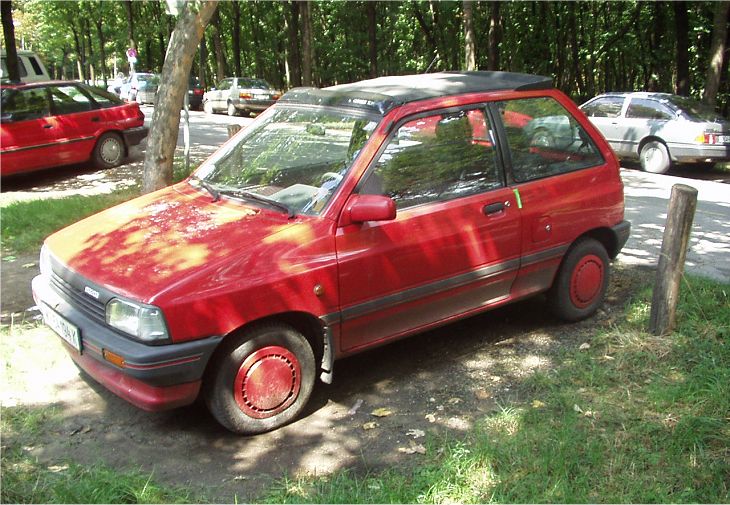
The Mazda 121 1.3 was one of the defining small cars of the early 1990s, known for its charm, practicality and distinctive rounded styling. Sold in many markets from 1991 onward, it belonged to the third generation of the 121 nameplate, sharing its platform with the Ford Festiva under the Mazda–Ford partnership. The 1.3-litre version was the most popular model, offering a strong balance of economy, reliability and everyday usability. Although positioned firmly as an affordable compact, it earned a reputation for being friendly to drive, easy to own and surprisingly well engineered for its class.
The car was powered by Mazda’s B3 1323 cc four-cylinder engine, a simple and durable SOHC unit delivering around 63–73 horsepower depending on market tuning. The engine was designed for efficiency rather than performance, but it was smooth, quiet and eager when worked through the gears. Paired with a five-speed manual or optional three-speed automatic, the 121 1.3 offered capable urban performance and enough flexibility for light motorway use. Low running costs were one of its strongest virtues, as the engine was robust, easy to service and impressively fuel-efficient.
The chassis construction followed Mazda’s familiar formula of the period. The 121 used a lightweight monocoque shell with MacPherson struts at the front and a torsion-beam axle at the rear. This gave the car a comfortable ride and predictable, confidence-inspiring handling. Steering was light and accurate, making the car especially pleasant in city driving, while the compact dimensions and tight turning circle helped it excel in urban environments. Despite its simplicity, the suspension tuning carried Mazda’s trademark friendliness and balance.
Styling was one of the 121’s most memorable features. The so-called “bubble” design gave the car a rounded, cheerful look that stood out among the more angular small cars of the time. The tall roofline maximised interior space, and the soft, curved surfaces gave it a friendly character. It was a shape that divided opinions when new but has since become something of a period icon, representing Mazda’s willingness to take risks in design during the early 1990s.
Inside, the 121 1.3 offered a cabin that prioritised space, simplicity and functionality. The high roof allowed generous headroom, and the upright seating position made the interior feel larger than expected for a small hatchback. Materials were basic but durable, and the dashboard layout was clear and straightforward. The car provided room for four adults in comfort, and the rear seat folded for extra luggage capacity. While equipment levels varied by market, many models included features such as power steering, a stereo, and optional air conditioning, making the 121 pleasant for daily use.
On the road, the Mazda 121 1.3 felt friendly and approachable. The small engine was smooth and economical, the gearbox light, and the handling characteristically tidy and forgiving. Its ride quality was better than many rivals, and refinement was respectable for its class. It was never designed as a performance car, but as an uncomplicated urban companion it excelled. Owners appreciated its reliability, low servicing costs and the general sense that it was a small car built with care and intelligence.
The Mazda 121 1.3 was popular in many markets and helped strengthen Mazda’s reputation for building dependable, user-friendly compact cars. Its combination of charm, practicality and reliability made it a strong seller in Europe, Australasia and parts of Asia. Today, surviving examples are increasingly rare, but the car is warmly remembered by enthusiasts of 1990s Japanese compacts for its distinctive looks, durable mechanicals and cheerful personality.
As an everyday car that offered real value, friendliness and long-term dependability, the Mazda 121 1.3 remains one of the most recognisable and characterful small hatchbacks of its era.