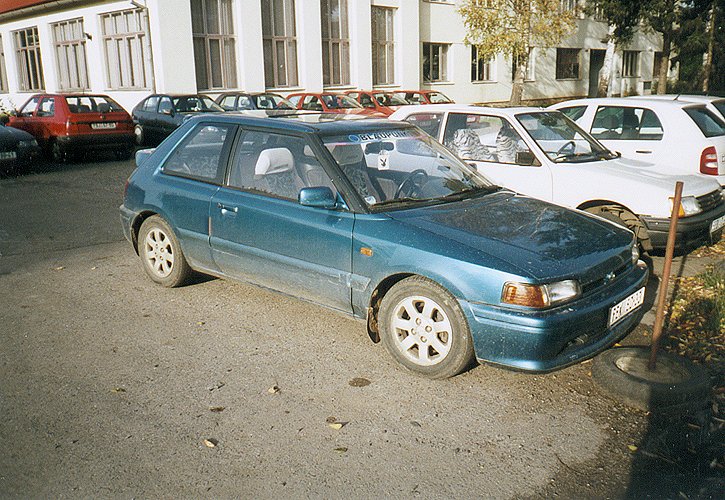
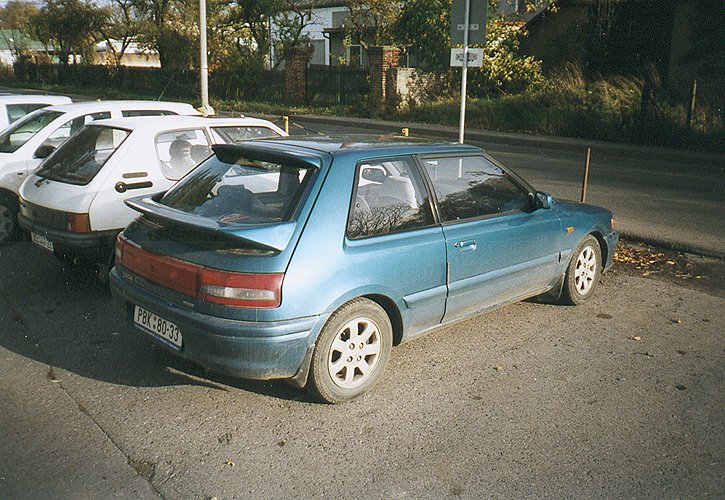
Description
The Mazda 323 GLX 4WD was one of the most versatile and confidently engineered variants of the BF-generation 323, offering the security of four-wheel drive in a compact, practical package long before all-wheel-drive hatchbacks became commonplace. Produced through the mid-1980s, the GLX 4WD sat just below the sporting Turbo and GTX models, combining everyday usability with impressive all-weather capability. For drivers living in rural regions, mountainous areas or simply wanting an extra margin of stability, it became a quietly outstanding choice that demonstrated Mazda’s early mastery of compact four-wheel-drive engineering.
Power came from Mazda’s 1.6-litre B6 inline-four, a smooth and durable single-overhead-cam engine producing around 80–90 horsepower depending on market. Though modest in outright performance, the B6 was known for its reliability, clean running and long life — characteristics that made it especially well suited to a 4WD car designed for difficult road conditions. Paired with a five-speed manual gearbox, it delivered enough torque for confident hill climbing, gravel-road use and winter driving. The engine’s calm, flexible nature made it an ideal partner for a model intended to balance practicality with sure-footed handling.
The defining feature of the GLX 4WD was its drivetrain. Mazda used a part-time four-wheel-drive system with a selectable transfer case that allowed the driver to switch between front-wheel drive and 4WD as conditions required. This layout kept running costs low in everyday use while providing excellent traction on snow, ice, loose surfaces or rough rural roads. In 4WD mode the car felt planted and secure, distributing torque to all four wheels for stable acceleration and reliable grip. The system was simple, tough and easy to maintain — qualities that helped make the 323 GLX 4WD popular in markets with harsh winters or challenging terrain.
The chassis matched the drivetrain’s capability. The BF platform used independent MacPherson-strut suspension at the front and a strengthened rear layout to accommodate the 4WD hardware. The result was a car with excellent stability, a comfortable ride and a reassuring sense of balance. Although not intended as a performance model, the GLX 4WD felt surprisingly capable on twisting roads thanks to its predictable handling and compact proportions. Ground clearance was slightly higher than standard 323 models, adding an element of rough-road versatility uncommon in small hatchbacks of the era.
Styling followed the clean, angular lines typical of mid-1980s Mazdas. The hatchback body was practical and well proportioned, with crisp surfacing, a generous glass area and a purposeful stance. Subtle exterior details — discreet 4WD badging, unique wheel designs and often slightly wider tyres — distinguished the GLX from front-drive versions. The overall look was tidy and functional, suited to a car intended for real-world driving rather than overt performance.
Inside, the 323 GLX 4WD offered the straightforward, durable cabin typical of Mazda’s BF series. The dashboard layout was logical, with clear instruments and tough, long-lasting materials. Seating was comfortable for long journeys, and visibility was excellent thanks to the car’s upright design and slim pillars. The GLX trim level added useful features such as better upholstery, improved interior trim and a modest equipment upgrade, depending on market. With its hatchback layout and folding rear seats, the car offered excellent practicality, making it suitable for family duty, commuting and outdoor activities alike.
On the road, the 323 GLX 4WD delivered calm, confident and predictable performance. In dry conditions, it drove much like a normal front-wheel-drive 323 — smooth, stable and pleasantly light. When roads became slippery or rough, the 4WD system transformed the car’s behaviour, giving it a level of traction and stability far beyond that of typical compact hatchbacks of its era. Owners valued its ability to handle winter roads, wet gravel, snow-covered driveways and rural tracks with complete composure.
The GLX 4WD played a significant role in establishing Mazda’s reputation for compact all-wheel-drive engineering, paving the way for later high-performance models such as the 323 GTX and GT-R. It proved that 4WD could be integrated into a small hatchback without compromising economy, simplicity or everyday usability.
Today, surviving Mazda 323 GLX 4WD models are rare, as many were used hard in the conditions they were designed for. Among enthusiasts, however, they are appreciated for their ruggedness, honest engineering and the understated competence of the BF platform. As an early example of a practical, reliable and genuinely capable small 4WD car, the 323 GLX 4WD stands as an important and quietly impressive part of Mazda’s history.