
Description
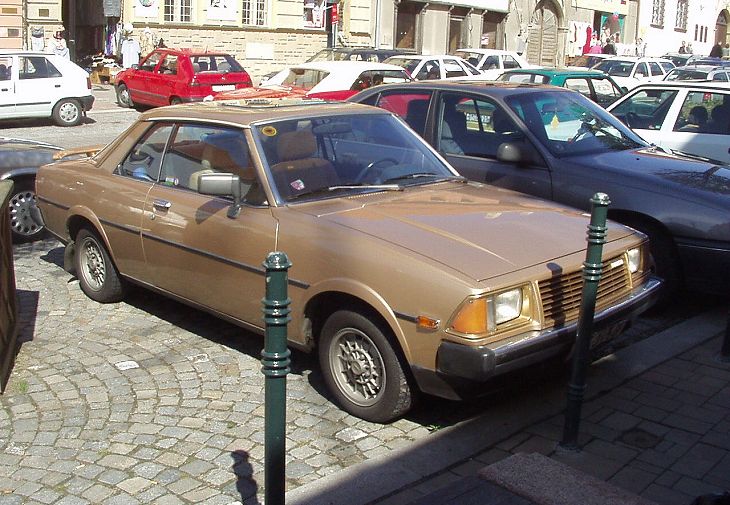
The Mazda 626 1.6 Coupé was one of the more stylish and youthful members of the second-generation 626 family, offering the clean lines and balanced engineering of Mazda’s early-1980s midsize range in a sleek two-door body. Produced during the GC generation (1982–1987 in most markets), the 1.6 Coupé served as the entry point to the coupé lineup, aimed at buyers who appreciated the elegant proportions of the 626 but did not need the stronger performance of the 1.8 or 2.0-litre versions. It combined affordability, smooth driving manners and pleasing design, making it a popular choice for commuters and younger drivers seeking a refined yet practical coupé.
Power came from Mazda’s 1.6-litre inline-four from the long-running TC/JE-series family, depending on market. With simple carburetion or, in later years, light fuel-injection tuning, output typically ranged from 75 to 85 horsepower. The engine was known for its reliability, smoothness and ease of maintenance. While modest in power, it provided enough flexibility for everyday driving, cruising and gentle long-distance travel. The engine’s simple, rugged construction made the 1.6 Coupé one of the most durable variants in the 626 range. It usually paired with a five-speed manual gearbox, whose light and precise shift action suited the car’s easygoing nature. Some markets also offered a three-speed automatic that prioritised smoothness over performance.
The GC-generation chassis was one of Mazda’s strongest achievements of the early 1980s. The 626 used MacPherson struts at the front and a coil-sprung, well-located rear axle, giving the car predictable, stable handling. Mazda’s suspension tuning was consistently praised for its comfort and composure, and even with the smaller engine the 1.6 Coupé benefited from the car’s inherently balanced character. Steering was light, ride quality was absorbent, and the overall refinement level was higher than many similarly priced European competitors. The coupé body, being slightly lighter than the sedan, gave the car an agile and responsive feel at moderate speeds.
Styling was one of the 1.6 Coupé’s main attractions. Mazda designed the GC Coupé with clean, angular lines typical of early-1980s Japanese design, but with a graceful roofline and a neatly sculpted tail that differentiated it clearly from the more conservative sedan and hatchback versions. The long bonnet, slim grille, flush-mounted headlamps (rectangular in most markets) and tidy rear proportions gave it an understated but elegant look. Subtle chrome or colour-matched exterior details varied by trim, and the car’s well-balanced profile helped it maintain a timeless, honest aesthetic. The Coupé struck a pleasing compromise between sportiness and sophistication.
Inside, the 626 1.6 Coupé featured a comfortable, well-designed cabin with the ergonomic clarity that Mazda was already known for. The dashboard layout was simple and logical, with large instruments and solid, tactile switchgear. Seats were supportive and wide, designed for long-distance comfort rather than sporty bolstering, and the Coupé body offered generous front-row space. Rear seating was more limited than in the sedan but still usable for short journeys. The materials used throughout were durable, and trim levels often included features such as adjustable steering, a good heater/ventilation system, high-quality fabrics and, in higher specifications, optional electric accessories or an upgraded stereo.
On the road, the Mazda 626 1.6 Coupé delivered a quietly refined and predictable driving experience. The engine was smooth and flexible at lower and mid-range speeds, and although acceleration was modest, the car cruised confidently and comfortably. The chassis encouraged relaxed driving rather than exuberance, but the Coupé felt settled, stable and competent on all types of roads. Its combination of good visibility, light controls and a supple ride made it an easy, enjoyable everyday companion. For many owners, its durability and mechanical simplicity were major strengths, contributing to long service lives and low running costs.
The 1.6 Coupé played an important role in the 626 lineup by offering the elegance of the Coupé body at a more accessible price. It attracted buyers who wanted something stylish yet practical, and it helped Mazda build a reputation for producing refined, well-engineered midsize cars that were less expensive to run than many European rivals.
Today, the Mazda 626 1.6 Coupé has become a rare sight, as many examples were used extensively and gradually retired. Among enthusiasts of 1980s Japanese classics, however, it is appreciated for its clean design, reliability and the simple, honest engineering that characterised Mazda’s best work of the era. As a light, elegant and quietly capable coupé, it stands as a charming and understated representative of Mazda’s early-1980s approach to style and refinement.