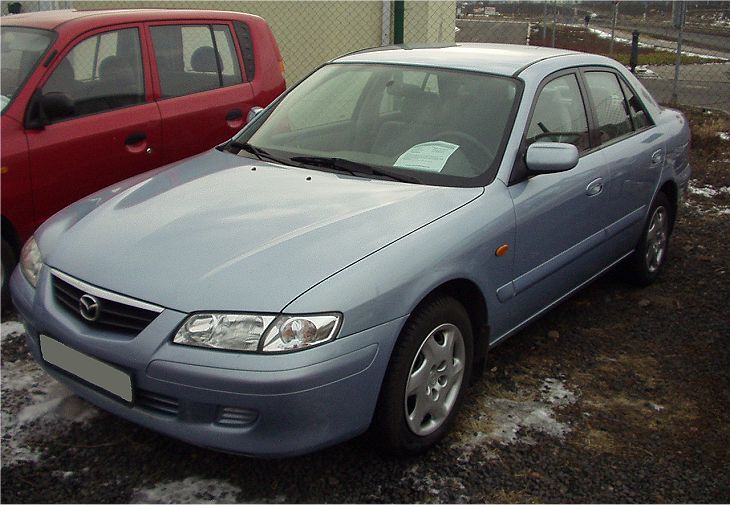
Description
The Mazda 626 1.9 was one of the quieter but important variants in the late GC (1982–1987) and early GD (1987–1992) generations, positioned just above the entry-level 1.6 models and providing buyers with a useful increase in torque and refinement without the higher fuel use of the 2.0-litre cars. In many European markets the 1.9 served as a practical, economical mid-range option, meeting the needs of commuters, families and company-car fleets who wanted a dependable midsize saloon or hatchback with modest running costs and the calm, mature driving manners that defined the 626 throughout the 1980s.
Power came from Mazda’s B-series 1.9-litre inline-four, a simple, durable overhead-cam engine producing around 90 horsepower depending on market and emissions requirements. It offered noticeably more flexibility than the 1.6, pulling more confidently at low and medium speeds and making the car more capable on hills and motorways. The engine was smooth and quiet for its size and designed for long service life with minimal mechanical stress. The 1.9 usually paired with a five-speed manual gearbox that shifted cleanly and lightly, giving the car an easy, friendly character. Some markets offered a three-speed or later a four-speed automatic, which emphasised the engine’s smoothness rather than its performance.
The chassis of the 626 1.9 was one of its great strengths. In the GC generation Mazda used MacPherson struts at the front and a well-located coil-sprung rear axle, giving the car a stable and comfortable ride that compared well with rivals of the period. The later GD models benefited from independent suspension all round, with Mazda’s advanced Twin-Trapezoidal Link rear system delivering impressive composure, improved bump absorption and greater stability at speed. In both generations the 1.9 engine worked well with the chassis, offering enough torque to take advantage of the car’s long-distance comfort without overwhelming its relaxed, balanced nature. Steering was light and predictable, and the suspension tuning gave the car a calm, assured feel on all road types.
Styling varied slightly between generations but maintained Mazda’s clean, understated approach. GC models carried angular early-1980s lines with slim rectangular headlamps, sharp edges and tidy proportions available in saloon, hatchback and coupé forms. GD models adopted a more aerodynamic, rounded shape with smoother body surfaces and a more modern profile. The 1.9 versions typically featured colour-keyed bumpers, simple wheel designs and modest badging. Mazda’s design remained deliberately restrained and proportional, giving the 626 a timeless quality that separated it from many more fussy mid-1980s competitors.
Inside, the 626 1.9 offered a comfortable, practical and well-organised cabin. The dashboard layouts were clear and logical, with large instruments and sturdy switchgear. Seat comfort was excellent, especially in the GD generation, where Mazda placed strong emphasis on long-distance support and ergonomics. Visibility was wide and unobstructed, and material quality was high for the class, built to endure years of daily use. Equipment levels varied, but most 1.9 models included power steering, a good heater/ventilation system, adjustable seating, central locking on higher trims and the option of electric windows or air conditioning. The hatchback versions offered particularly generous luggage capacity, while saloons provided a more traditional feel without sacrificing practicality.
On the road, the Mazda 626 1.9 delivered the calm, predictable and quietly refined driving experience that defined the nameplate. The engine provided smooth and steady progress, the chassis remained composed over uneven roads, and the car cruised comfortably at motorway speeds. It was not a sporting model — Mazda reserved that role for the 2.0 GT and later the V6 — but the 1.9 excelled at everyday reliability, stable handling and unpretentious usability. The balance of modest performance, low running costs and strong refinement made it a favourite among drivers who valued dependability over drama.
The 626 1.9 played a significant role in Mazda’s European and Oceanic markets by offering a practical, durable and affordable mid-range engine choice. Its mechanical simplicity and long-lived nature meant many examples covered very high mileage with minimal issues, reinforcing Mazda’s growing reputation for quality during the 1980s.
Today, the 1.9-litre version is no longer common, as many were used extensively and retired only after years of faithful service. Among enthusiasts it is appreciated not for rarity or performance but for its honesty — a well-built, comfortable and quietly capable midsize car that reflected Mazda’s strengths at a formative moment in the brand’s history.