
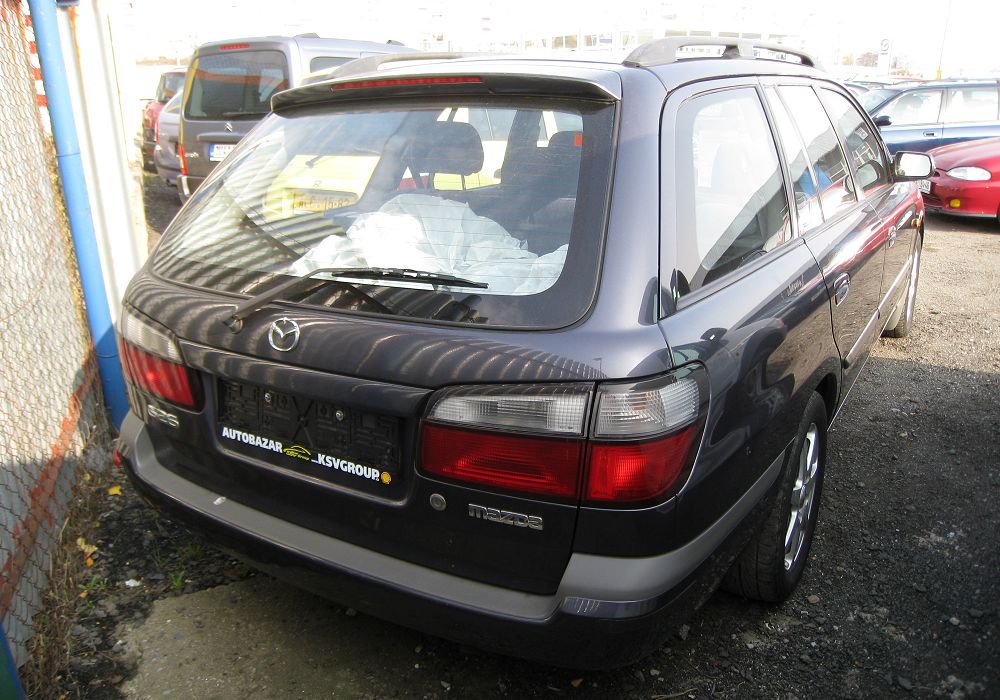
Description
The Mazda 626 Wagon 2.0 was one of the most versatile and well-balanced estate models in the GC (1982–1987) and GD (1987–1992) generations, combining the practicality of the long-roof body with the smooth performance and durability of Mazda’s 2.0-litre FE engine. It sat above the 1.6 and 1.9 models in terms of capability, offering stronger mid-range power and noticeably easier load carrying, but without the fuel consumption penalty or running-cost jump of the sporting GT models. For many family buyers, high-mileage drivers and small businesses, the 626 Wagon 2.0 became the ideal all-round estate: comfortable, spacious, reliable and effortless to drive.
Power came from Mazda’s FE-series 1998 cc four-cylinder engine, one of the brand’s most respected units. In the GC generation it was usually carburetted, producing around 100–110 horsepower, while GD models commonly adopted fuel injection, improving smoothness and giving the engine a more effortless feel. The FE was known for its long life, quiet operation and strong torque for everyday driving. It pulled cleanly at low and mid-range speeds and remained relaxed when the car was fully loaded. Most versions used Mazda’s clean-shifting five-speed manual gearbox, which suited the engine’s flexible power delivery. A three-speed automatic (GC) and a four-speed automatic (GD) were offered in many markets for buyers who wanted a more laid-back touring character.
The chassis gave the 626 Wagon 2.0 much of its appeal. The GC estate used MacPherson struts at the front and a coil-sprung live rear axle tuned for stability under load. Even with heavy cargo, the Wagon retained a supple, predictable ride and impressed buyers with its long-distance comfort. The GD generation stepped up further by introducing fully independent suspension across the entire range, featuring MacPherson struts at the front and Mazda’s Twin-Trapezoidal Link rear layout. This made the 626 one of the most refined estates in its class, delivering smooth bump absorption, excellent stability and a calm, planted feel on motorways. The 2.0 engine complemented the chassis well, providing enough power to make the Wagon feel confident on hills, overtaking and long cross-country journeys.
Styling evolved between the two generations while keeping Mazda’s characteristic clean, unfussy design. GC Wagons had angular early-1980s lines, large side windows, slim bumpers and a long roof that gave excellent cargo space and visibility. GD Wagons adopted a smoother, more aerodynamic profile with rounded edges and a more modern nose. Both generations prioritised proportion and clarity over ornamentation, giving the Wagon a timeless honesty. The 2.0 versions generally included colour-coded trim, neater wheel designs and discreet badges indicating their higher-spec position.
Inside, the 626 Wagon 2.0 was designed for comfort, practicality and durability. The dashboards were clear and logically arranged, with large instruments and robust switchgear. Seat comfort was excellent, especially in the GD models where Mazda improved padding, shape and long-distance support. Visibility was wide, and the cabin felt airy thanks to the large glazing. The rear load area was one of the Wagon’s biggest strengths. With a long, flat floor and a wide tailgate opening, it could carry bulky luggage, tools, bicycles or weekly shopping with ease. Folding rear seats extended the load space further, turning the estate into an impressively capable hauler. Equipment levels varied by market, but most 2.0-litre Wagons included power steering, a good heater/ventilation system, adjustable seating, central locking and, in higher trims, electric windows or air conditioning.
On the road, the 626 Wagon 2.0 delivered a relaxed and confidence-inspiring driving experience. The FE engine provided smooth, steady torque that made the heavier estate body feel untroubled in everyday use. The suspension absorbed rough roads gracefully, and the long wheelbase enhanced stability during motorway cruising. Steering was light but accurate, and the Wagon always felt predictable and secure. It was not designed for performance, but rather for dependable, comfortable and economical travel with enough power to handle varied driving demands. Its real strengths lay in quietness, composure and the ability to cover long distances without fatigue.
The 626 Wagon 2.0 played an important role for Mazda during the 1980s, offering a practical estate alternative that was more refined and reliable than many European competitors yet still affordable to run. It appealed to families needing space, to rural drivers requiring load-carrying ability, and to business owners who wanted a trustworthy, long-lasting estate.
Today the 626 Wagon 2.0 is rare, as many examples lived hardworking lives and accumulated high mileage before being retired. Enthusiasts appreciate surviving cars for their mechanical toughness, generous practicality and the quiet competence that defined Mazda during this era. As a durable, refined and thoroughly usable estate car, the 626 Wagon 2.0 remains one of the most complete and capable versions of the 626 line.