

Description
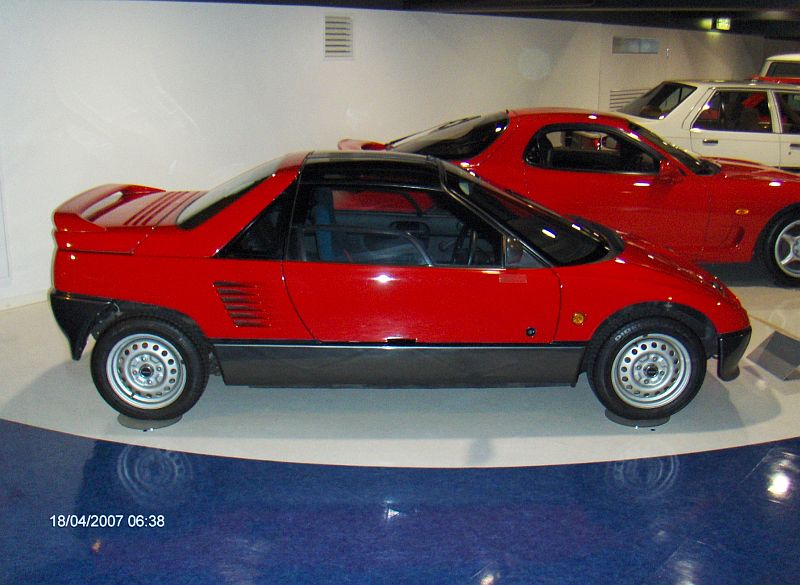
The Mazda Autozam AZ-1 was one of the most remarkable, unusual and beloved sports cars ever built within Japan’s kei-car regulations. Produced from 1992 to 1994 under Mazda’s Autozam sub-brand, the AZ-1 combined mid-engine layout, lightweight construction, dramatic gullwing doors and sharp, wedge-inspired styling to create a miniature exotic unlike anything else on the road. Although it arrived during a difficult economic moment and sold in small numbers, the AZ-1 has since become a cult icon — a tiny supercar with enormous character.
The AZ-1 was powered by a 657 cc turbocharged three-cylinder DOHC engine supplied by Suzuki (the F6A unit), producing 64 horsepower — the maximum output permitted under kei-class rules of the era. Mounted transversely behind the seats, the engine gave the car the optimal weight distribution of a true mid-engined sports car. Paired with a five-speed manual gearbox, the powertrain delivered lively, eager performance thanks to the car’s exceptionally low weight of around 720 kg. Though small in displacement, the turbocharged engine provided strong low-end torque and a distinctive, enthusiastic character that suited the AZ-1’s personality.
The chassis was engineered specifically for the AZ-1 and reflected Mazda’s ambition to build a true enthusiast’s kei-sports car. It used a steel backbone frame clad in lightweight ABS and fibreglass-reinforced plastic body panels. Suspension consisted of independent struts and coils at all four corners, tuned for sharp handling and responsive feedback. The mid-engine layout and compact dimensions made the car extraordinarily agile, with quick turn-in and excellent balance. On tight, winding roads the AZ-1 delivered a driving experience unmatched by almost any other kei car — playful, precise and deeply engaging.
Styling was one of the AZ-1’s defining features. The design, originally explored by Suzuki before Mazda took control of the project, was refined into a dramatic wedge-shaped body with flared arches, a short wheelbase and the iconic gullwing doors that instantly set the car apart. The proportions evoked miniature Ferrari and Countach cues, but with a uniquely Japanese compactness and charm. The AZ-1 looked like a pocket supercar, and for many enthusiasts it fulfilled the fantasy of an exotic sports car scaled down to kei-size.
The interior was compact but purposeful, designed for two occupants. Bucket seats, a simple driver-focused dashboard and minimal ornamentation emphasised the car’s sporting intent. Despite the tight space, the cabin felt well laid out, with clear instrumentation and lightweight materials throughout. Mazda ensured that the AZ-1 retained a sense of fun without compromising driving ergonomics. Storage was minimal — the car was more of a weekend toy than a practical commuter — but the emphasis on simplicity suited its mission as a pure driver’s car.
On the road, the Autozam AZ-1 delivered a surprisingly serious and exhilarating driving experience. The turbocharged engine pulled eagerly through the gears, and the mid-engined chassis provided superb grip and balance. The suspension tuning made the car firm but precise, and the steering offered excellent feedback. While top speed and outright acceleration were modest by global sports-car standards, the AZ-1 excelled in handling, character and the sheer joy of driving. Its lightness and compactness made it ideal for Japan’s mountain passes, and its unique styling turned heads everywhere it went.
Unfortunately, the AZ-1 arrived during Japan’s early-1990s economic downturn. Its high price for a kei car, limited practicality and niche appeal meant that sales remained low. Fewer than 5,000 units were built before production ended in 1994. However, its rarity and distinctive personality helped it grow into a cult classic, attracting collectors in Japan and abroad.
Today, the Mazda Autozam AZ-1 is regarded as one of the finest and most charismatic kei-sports cars ever made. Its combination of mid-engine engineering, gullwing drama, compact exotic styling and involving driving dynamics has earned it a dedicated following. As a landmark in Mazda’s experimental 1990s creativity — and a standout in Japan’s kei-car history — the AZ-1 remains a tiny but unforgettable icon.