
Description
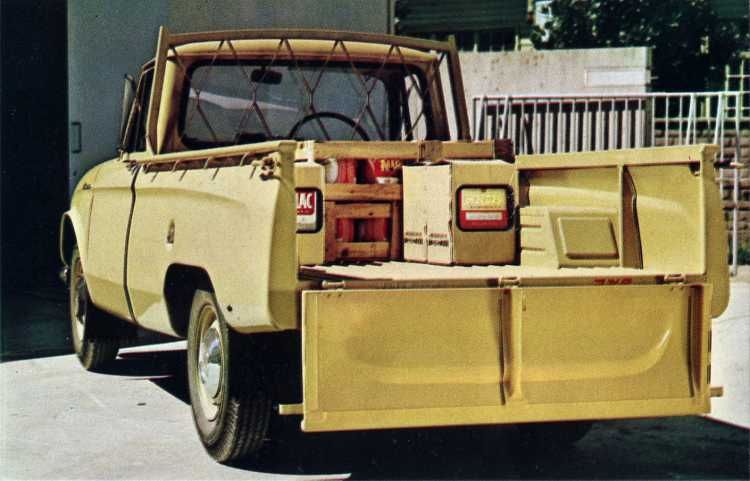
The Mazda B1500 was one of Mazda’s most important early pickups and a key model in the brand’s expansion into global light-commercial markets during the 1960s. Introduced in 1961 as part of the first generation of Mazda’s B-series trucks, the B1500 was designed to give small businesses, farmers and tradespeople a strong, practical and dependable workhorse with the refinement and reliability of a passenger car. It became Mazda’s most successful commercial vehicle of the decade and laid the groundwork for a long-running B-series pickup lineage that would continue well into the 2000s.
Power came from Mazda’s UA-series 1484 cc inline-four engine, producing around 60–70 horsepower depending on the model year and market. This engine was simple, robust and easy to service, making it ideal for commercial use. It provided smooth, steady torque at low speeds, which made the B1500 particularly capable when carrying heavy loads or navigating rural roads. The engine was paired with a four-speed manual gearbox that offered clean, predictable shifting and gearing suited to work environments. While not fast by modern standards, the B1500 delivered the durable, trouble-free performance that buyers needed.
The chassis of the B1500 was built for strength and longevity. Mazda used a ladder-frame construction with heavy-duty steel crossmembers, ensuring the truck could withstand regular hauling and rough surface use. Suspension consisted of independent double-wishbones with torsion bars at the front and leaf springs at the rear. This combination struck a balance between load-carrying capacity and ride quality, making the B1500 more comfortable than many competing trucks of the early 1960s. The rear-wheel-drive layout gave good traction under load, and the steering was light enough to make the truck manageable in tight spaces.
Styling was one of the B1500’s quieter strengths. Mazda gave the truck clean, modern lines and a neatly proportioned body that appeared more refined than many agricultural rivals. The front featured a wide horizontal grille with simple circular headlamps, while the cab had large windows for excellent visibility. Its shape was honest and functional, but the smooth surfacing and tidy detailing gave the B1500 a friendlier, more approachable look than the utilitarian pickups of earlier decades. Mazda updated the design through the 1960s, refining the cab and grille while maintaining the truck’s recognisable character.
The interior was straightforward but well considered. Mazda fitted a simple steel dashboard with large, clear gauges and durable materials designed to withstand work use. Seating was basic but comfortable enough for long days, and the upright driving position gave good control and visibility. Though spartan, the cabin was ergonomically arranged and sturdier than many of its competitors. Mazda placed particular emphasis on ease of maintenance — from the dashboard switches to the engine bay layout — ensuring that owners could keep the truck running with minimal downtime.
On the road, the B1500 offered dependable, predictable performance. The engine delivered enough torque to handle moderate loads, and the truck’s low gearing made it sure-footed when climbing hills or pulling weight. Suspension tuning gave the B1500 a calmer ride than expected for a small pickup, especially when lightly loaded. The ladder frame provided excellent stability, and the steering feel remained consistent even with varying cargo. While top speed and acceleration were modest, the B1500 excelled in daily work scenarios where reliability mattered most.
The Mazda B1500 played a key role in Mazda’s commercial expansion during the 1960s. It became a best-seller in Japan, was exported to markets across Asia, Europe, Australia and parts of Africa, and helped establish Mazda’s reputation for building durable, user-friendly light trucks. It served as the direct ancestor of later B-series pickups — from the B1600 and B1800 to the long-running B2200 and B2600 — and helped Mazda become a major player in the global small-truck segment.
Today the Mazda B1500 is appreciated by collectors of early Japanese commercial vehicles for its clean design, rugged mechanical simplicity and historical significance. Surviving examples are becoming rare, but enthusiasts value the model as one of the foundational vehicles in Mazda’s utility lineup. As an early and influential member of the B-series family, the B1500 stands as an important milestone in Mazda’s evolution from a domestic automaker into a recognised global manufacturer.