Description
The Mazda Bongo 1000 Van was one of Mazda’s earliest and most important light-commercial vehicles, introduced in the mid-1960s as a compact, highly manoeuvrable van designed for Japan’s rapidly growing urban economy. Positioned beneath larger commercial vehicles of the era, the Bongo 1000 established Mazda’s reputation for practical, durable and cleverly packaged vans. Its small footprint, economical engine and flexible interior layout made it a popular choice for small businesses, delivery services and tradespeople throughout Japan.
Power came from Mazda’s 987 cc inline-four OHV engine, a simple, robust and economical unit derived from Mazda’s early passenger-car programmes. Producing modest power, it was designed for reliability and low running costs rather than speed. The engine’s compact size allowed Mazda to create an unusually spacious cabin for such a small vehicle. Paired with a four-speed manual gearbox, the Bongo 1000 Van delivered predictable, steady performance well suited to city routes and short-distance transport work. Fuel economy was one of its key selling points, which helped it succeed in an era when many Japanese businesses were seeking to minimise operating expenses.
The Bongo 1000 Van’s chassis was unconventional for its time. Mazda used a rear-engine, rear-wheel-drive layout, placing the power unit beneath the cargo floor at the back of the vehicle. This approach freed up a surprising amount of space in the cabin and load area, creating a flat, unobstructed floor that maximised usable volume. The layout also gave the Bongo excellent manoeuvrability in tight urban environments, with a tight turning circle and stable road manners at low speeds. Suspension was designed for durability and load-carrying ability, offering a comfortable ride even when the van was fully loaded.
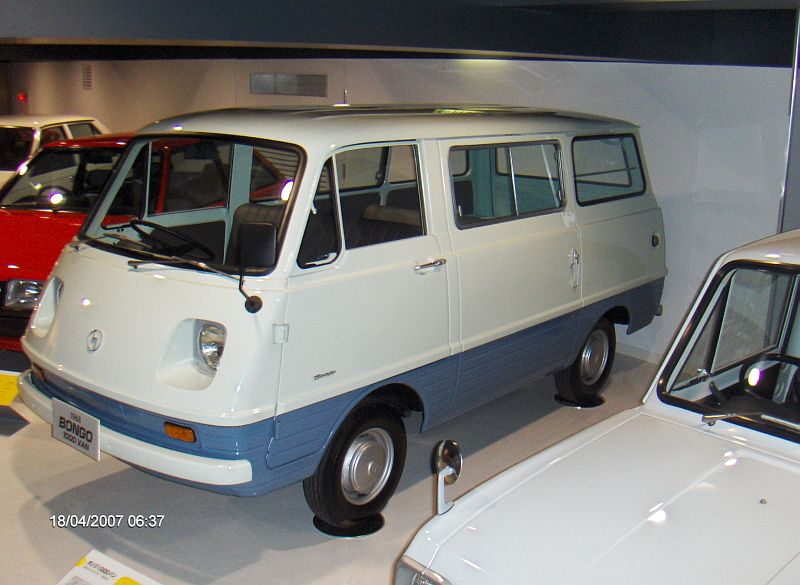
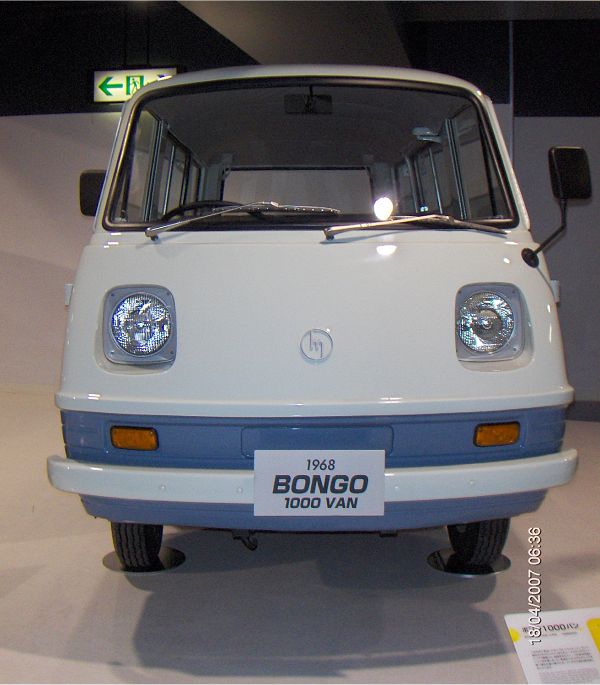
Styling was simple, functional and modern for a 1960s commercial vehicle. The Bongo 1000 featured a clean, boxy shape with large windows, a short front overhang and upright proportions that emphasised visibility and practicality. The design created a bright, airy cabin and made the vehicle easy to place in traffic. The sliding side door and wide rear opening improved access for loading and unloading, which made it appealing for delivery routes and trades requiring frequent stops.
Inside, the Bongo 1000 Van prioritised practicality. The dashboard was basic but clearly laid out, with large, easy-to-read instruments and durable materials. Seating was straightforward but comfortable enough for daily commercial use, and the flat floor and upright driving position made the vehicle easy to enter and exit. Sound insulation was minimal, as was typical for small vans of the period, but the overall ergonomics were well considered.
On the road, the Mazda Bongo 1000 Van delivered a calm and predictable driving experience. Its low weight allowed the small engine to perform adequately in urban driving, and the rear-engine layout gave the van good traction when carrying loads. Steering was light, visibility was excellent and the suspension dealt with rough city surfaces convincingly. It was never intended as a long-distance transporter, but within the city it offered efficiency, manoeuvrability and dependability.
The Bongo 1000 Van became an important vehicle for Mazda, laying the groundwork for decades of Bongo-branded light commercial models. It demonstrated the company’s ability to create practical, cleverly packaged and reliable working vehicles. Its rear-engine layout, while later abandoned for front-engine designs, gave the original Bongo a unique identity and contributed to its reputation for impressive interior space relative to its compact size.
Today, surviving Mazda Bongo 1000 Vans are rare, especially outside Japan, and they are increasingly appreciated by collectors of early Japanese commercial vehicles. Their simple engineering, distinctive rear-engine configuration and historical importance make them appealing to enthusiasts who value early JDM industrial design. As the first generation of one of Mazda’s longest-running commercial nameplates, the Bongo 1000 Van holds a special place in the company’s history.