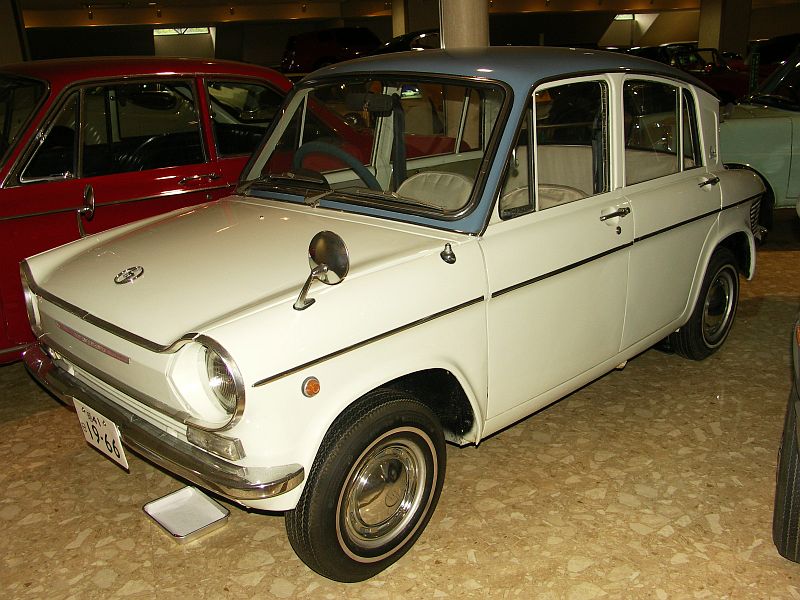
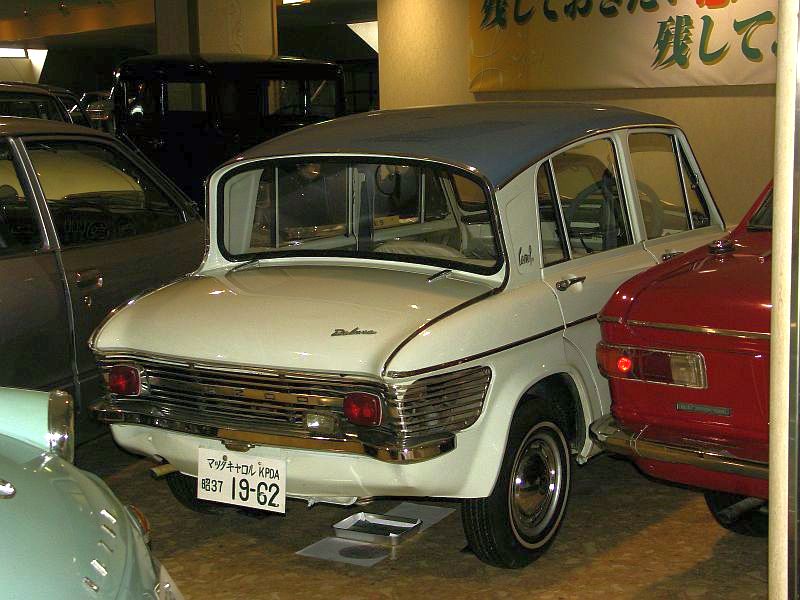
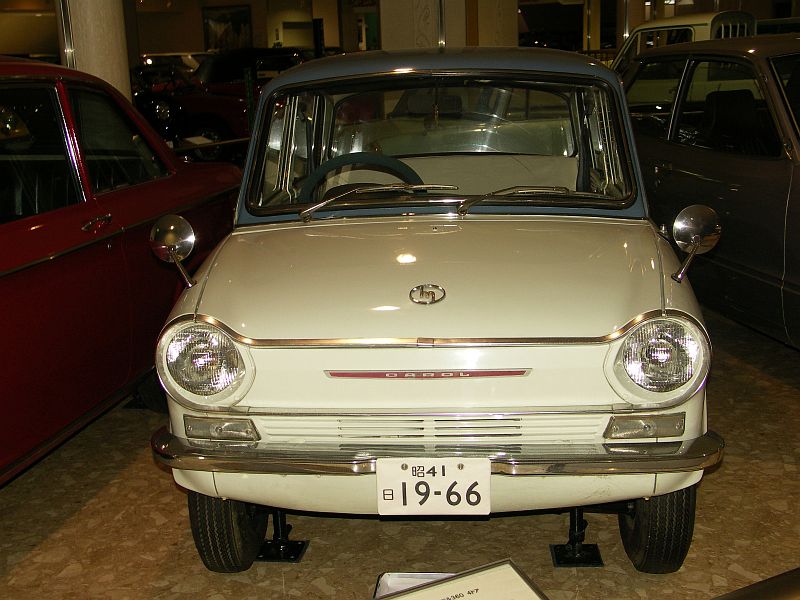
Description
The Mazda Carol 360, introduced in 1962, was one of Mazda’s most important early passenger cars and the model that firmly established the company in Japan’s fast-growing kei-car market. Following the success of the R360 Coupé, the Carol offered buyers a more sophisticated, more practical and more technologically advanced small car while remaining within the strict constraints of the kei-vehicle regulations of the era. The Carol 360 went on to become one of Japan’s most popular compact cars of the 1960s and played a major role in Mazda’s rise as a mainstream automobile manufacturer.
The Carol 360 was powered by a rear-mounted 358 cc water-cooled inline-four engine — a remarkable and unusual engineering choice in the kei-car world. At a time when most competitors relied on two-stroke twins or simple V-twins, Mazda’s decision to develop a compact four-cylinder engine gave the Carol an exceptionally smooth, refined and quiet character. Producing around 18 horsepower, the small four-cylinder unit provided lively performance for city driving and offered a level of mechanical polish rare in such a small and inexpensive vehicle. Power was delivered through a four-speed manual gearbox that made the Carol responsive and enjoyable to drive for its size.
The chassis featured a lightweight monocoque body, continuing Mazda’s early focus on advanced construction methods. Independent suspension was used at all four wheels, with torsion bars at the front and semi-elliptic leaf springs at the rear in early versions. This layout provided stable, predictable handling and a comfortable ride even on Japan’s still-developing road surfaces. The Carol’s compact size and tight turning radius made it exceptionally manoeuvrable, ideal for navigating the narrow streets of Japanese cities.
Visually, the Carol 360 had a distinctive and appealing design. Its upright shape, short overhangs and rounded details gave it a cheerful, approachable character that contrasted nicely with the more utilitarian kei vehicles of the early 1960s. The front end featured a tidy grille and round headlights, while the overall silhouette was simple but well proportioned. Although compact, the Carol had a substantial and solid appearance that helped it stand out in a crowded segment.
The interior of the Carol was one of its strongest points. Mazda worked hard to give the car a surprisingly high level of comfort and usability for its class. Seating was designed for four people — ambitious for a kei car — and the water-cooled engine’s refinement reduced cabin noise compared with two-stroke competitors. The dashboard layout was simple but functional, with clear instruments and durable materials. Though not luxurious, the cabin felt well designed and robust, with a degree of sophistication unusual in kei cars of the period.
On the road, the Carol 360 delivered smooth, flexible performance. The small four-cylinder engine, while not powerful, was more refined than almost anything else in the kei-class at the time. Combined with good ride comfort and predictable handling, it made the Carol an enjoyable urban commuter and a practical family runabout. Fuel economy was excellent, and reliability was one of the model’s key selling points.
The Carol quickly became one of Mazda’s most successful early passenger cars. It broadened the company’s market beyond the two-seat R360 Coupé and helped solidify Mazda’s reputation as an innovator within the kei-car category. The Carol line continued to evolve, eventually leading to later, more advanced generations and establishing a nameplate that remains familiar in Japan even today.
Surviving examples of the early Carol 360 are now prized by collectors of Japanese microcars, both for their historical importance and for their distinctive engineering. As one of Mazda’s foundational models, the Carol 360 played a crucial part in transforming the company from a small manufacturer of three-wheelers into a fully fledged automotive brand with global ambitions.