
Description
The Mazda Chantez was a short-lived but technically impressive kei car produced from 1972 to 1976, representing Mazda’s most ambitious attempt to build a class-leading kei-sport model during the early 1970s. Compact, lively and unusually well engineered for its category, the Chantez was intended to compete directly with the Honda Z, Suzuki Fronte and Subaru R-2. Although it was praised for its refinement and performance, the Chantez ultimately became a casualty of shifting kei-car regulations and Mazda’s internal strategic decisions — making it one of the more intriguing “lost” models in the company’s history.
The Chantez was powered by a 359 cc water-cooled two-cylinder engine (Type AA), producing around 28–35 horsepower depending on trim and tune. Unusually, Mazda mounted the engine longitudinally and drove the rear wheels, giving the Chantez a layout more reminiscent of traditional sports cars than the front-drive kei vehicles that would soon dominate the market. This rear-drive configuration, combined with relatively high output for a kei engine of its time, made the Chantez one of the liveliest and most enjoyable small cars of the early 1970s.
Mazda engineered the Chantez with care and ambition. The chassis featured a lightweight monocoque structure, and suspension used MacPherson struts at the front and leaf springs at the rear. This setup provided stable handling and good ride comfort, while the rear-wheel-drive layout gave the car balanced dynamics uncommon in the kei segment. The Chantez had a reputation for feeling more “grown-up” and more solidly engineered than many of its competitors.
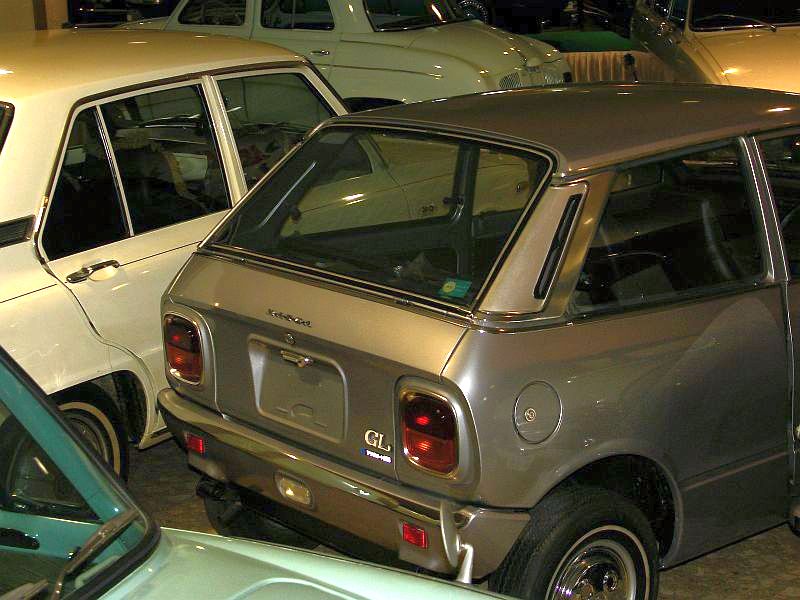
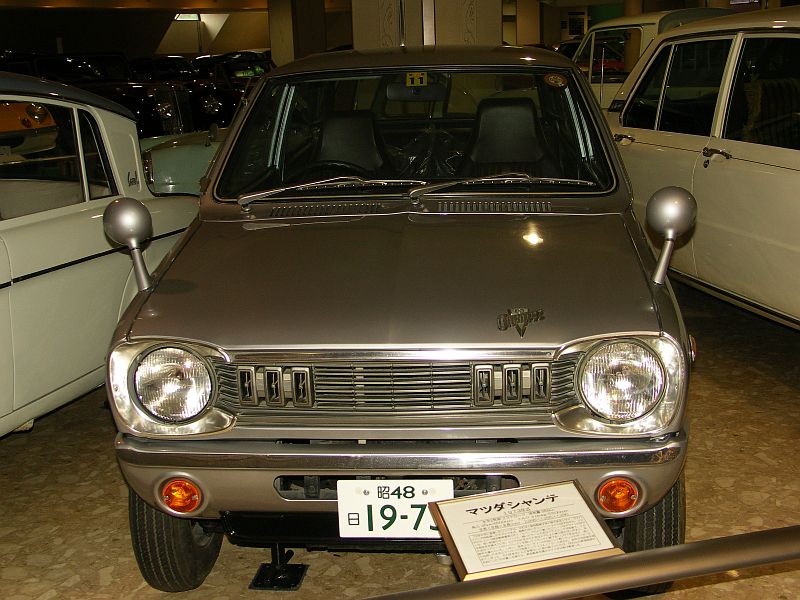
Styling of the Chantez was contemporary and slightly sporty, with a clean two-door fastback profile, a neat front fascia and subtle sculpting along the body sides. The proportions were modern and purposeful, giving the car a presence beyond its tiny dimensions. A commercial variant — the Chantez Van — added practicality, while higher-spec versions emphasised a more enthusiastic driving character.
Inside, the Chantez offered one of the roomier and more comfortable cabins in its class. Seating for four was technically possible, but like most kei cars of the era, it was more realistic for two adults and two children. The dashboard layout was straightforward and functional, with clear instruments and durable materials. Mazda’s build quality had improved significantly by the early 1970s, and the Chantez’s interior reflected this with its solidity and attention to detail.
On the road, the Chantez was considered one of the quickest kei cars of its day. The lively two-cylinder engine, light weight and the superior traction of rear-wheel drive made acceleration brisk and driving entertaining. The handling was agile and predictable, and the ride was comfortable enough for longer journeys. Fuel economy was strong — a major selling point during the energy-conscious 1970s — and overall refinement was excellent for a kei-class vehicle.
However, the timing of the Chantez’s launch proved difficult. Just as Mazda introduced it, kei-car regulations were set to change, increasing maximum engine size from 360 cc to 550 cc by 1976. Mazda had planned a next-generation Chantez with a new small rotary engine, but government regulators strongly discouraged rotary power in kei cars due to emissions and fuel concerns. Without a clear path forward, Mazda cancelled the project. The Chantez ended production in 1976, leaving the kei-car field until Mazda returned with the Carol many years later.
Today, the Mazda Chantez is a rare and highly collectible microcar. Its rear-wheel-drive layout, spirited performance, attractive design and short production run make it a favourite among enthusiasts of obscure Japanese classics. Historically, the Chantez represents a fascinating “what-might-have-been” moment in Mazda’s history — a capable and forward-thinking kei car cut short just as the segment was about to transform.