Description
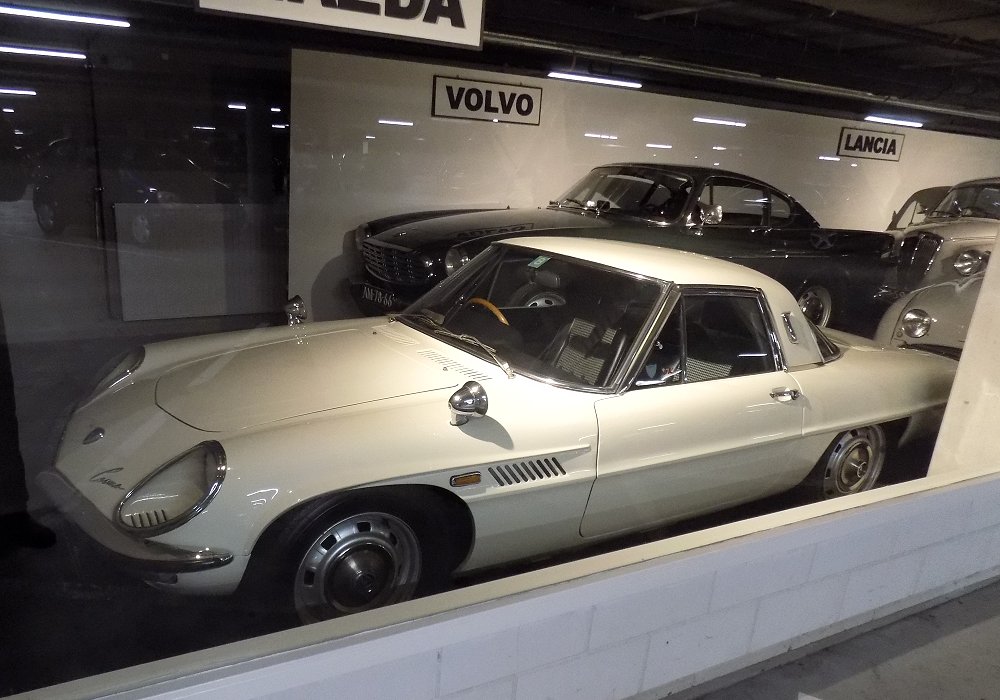
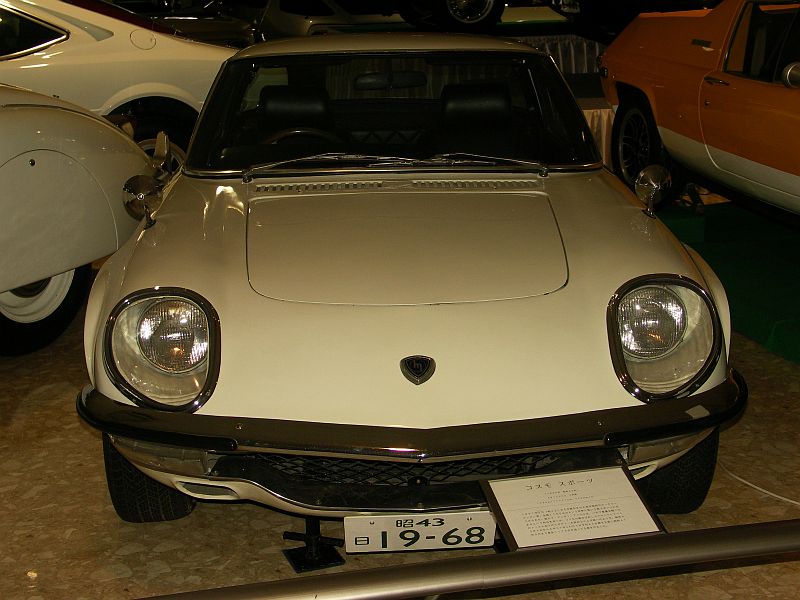
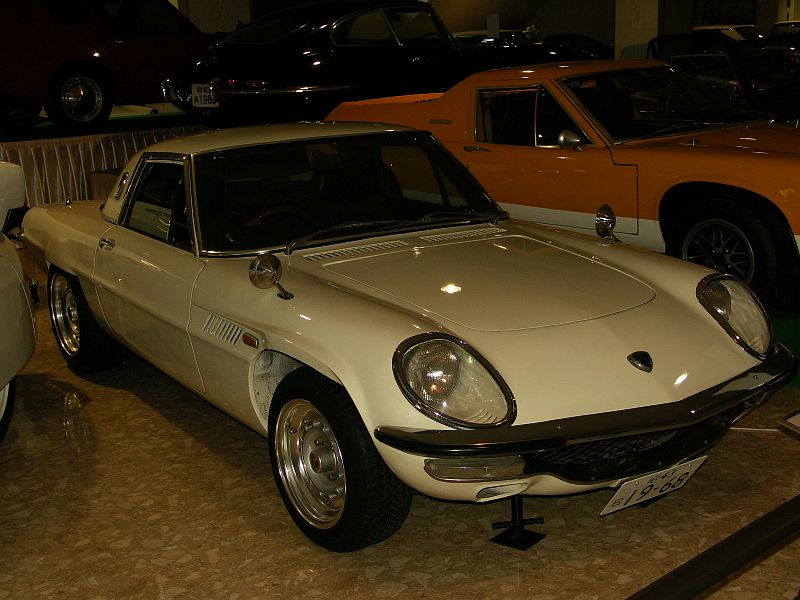
The Mazda Cosmo Sport was Mazda’s first rotary-powered production car and one of the most important models in the company’s history. Introduced in 1967 after an intensive development programme, it was a sleek, futuristic sports coupé designed not only to showcase Mazda’s engineering ambition but to prove that the rotary engine could be viable for road use. Built in small, largely hand-assembled numbers, the Cosmo Sport became a technological halo car for the brand and laid the foundations for Mazda’s rotary lineage that would continue through the RX-series, the Eunos Cosmo and beyond.
Power came from Mazda’s compact twin-rotor Wankel engine, a design that Mazda had been refining since the early 1960s. The first production version, known as the 0810, displaced 982 cc and produced around 110 horsepower in the early Series I cars. Later models, designated Series II, received the improved 0813 engine, delivering roughly 128 horsepower thanks to better port timing and higher rotational capacity. The rotary engine’s clean, vibration-free operation gave the Cosmo Sport a distinctive character. It was smooth, eager to rev and produced a rising, turbine-like note completely unlike the four-cylinder engines common in sports cars of the period. Series I cars used a close-ratio four-speed gearbox while Series II cars gained a five-speed, enhancing both flexibility and high-speed cruising.
The chassis was engineered with the same level of care. Mazda designed a sturdy steel backbone frame to provide rigidity without excessive weight. The Cosmo used independent front suspension with unequal-length wishbones and coil springs, while the rear employed a De Dion axle — a sophisticated layout for the mid-1960s, offering improved stability and reduced unsprung mass. Front disc brakes were fitted to later cars, improving stopping performance. With a kerb weight of just over 940 kilograms, the Cosmo Sport felt light, precise and responsive, delivering an agile and engaging driving experience that matched the personality of its rotary engine.
Styling was one of the Cosmo Sport’s most enduring qualities. Mazda gave the car a smooth, low-slung shape that reflected the optimism and futuristic design trends of the era. The long bonnet, short rear deck and slender cabin created a purposeful GT profile, while the recessed twin headlamps, sculpted wheel openings and delicate chrome detailing completed its elegant, almost space-age appearance. The proportions were compact but perfectly balanced, and the car’s crisp surfacing and flowing lines have helped it remain visually timeless. Even today, the Cosmo Sport is regarded as one of Japan’s most beautiful sports cars.
Inside, Mazda created a cockpit-like cabin that emphasised precision and technical sophistication. The dashboard featured a wide instrument panel with a full array of gauges, metal toggle switches and a three-spoke steering wheel. The seats were supportive and well shaped, giving the interior a purposeful, almost aircraft-inspired feel. Though compact, the cabin felt well crafted and carefully finished, reflecting the car’s low production volume and semi-hand-built nature. Attention to detail was high, and the interior contributed significantly to the car’s sense of exclusivity.
On the road, the Cosmo Sport delivered a driving experience defined by its lightweight construction and the unique characteristics of its rotary engine. Acceleration was lively for such a small-displacement motor, and the smoothness of the rotary encouraged drivers to use the upper rev range. Steering was crisp and direct, and the chassis felt composed and predictable. The car’s compact dimensions made it particularly enjoyable on narrow, twisting roads. The later Series II model, with more power and a five-speed gearbox, expanded the Cosmo’s abilities, making it more capable at sustained high speeds and enhancing its GT credentials.
The Mazda Cosmo Sport played a crucial role in Mazda’s identity. It was not just a sports car but a statement of intent — proof that the company could innovate, engineer and build advanced vehicles that stood apart from the mainstream. Although production was limited to roughly 1,500 units, the Cosmo demonstrated that the rotary engine could succeed in a demanding real-world environment. Its legacy influenced every rotary Mazda that followed, and it remains one of the most significant Japanese cars ever made.
Today the Cosmo Sport is a highly sought-after and revered classic. Its elegant design, its historical importance as the first production rotary sports car, and its rarity all contribute to its desirability. For Mazda enthusiasts and collectors alike, the Cosmo Sport remains a landmark achievement — a beautifully engineered and beautifully styled symbol of Mazda’s early ambition and innovation.