Description
The Mazda Cosmo Sport 110 S was the world’s first true production rotary-powered sports car and the model that introduced Mazda’s bold engineering identity to an international audience. Launched in 1967 after several years of public prototypes and testing, the Cosmo Sport became the brand’s technological flagship, a sleek, futuristic coupé built in small numbers and assembled largely by hand. It marked the moment Mazda committed fully to the rotary engine, setting the foundation for decades of rotary innovation that would follow in cars such as the RX-2, RX-7 and the Eunos Cosmo.
Power came from Mazda’s 0810 twin-rotor Wankel engine, a compact and advanced 982 cc unit producing around 110 horsepower in the earliest Series I cars, rising to 128 horsepower in the later Series II with the upgraded 0813 engine. Unlike the buzzy four-cylinder engines powering most sports cars of its era, the rotary delivered exceptionally smooth, vibration-free power with a distinctive rising hum at higher revs. It was eager to rev, characterful, and surprisingly willing for its size. The Cosmo Sport used a close-ratio four-speed gearbox on early cars, replaced by a five-speed in later versions. Power was delivered to the rear wheels with a lightness and immediacy that made the car feel agile even by modern standards.
The chassis of the Cosmo Sport was engineered to complement its advanced engine. Mazda gave the car a lightweight steel backbone frame and a front-engine, rear-drive layout that kept weight distribution tidy. Suspension consisted of unequal-length wishbones and coils at the front and a De Dion rear axle, a sophisticated setup for the mid-1960s. The result was sharp steering, predictable balance and impressive composure for such a small car. Weighing just over 940 kg, the Cosmo felt nimble, responsive and surprisingly settled at speed. Braking was strong for the era, with front discs becoming standard on later cars.
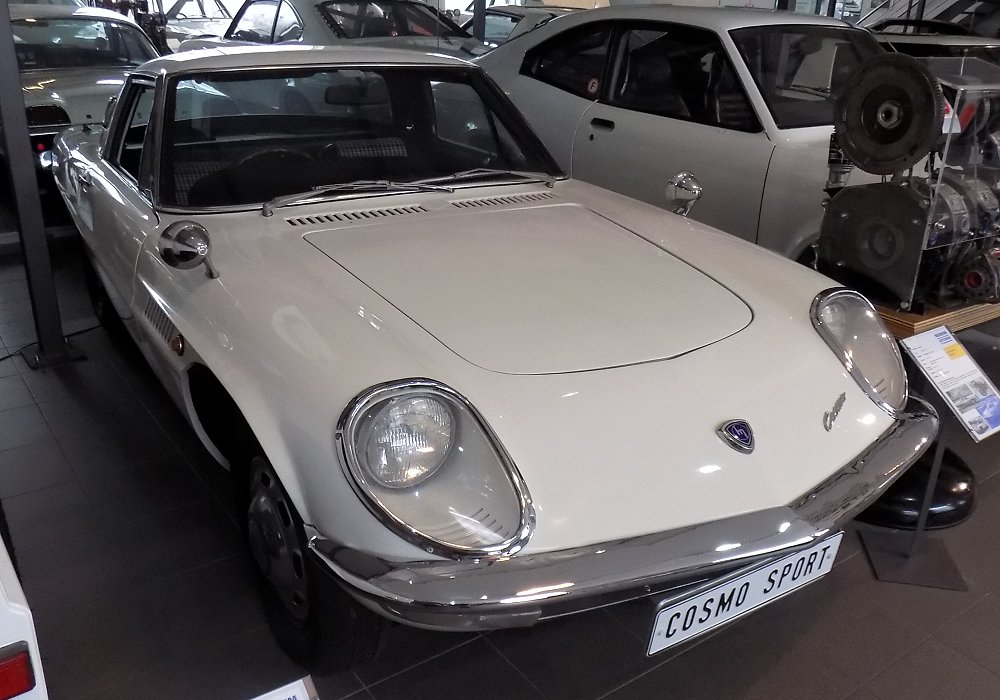
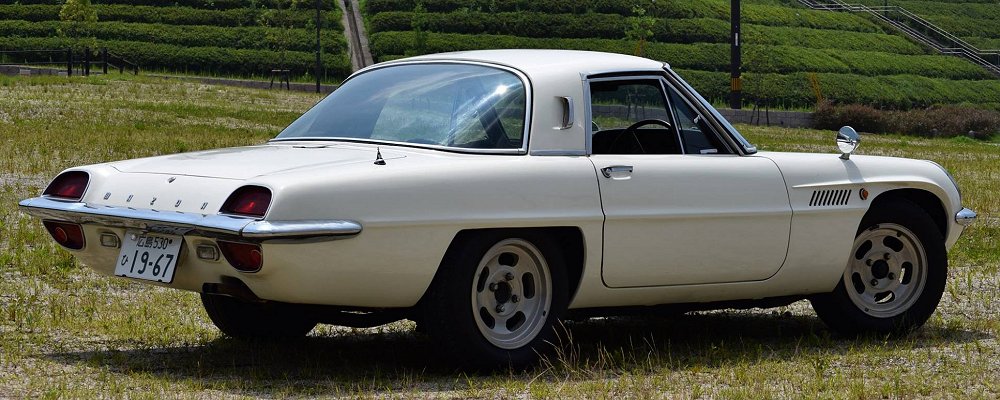
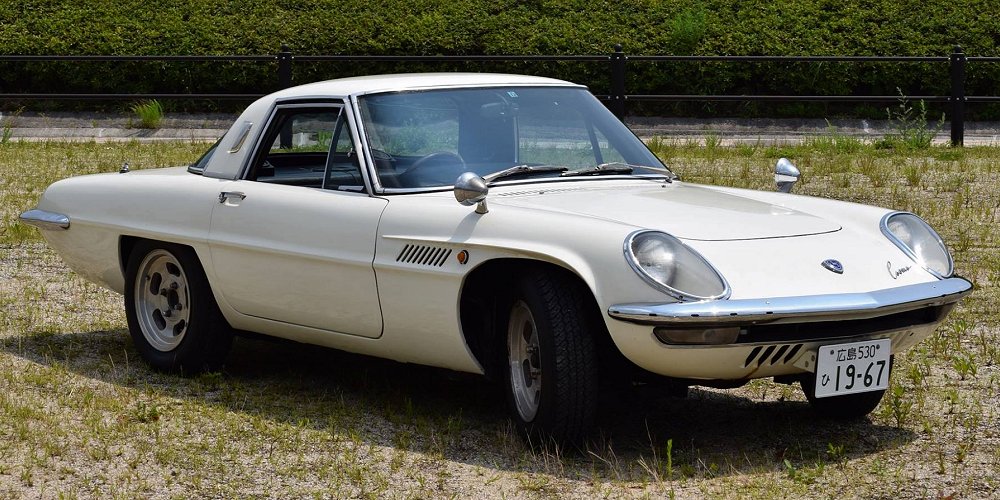
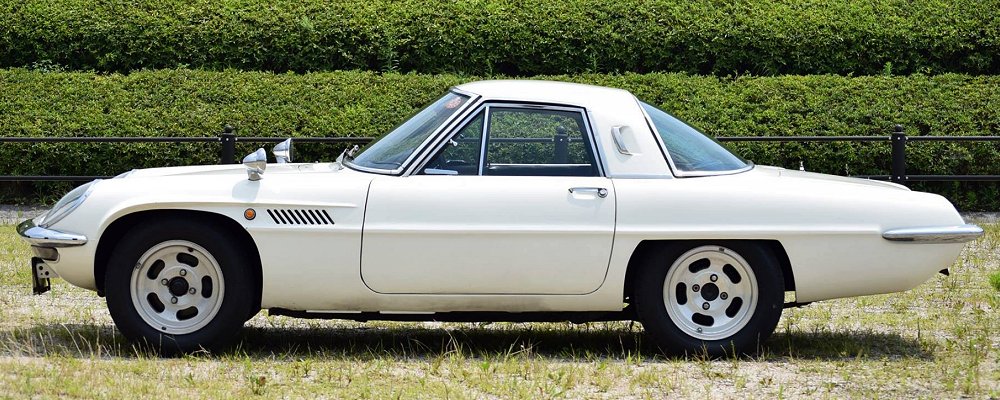
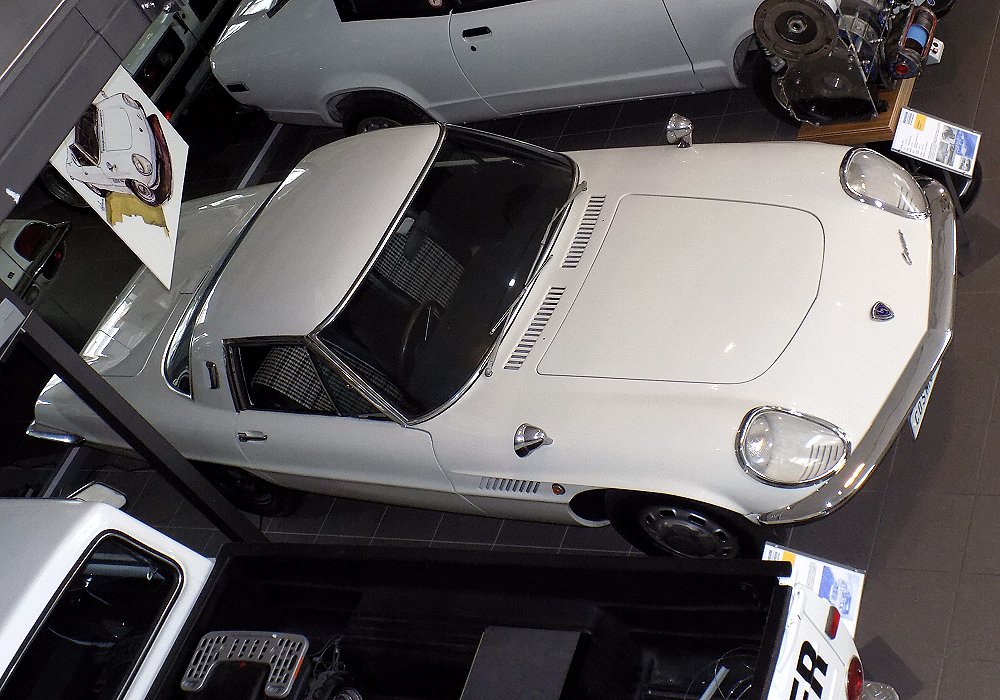
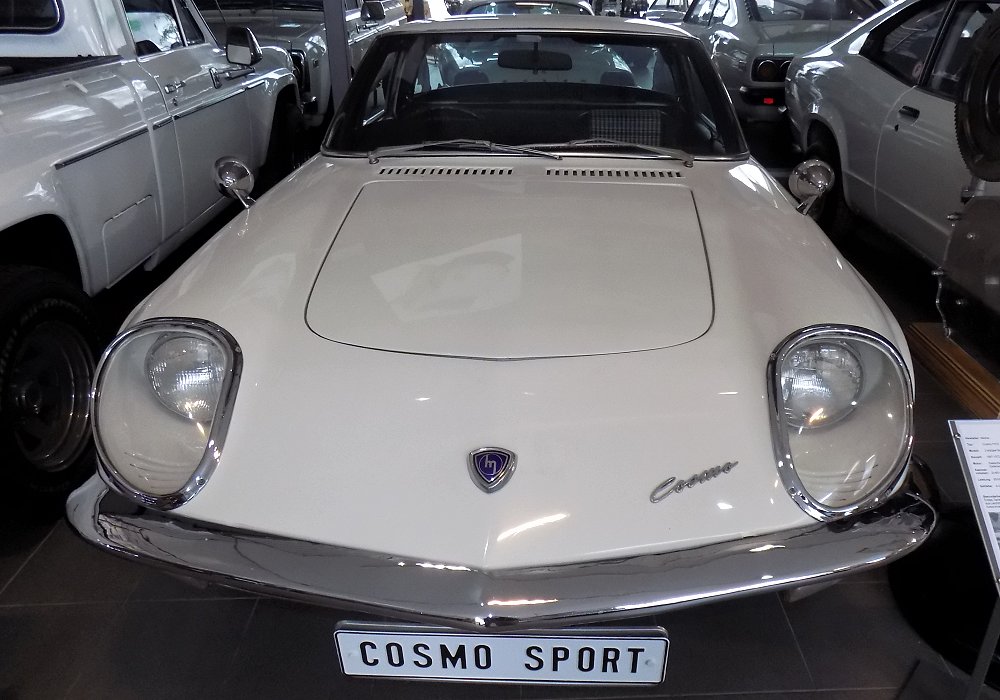
Styling was one of the Cosmo Sport’s most distinctive achievements. Mazda created a low, sleek, almost space-age shape that reflected the optimistic futurism of the 1960s. The long bonnet, short tail, slim roof pillars and sculpted wheelarches gave the car an elegant, aerodynamic form. The twin recessed headlamps, chrome accents and flowing side profile created a visual identity unlike anything on the road at the time. Its compact proportions made it appear delicate and precise, while the detailing showed Mazda’s intent to create a halo car that was technologically advanced yet beautifully styled. Even today the Cosmo Sport looks remarkably fresh and is often regarded as one of Japan’s most beautiful sports cars.
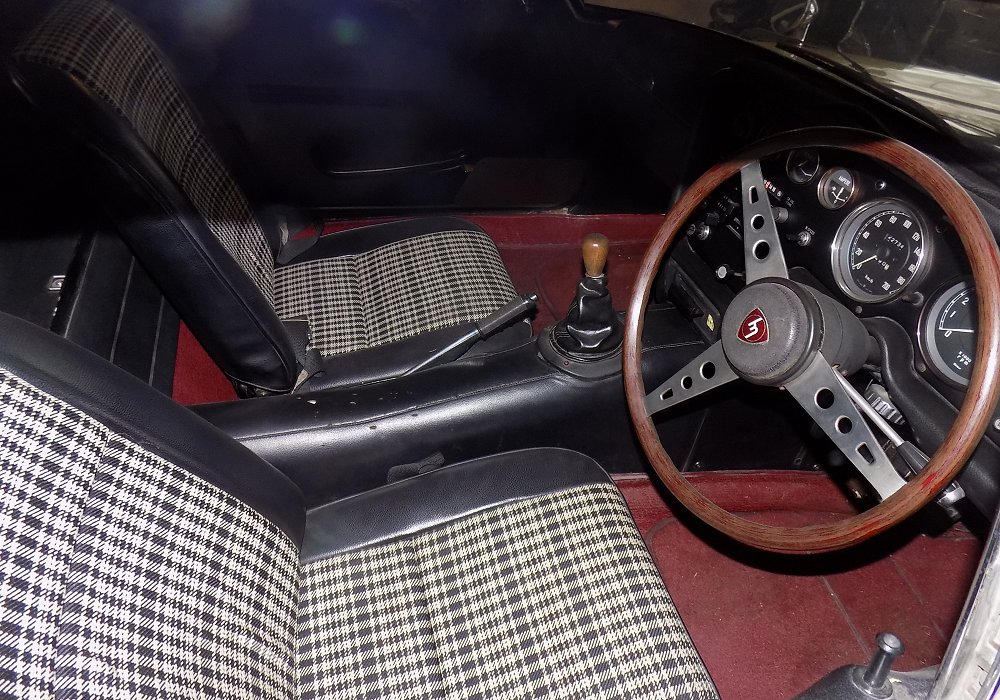
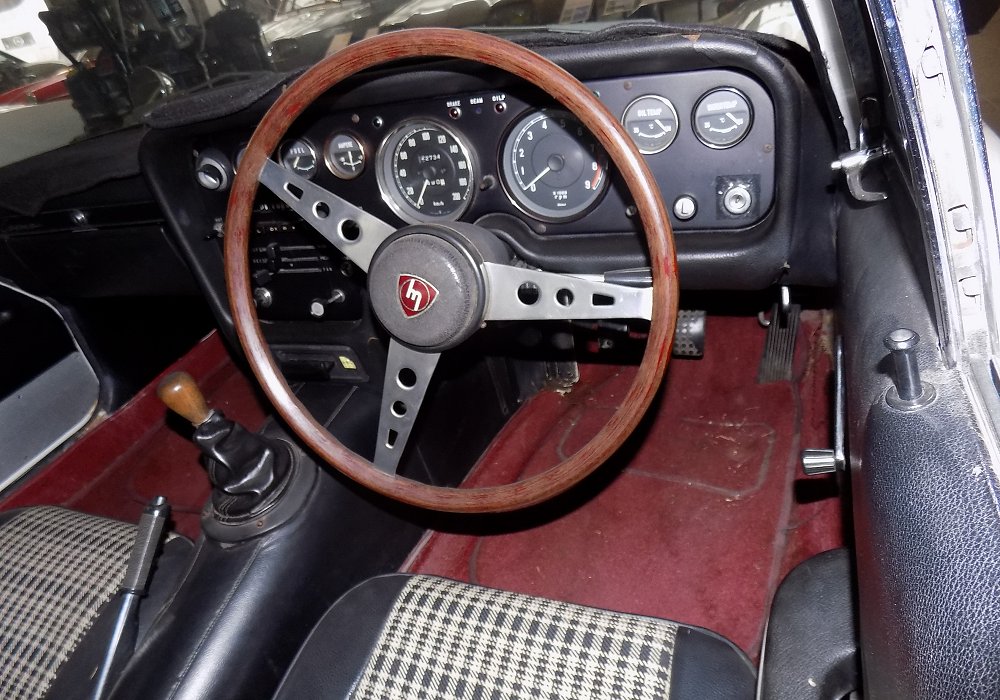
Inside, the Cosmo Sport offered a cockpit-style cabin centred around clear instruments, a wide dashboard and a pair of well-shaped seats. The emphasis was on a sporty, almost aircraft-like ambience. The three-spoke steering wheel, the bank of analogue gauges and the chromed switchgear contributed to a sense of precision and craftsmanship. The attention to detail was notable, from the fit of the panels to the quality of the materials. Despite the car’s small size, the cabin felt special, with a level of finish that reflected the model’s semi-hand-built production.
On the road, the Cosmo Sport 110 S delivered a driving experience defined by its lightness, responsiveness and the unique character of its rotary engine. Acceleration was brisk for its size, and the smooth, rev-happy nature of the rotary made it feel lively and refined. The car handled with agility, responding quickly to steering inputs and maintaining strong composure through bends. Its compact size and low weight made it particularly effective on narrow, twisting roads. The later Series II model, with its five-speed gearbox and more powerful engine, offered improved high-speed cruising capability, reinforcing the Cosmo’s grand-touring aspirations.
The Cosmo Sport’s importance to Mazda cannot be overstated. It was the company’s first rotary-powered production model and a bold declaration of technological ambition. Its success proved that rotary engines could be viable in a road car, leading Mazda to develop an entire range of rotary-powered vehicles. Although only around 1,500 units were produced, the Cosmo Sport established Mazda’s reputation for innovation and set the stage for its rotary legacy.
Today the Mazda Cosmo Sport 110 S is one of the most coveted Japanese classics, admired for its beauty, engineering significance and rarity. Its combination of timeless styling, advanced technology and historical importance makes it a landmark model not only for Mazda but for the global history of sports cars. As the first rotary production sports car, it stands as a symbol of Mazda’s ingenuity and a milestone in automotive engineering.