Description
The Mazda Familia 1000 Coupé was one of the most distinctive and stylish variants of the early Familia range and an important milestone in Mazda’s emergence as a serious manufacturer of compact, internationally competitive passenger cars. Introduced in the mid-1960s as part of the expanding first-generation Familia lineup, the 1000 Coupé offered a sportier, more expressive alternative to the practical saloons and estates. Compact, lively and attractively designed, it helped establish Mazda as a brand capable not only of building economical transportation but also of producing cars with real character and visual appeal.
The 1000 Coupé was powered by Mazda’s 987 cc SA-type water-cooled inline-four engine, the same smooth and refined powerplant used in the higher-spec Familia 1000 saloons. Producing around 52 horsepower, it offered a noticeable improvement in torque and mid-range strength compared with the smaller 782 cc engine found in the Familia 800. The four-cylinder layout gave the Coupé a level of mechanical refinement superior to many contemporary small cars, and the engine paired well with the standard four-speed manual gearbox. Though not a performance car in modern terms, it was lively and eager, delivering an enjoyable driving experience thanks to its low weight and responsive gearing.
The chassis design closely followed that of the standard Familia models. A compact monocoque body provided rigidity and lightness, while independent front suspension with coil springs and a leaf-sprung live rear axle ensured predictable, stable road manners. The Coupé retained the same rear-wheel-drive layout as the saloon, which contributed to its well-balanced handling. Compact exterior dimensions and a short wheelbase made the car nimble in tight spaces while still offering a settled, comfortable ride on open roads. Mazda’s tuning gave the Coupé a slightly more agile feel than the standard sedan, enhancing its sporting character.
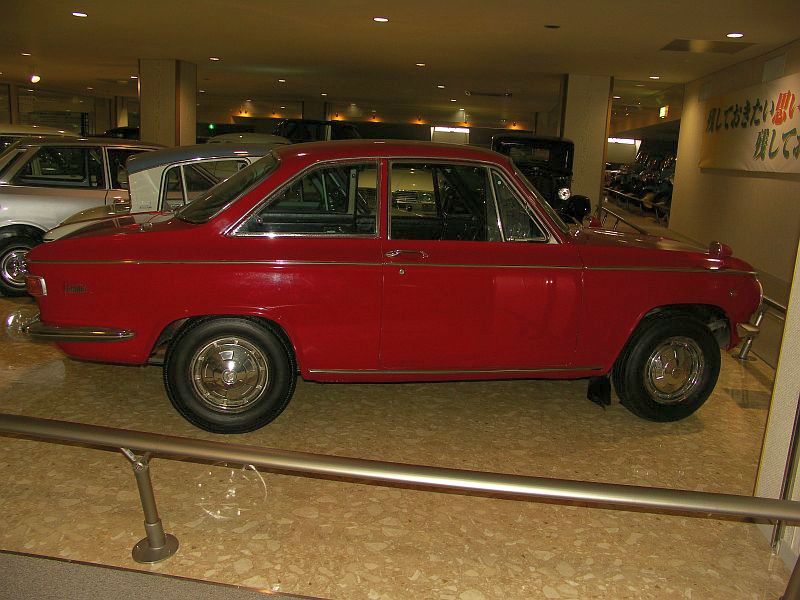
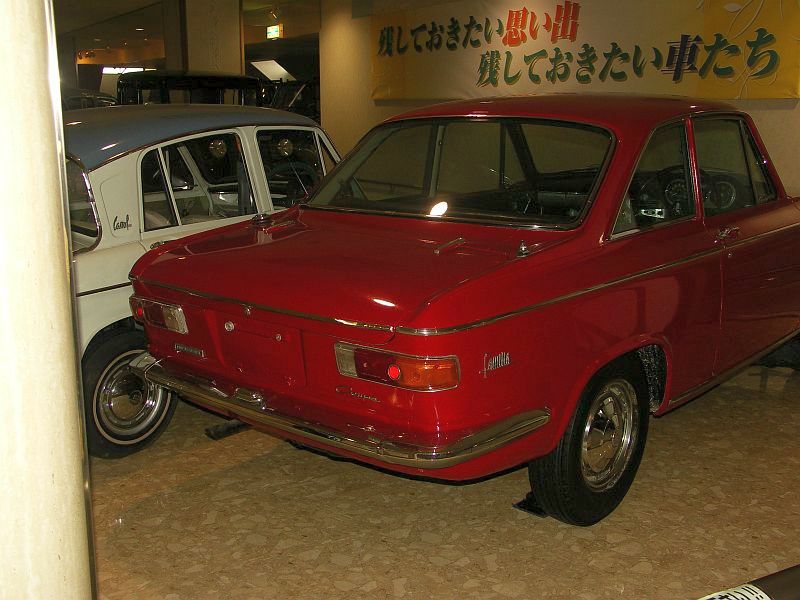
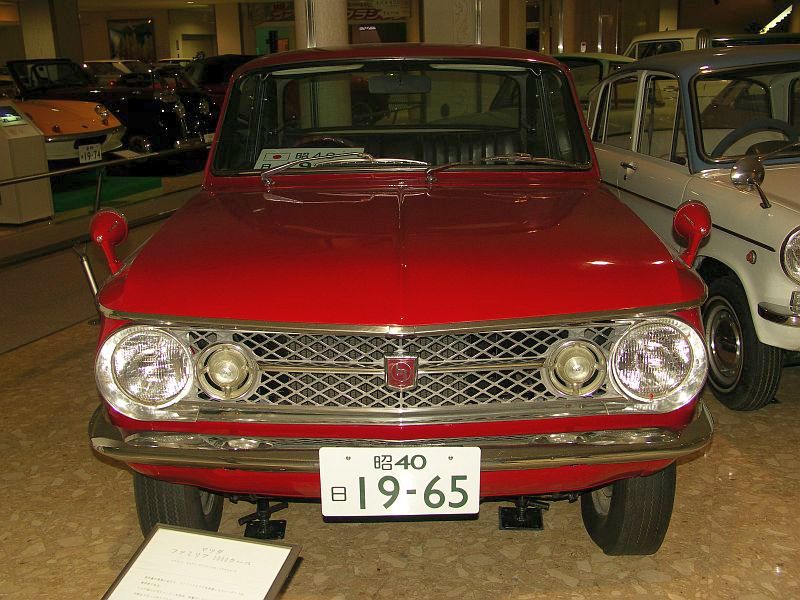
It was the styling, however, that truly distinguished the Familia 1000 Coupé. The car featured a sleeker, more expressive two-door body with a gently sloping roofline, a cleaner side profile and unique trim details that set it apart from the more conservative four-door models. The front end retained the Familia’s simple, modern grille and round headlamps, but the Coupé’s proportions were more dynamic, giving it a youthful appeal that resonated with younger buyers and early enthusiasts. Its restrained but confident design reflected European influences and helped elevate Mazda’s image in a period when Japanese styling was still developing its own identity.
Inside, the Coupé offered a cabin that balanced practicality with an understated sporting flair. Seating for four remained, though the two-door layout gave the interior a more intimate feel. Vinyl upholstery, a simple but elegant dashboard and well-placed controls made the car easy and pleasant to use. The instrumentation was slightly more focused than in the sedan, and the overall fit and finish reflected Mazda’s growing maturity as a manufacturer. Visibility remained excellent thanks to the thin pillars and upright glass area, making the Coupé easy to drive in both city and rural settings.
On the road, the Familia 1000 Coupé delivered smooth, flexible performance. The 1.0-litre engine provided enough power for confident everyday driving, and the car’s light weight gave it a responsive, agile character. The suspension tuning offered a comfortable ride while maintaining good body control, and the manual gearbox added to the engaging driving experience. Fuel economy remained strong, ensuring that the Coupé appealed not only to style-conscious buyers but also to those prioritising affordability and low running costs.
The Familia 1000 Coupé became one of Mazda’s first small cars to gain interest outside Japan. Its combination of refinement, efficiency and attractive design helped introduce Mazda to new export markets and set the stage for the international success of later Familia generations. It also demonstrated Mazda’s ability to blend practicality with a more emotional, driver-oriented approach to car design.
Today, surviving examples of the Mazda Familia 1000 Coupé are rare. Most early small Mazdas were used extensively and not preserved, making the Coupé a sought-after classic among enthusiasts of 1960s Japanese cars. Its charm lies in its simplicity, its balanced engineering and its role in establishing Mazda as a brand capable of building compact cars with genuine style and personality.