Description
The Mazda Familia 800 Sedan was one of the key early models in Mazda’s push into the mainstream passenger-car market during the mid-1960s. Introduced in 1963 as part of the first-generation Familia line (known internally as the “FA” series), the 800 Sedan represented Mazda’s step up from kei-class microcars and very small saloons into the competitive compact-car segment. Practical, modern and well engineered for its price, it helped establish the Familia nameplate — later known worldwide as the 323 — as one of Mazda’s most important and successful long-running model ranges.
The Familia 800 Sedan was powered by Mazda’s 782 cc SA-type water-cooled inline-four engine. This compact four-cylinder unit produced around 42 horsepower, which was notably smooth and refined for a car in its class at the time. Mazda had already shown its preference for four-cylinder sophistication in small cars with the Carol 360 and 600, and the 800 Sedan continued this approach. The engine delivered good drivability in city traffic and acceptable performance on faster suburban roads, with power sent to the rear wheels through a four-speed manual gearbox.
The chassis was conventional but well executed. Built on a sturdy monocoque body, the Familia 800 sedan used independent coil-spring front suspension paired with a leaf-sprung live rear axle. The layout prioritised ride comfort, predictable handling and durability — qualities that made the car appealing to families and commuters during Japan’s rapid urban expansion. The compact footprint and tight turning radius made it easy to manoeuvre in narrow streets, a key advantage in the Japanese market of the 1960s.
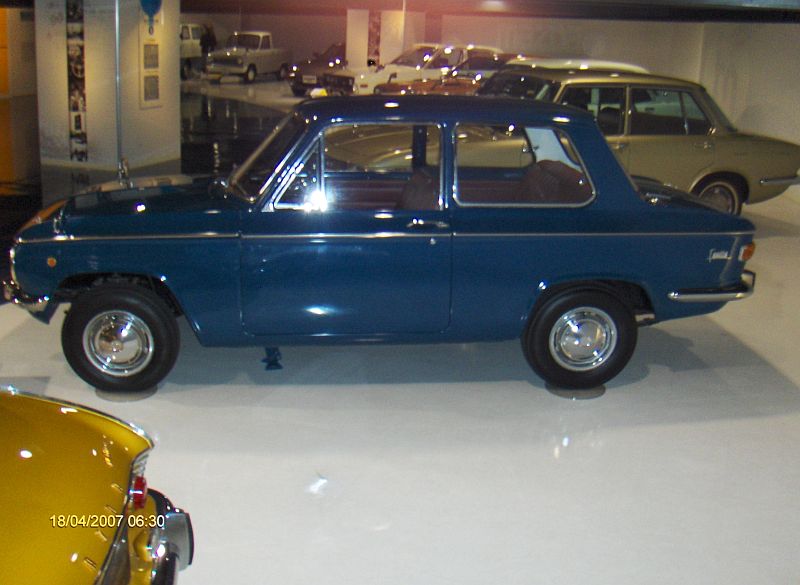
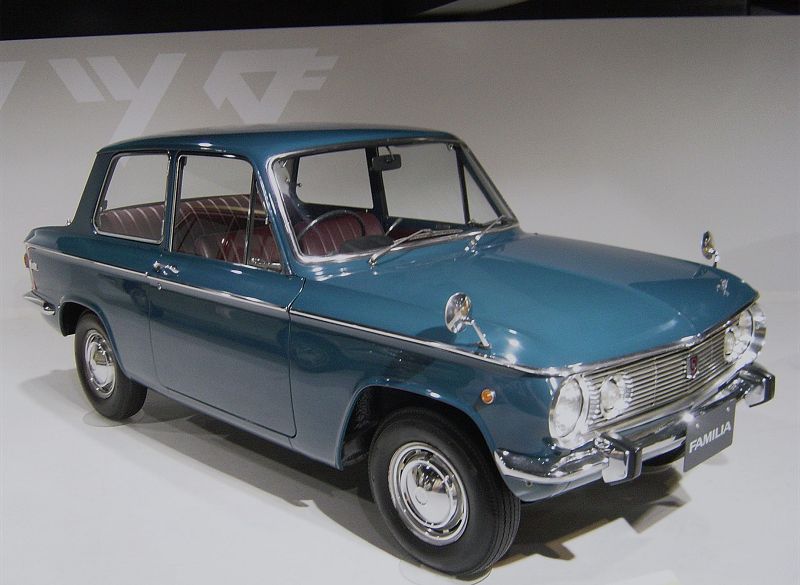
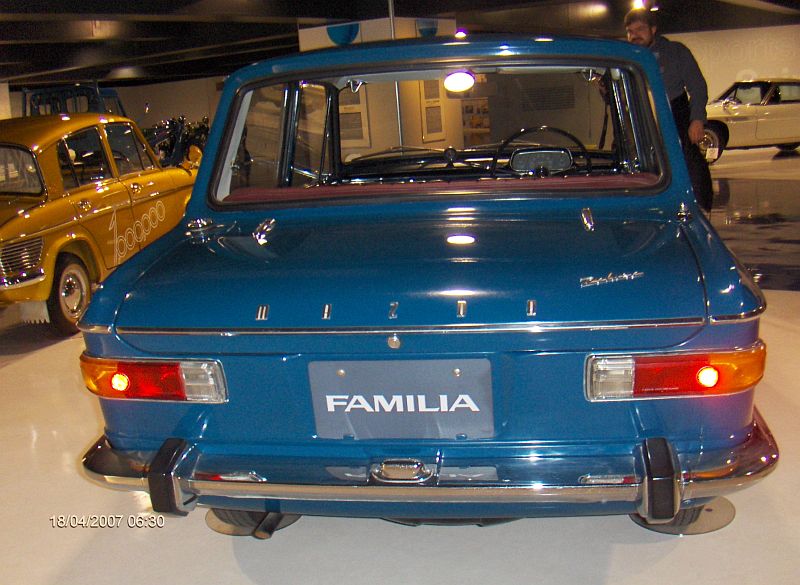
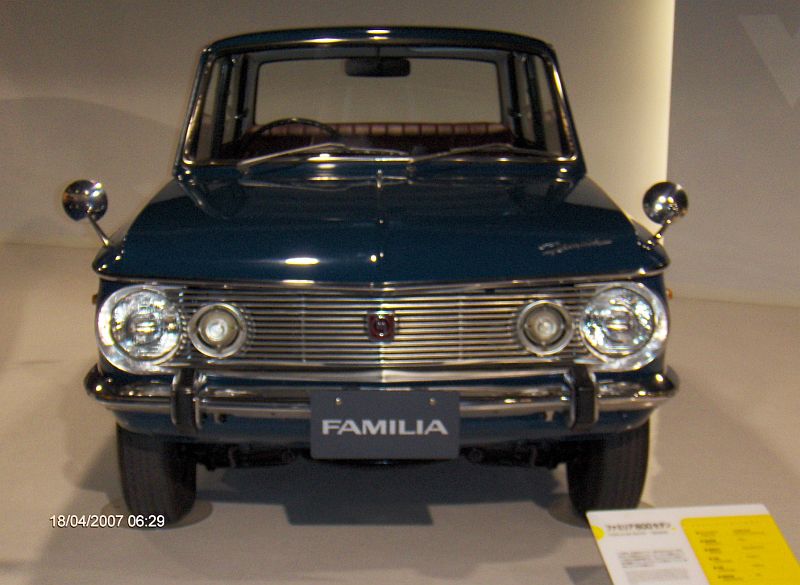
Stylistically, the Familia 800 Sedan displayed a clean, modern three-box design influenced by contemporary European small cars. It featured a modest chrome grille, round headlamps and uncluttered body lines that gave it a neat, contemporary appearance. Its proportions were well balanced, and while not flamboyant, the design conveyed a sense of honest practicality and modernity that resonated strongly with buyers seeking an affordable family car.
Inside, the cabin of the 800 Sedan was simple and functional but thoughtfully designed. Seating for four adults was standard, with vinyl upholstery chosen for durability and ease of cleaning. The dashboard layout was uncluttered, featuring clear dials and simple switchgear. The upright seating position provided good visibility, and the interior felt spacious relative to the car’s compact exterior dimensions. Though not luxurious, the build quality was solid, reflecting Mazda’s growing confidence as a manufacturer of everyday passenger cars.
On the road, the Familia 800 Sedan delivered steady, predictable and economical performance. The four-cylinder engine contributed to its refinement, and the suspension tuning gave a comfortable ride on both urban and suburban surfaces. Steering was light and intuitive, and the car’s modest weight allowed it to feel responsive even with its small engine. Fuel economy was excellent, making it appealing during an era when efficiency was a major consideration for family buyers.
The 800 Sedan played a significant role in Mazda’s early export efforts as well. It was sold in various international markets, sometimes simply as the “Mazda 800,” giving Mazda exposure abroad and helping the company transition from a domestic kei-car specialist to a global manufacturer. Its success created the foundation on which later Familia generations — including the famous 323 — would build.
Today, the Mazda Familia 800 Sedan is rare, as most examples were used extensively and not preserved. Yet it holds considerable historical importance. As one of Mazda’s first mainstream compact saloons, it demonstrated the company’s ability to design, engineer and market a competitive family car — an achievement that paved the way for Mazda’s global growth in the decades that followed.