Description
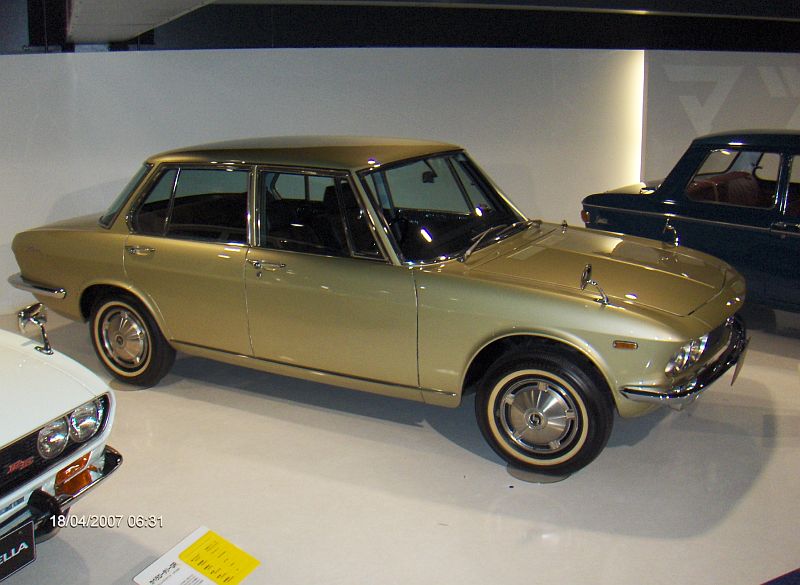
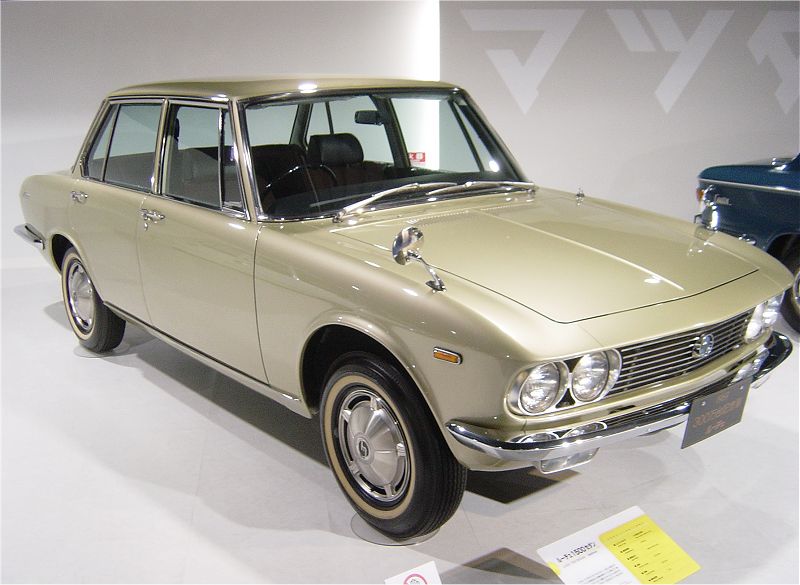
The Mazda Luce 1500 Sedan was one of Mazda’s most important early milestones, representing the company’s move into more sophisticated, internationally credible mid-size cars during the 1960s. Introduced in 1966 and styled under the direction of Giorgetto Giugiaro at Bertone, the Luce 1500 marked Mazda’s first major step toward a more upmarket identity. With clean Italian-inspired lines, advanced engineering for its class and a well-finished interior, it stood apart from Japan’s typical family sedans of the period and helped establish Mazda’s reputation for innovation and design refinement.
Power for the Luce 1500 Sedan came from Mazda’s 1490 cc inline-four engine, an overhead-valve unit producing around 78 horsepower in most specifications. While modest by modern standards, this engine gave the Luce strong performance for the mid-1960s Japanese market. It was smooth, durable and capable of steady high-speed cruising, which was essential as Japan’s national highway system rapidly expanded. The four-cylinder engine paired with a four-speed manual gearbox that shifted cleanly and was well matched to the engine’s torquey, flexible character. In some export markets a three-speed automatic later became available, adding to the car’s appeal as a comfortable long-distance tourer.
The Luce’s chassis and road manners were a step above many of its domestic rivals. Mazda used independent front suspension with coil springs and a well-located live rear axle, tuned for ride comfort and stability. The car handled predictably and felt composed at highway speeds, reflecting Mazda’s desire to create a sedan with a more European feel. The longer wheelbase compared with typical compact Japanese cars provided a smoother ride, while the sturdiness of the structure gave the Luce a reassuring sense of solidity. Disc brakes at the front were standard on many versions, an advanced feature for a Japanese family car in the mid-1960s.
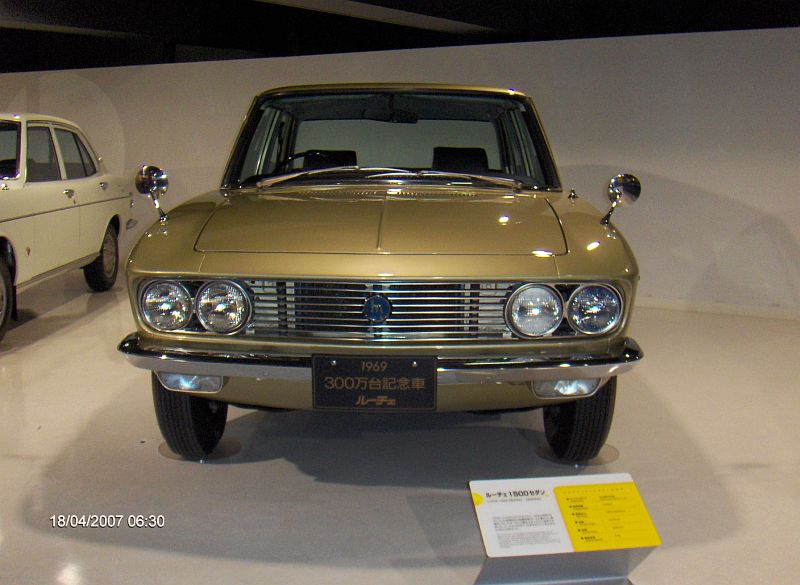
Styling was one of the Luce 1500 Sedan’s greatest strengths. Designed at Bertone during Giugiaro’s tenure there, the car carried crisp, elegant lines far more international in flavour than traditional Japanese designs of the era. A long, horizontal waistline, slim pillars, sculpted body sides and a refined front grille gave the Luce a sophisticated European appearance. The proportions were carefully judged, with a long bonnet and a well-balanced profile that helped differentiate Mazda from domestic manufacturers leaning towards more utilitarian shapes. The Luce’s styling received praise both in Japan and abroad, contributing significantly to Mazda’s global image.
Inside, the Luce 1500 offered a cabin that emphasised comfort, clarity and a subtle premium feel. The dashboard design was clean and functional, with well-arranged instruments and chrome-accented detailing that reflected European influences. Seats were generously padded and contoured for long-distance comfort, while the interior materials were chosen to create a more upscale atmosphere than most Japanese sedans of the era. Legroom and headroom were good for a mid-size car, and the overall sense of space and comfort made the Luce suitable for both family and executive use.
On the road, the Mazda Luce 1500 Sedan delivered refined, quiet and predictable performance. The engine’s smoothness and torque made city driving easy, while the chassis remained stable and comfortable at sustained motorway speeds. It was not a sports sedan, but it drove with polish and confidence. Its blend of good acceleration for the period, stable handling and comfortable ride made it one of the more satisfying Japanese sedans of its time. Export versions, aimed at markets such as Europe and Australia, were often praised for feeling more sophisticated than many competing models.
The Luce 1500 was also an important stepping stone for Mazda’s future innovation. It established the Luce as Mazda’s flagship line for many years, later evolving into rotary-powered versions, luxury sedans and eventually forming the basis for Mazda’s high-end offerings such as the 929 and Sentia. The 1500 helped Mazda gain credibility abroad and demonstrated that the company could design and build cars that appealed to global tastes.
Today, surviving Mazda Luce 1500 Sedans are rare and increasingly appreciated by enthusiasts of early Japanese classics. Their Italian styling, smooth engines, solid engineering and historical significance make them desirable collector pieces. As one of Mazda’s first truly international cars, the Luce 1500 Sedan stands as a landmark model that helped shape the company’s path toward refinement, innovation and global recognition.