

Description
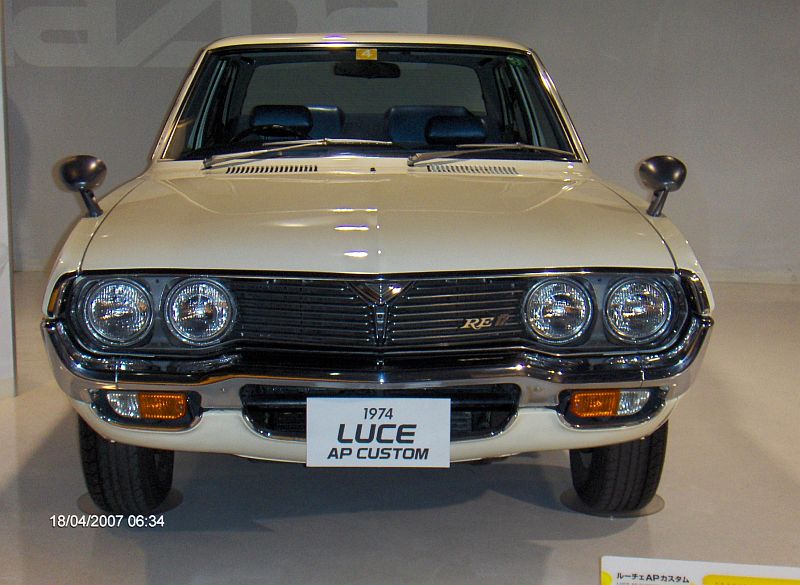
The Mazda Luce AP Custom was one of the more distinctive and comfort-orientated variants of the mid-1970s Luce lineup, created during a period when Mazda was expanding its rotary and piston-engined offerings into more upscale territory. The “AP” designation stood for “Anti-Pollution,” referring to Mazda’s cleaner-burning engines introduced to meet increasingly strict emissions regulations in Japan and abroad. The Luce AP models combined the modernised, squared-off styling of the mid-1970s Luce with engines tuned for lower emissions, and the “Custom” trim added a higher degree of comfort, visual refinement and luxury-leaning features. The result was a mature, well-equipped sedan that aimed to give Mazda a stronger presence in the executive segment of the domestic market.
Power for the Luce AP Custom came from either a piston engine or a rotary depending on the market and exact model code. Most commonly, the Custom trim used Mazda’s 1769 cc or 1970 cc inline-four engines, both of which were tuned to meet AP emissions regulations through revised carburetion and ignition systems. Power output was reduced slightly compared with earlier pre-AP models, but the engines remained smooth, dependable and suited to relaxed daily driving. In some markets a 13B rotary version of the Luce AP was offered, though this was more often found in the RX-4-based AP models rather than in the Custom trim. Transmission choices included a four-speed manual gearbox and a three-speed automatic, the latter emphasising the car’s comfort-oriented character.
The chassis was based on the contemporary Luce platform, which used MacPherson struts at the front and a well-located live rear axle supported by coil springs. This layout provided a stable, comfortable ride that suited the car’s upmarket ambitions. Mazda tuned the AP Custom’s suspension to prioritise smoothness and refinement rather than sportiness, and it proved well suited to Japanese road conditions of the era. Steering was light and predictable, and the longer wheelbase of the Luce platform gave the car good straight-line stability at motorway speeds. Front disc brakes were standard, adding to the car’s reassuring road manners.
Styling was one of the major defining traits of the Luce AP series. Mazda updated the original early-1970s Luce with a modern, squared-off look characterised by a wide grille, larger rectangular headlamps, a stronger shoulder line and a more angular rear section. The Custom trim emphasised visual elegance, often featuring additional chrome detailing, unique wheel designs, upgraded grille treatments and more elaborate exterior badging. The proportions remained handsome and balanced, giving the Luce AP a refined presence that positioned it above the more compact Capella/616 range. The crisp styling gave it a quiet, executive look that matched its comfort-based role.
Inside, the Luce AP Custom focused on comfort, convenience and a refined ambience. Higher-grade upholstery, patterned or velour cloth seats, improved carpeting and wood-tone dashboard accents helped distinguish it from simpler trims. The dashboard design was cleanly arranged with large, clear instruments and thoughtfully placed switchgear. Equipment levels were generous for a mid-1970s Japanese sedan, with many Custom models featuring amenities such as a push-button radio, upgraded ventilation controls, reclining front seats, additional interior lighting and enhanced sound insulation. The rear seat area offered generous space and was well padded, designed to appeal to buyers who required both family comfort and a more formal, executive tone.
On the road, the Mazda Luce AP Custom delivered a quiet, smooth and predictable driving experience. The AP-tuned piston engines were not powerful, but they were flexible and refined, particularly when paired with the automatic transmission. The ride quality was absorbent, the cabin remained calm at speed and the car handled with steady composure. It was not intended as a sporting model, but rather as a practical and comfortable sedan with an air of dignity and quality. The Custom trim in particular made the most of the Luce platform’s inherent refinement, and it excelled at relaxed cruising and daily use.
The Luce AP Custom played an important role in Mazda’s mid-1970s strategy. At a time when emissions regulations were reshaping the automotive landscape, Mazda used the AP badge to demonstrate compliance and technological adaptation. The Custom trim, meanwhile, helped Mazda push further into the semi-luxury segment, showing that the brand could produce a mature, comfortable sedan with attractive styling and high equipment levels. It set the stage for later, more ambitious Luce and 929 models that would carry Mazda further into the executive-car market.
Today the Mazda Luce AP Custom is rarely seen outside Japan, as many examples were used heavily and few were exported in large numbers. Among enthusiasts of early Japanese saloons it is appreciated for its crisp styling, refined cabin and its place in Mazda’s transition toward more upmarket offerings. As a comfortable, well-equipped and elegantly designed sedan of the mid-1970s, the Luce AP Custom remains an intriguing and historically significant chapter in Mazda’s development.