
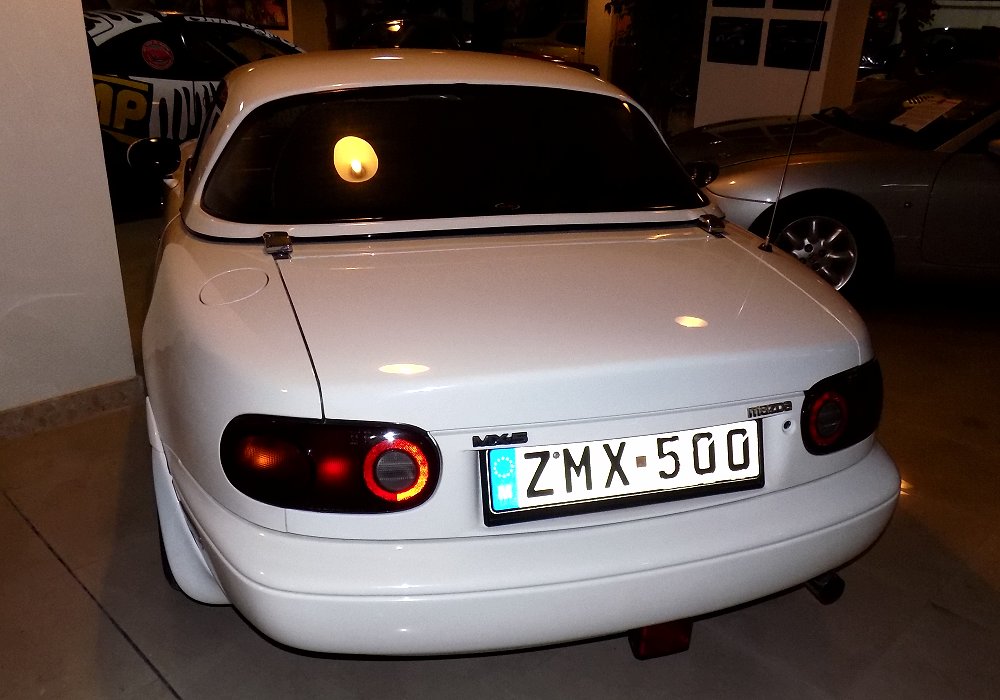
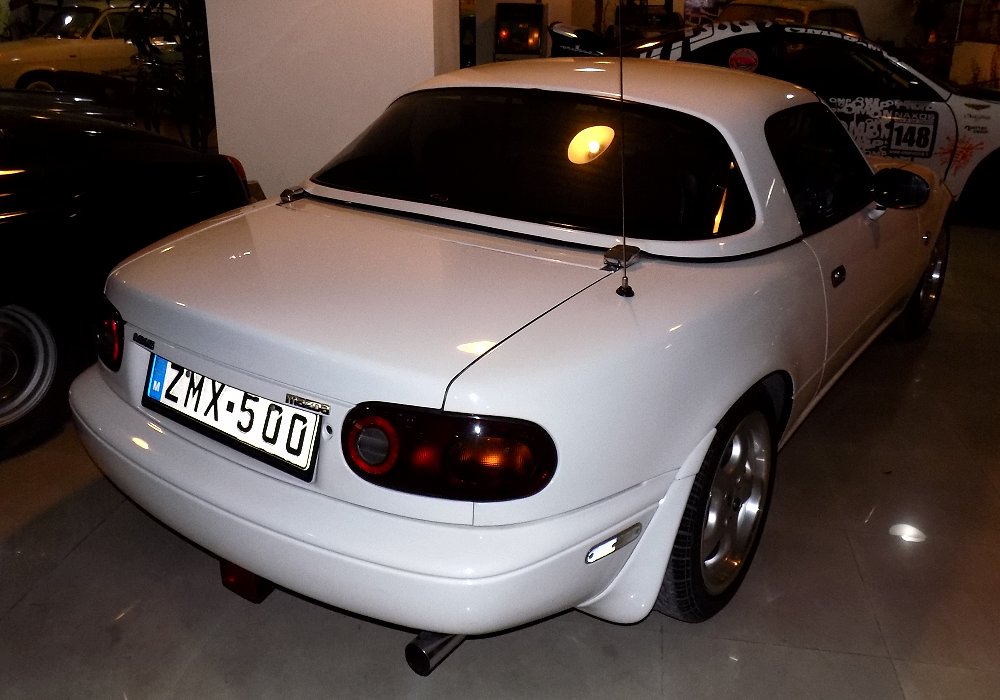
Description
The Mazda MX-5 Hardtop refers to the factory-produced removable roof offered for several generations of the MX-5/Miata, designed to transform the lightweight roadster into a more refined, weatherproof and long-distance-friendly sports car without sacrificing its core open-air character. While not a separate model in its own right, the hardtop option became highly significant in the MX-5 community, influencing how the car was used, perceived and enjoyed. For many owners it turned the MX-5 into a true all-season machine, and today original hardtops are prized, especially for early models.
The hardtop option was first offered on the NA-series MX-5 (1989–1997). Mazda designed a beautifully integrated, lightweight fibreglass roof that followed the car’s smooth, compact profile. With its heated glass rear window, weather-tight seals and excellent fit, it gave the MX-5 a more coupe-like feel while preserving the purity of its styling. The pop-up headlamps and clean beltline meant the hardtop looked almost factory-as-standard, enhancing the car’s proportions rather than disrupting them. It bolted to reinforced mounting points on the body, ensuring rigidity and eliminating the flex often associated with aftermarket roofs.
The NB generation (1998–2005) continued with a similar hardtop concept. Mazda refined the design with a more rounded, modern shape that matched the updated styling. The heated rear window became standard, and the panel fit improved further. The hardtop not only offered better insulation and security but also enhanced chassis stiffness, sharpening steering response and cornering precision. This made the NB Hardtop particularly popular among track-day and club-racing drivers, who valued the extra rigidity without the weight of a full roll cage.
The NC (2005–2015) marked a major shift, as Mazda introduced the Power Retractable Hardtop (PRHT). No longer a removable accessory, this was a fully folding electric roof that transformed the MX-5 into a dual-personality car: a coupe when closed, an open roadster when retracted. The PRHT added weight but was engineered cleverly to preserve boot space and the car’s balanced dynamics. It broadened the MX-5’s appeal to buyers wanting greater refinement, quieter cruising and year-round usability while still enjoying top-down motoring at the touch of a button.
The ND generation (2015–present) split into two roof types: the traditional soft-top and the RF (Retractable Fastback). The RF, while not a fully removable hardtop in the classic sense, followed the hardtop philosophy by offering a rigid, stylish roof structure with a targa-style opening. It created a more coupe-like aesthetic with a distinctive flying-buttress rear design. The RF catered to drivers seeking the most refined, weather-resistant and visually striking version of the modern MX-5 while keeping the lightweight ethos intact.
Across all generations, interior design and equipment did not change significantly with the hardtop, but the driving environment did. With the hardtop fitted, NA and NB models became noticeably quieter, warmer and more secure. Wind noise was reduced, making motorway driving more comfortable, and the cabin felt more solid thanks to improved body rigidity. Visibility was improved through the use of heated glass rear windows, a major upgrade from the soft-top’s early plastic rear screen. On damp or icy days, the hardtop transformed the MX-5 from a fair-weather roadster into a practical daily driver.
On the road, the hardtop-equipped MX-5 delivered a subtly different dynamic character. The added structural rigidity sharpened the front-end response, improved high-speed stability and made the car feel more composed during hard cornering. For drivers who enjoyed spirited driving — especially those using NA and NB models for track days or autocross — the hardtop became an essential accessory. Yet even with the roof on, the MX-5 retained its playful, lightweight feel, responsive steering and balanced chassis.
The Mazda MX-5 Hardtop played a key role in the car’s broad appeal. It allowed Mazda to offer the best of both worlds: an open, elemental roadster when desired and a refined coupe-like sports car when needed. For many enthusiasts, the removable hardtop has become a prized piece of MX-5 heritage — especially the original NA and NB tops, which are highly sought after today for restoration builds, winter use or motorsport applications.
As a concept, the MX-5 Hardtop stands as a reminder of Mazda’s commitment to usability and driver enjoyment. It allowed one of the world’s greatest roadsters to adapt effortlessly to different climates, driving styles and owner needs, all while preserving the simplicity, balance and joy that define the MX-5 legacy.