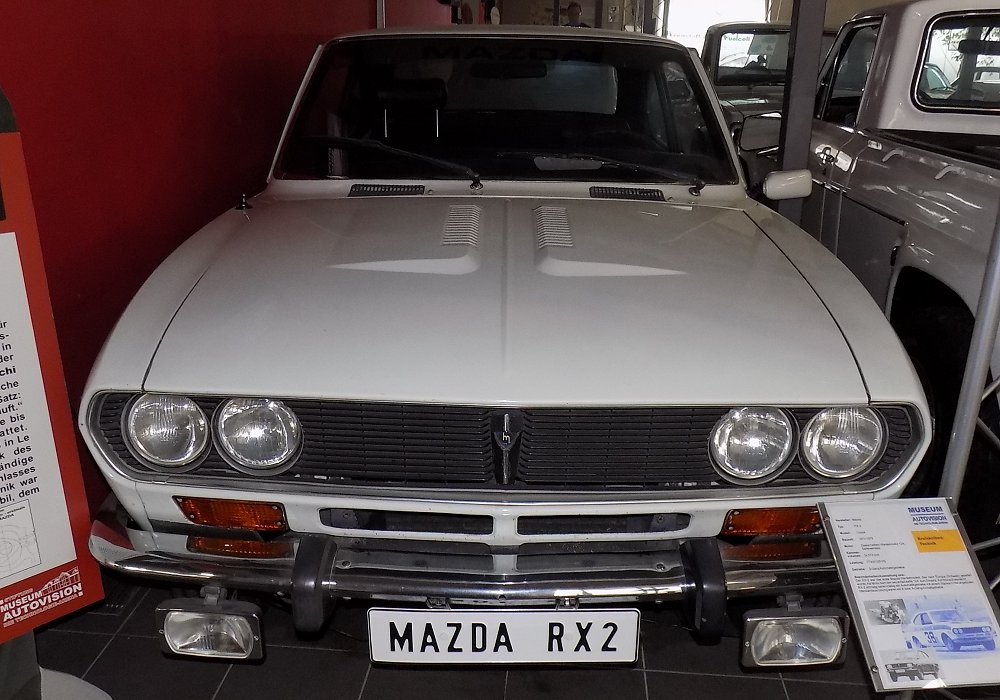
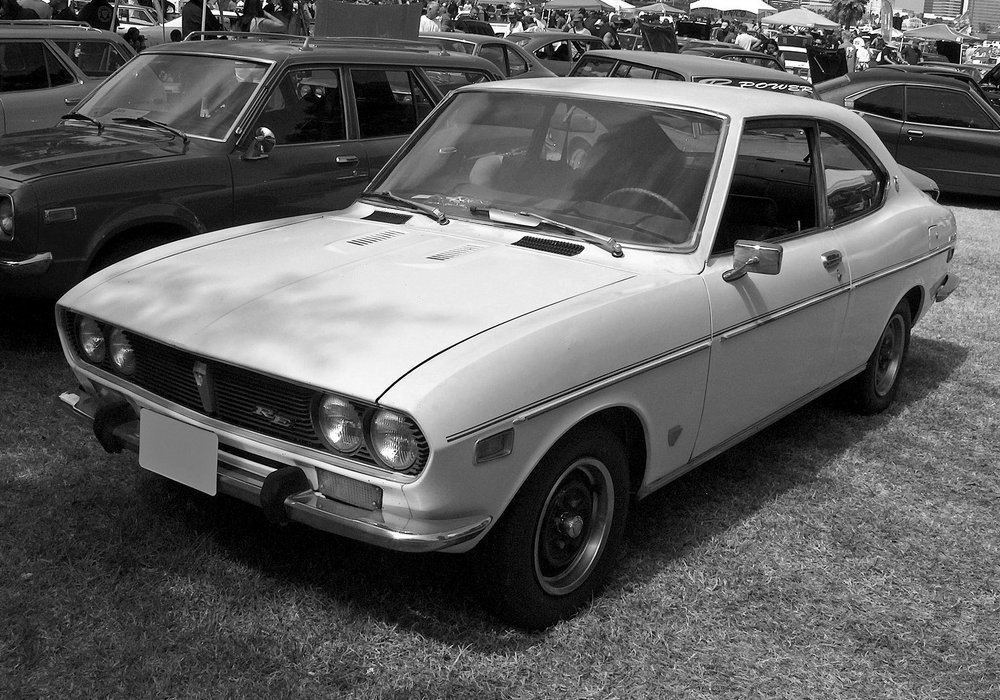
Description
The Mazda RX-2 Coupé AT was the automatic-transmission version of one of Mazda’s earliest and most influential rotary-powered cars. Introduced in the early 1970s, the RX-2 (sold as the Capella Rotary in some markets) helped establish Mazda’s reputation for smooth, high-revving Wankel engines, and the Coupé version combined that uniquely Mazda performance with more stylish, youthful lines than the standard sedan. The AT model added an automatic gearbox, appealing to buyers who wanted the refinement of rotary power without the involvement of a manual transmission. It became a distinctive offering in a period when automatic coupés with performance ambitions were still relatively uncommon.
Power came from Mazda’s 12A twin-rotor engine, a compact and lightweight rotary unit producing around 120 horsepower in most period specifications. The 12A delivered the characteristic rotary traits that defined the RX-series: exceptionally smooth operation, a willingness to rev freely and a linear power delivery untainted by vibration or mechanical harshness. In automatic form the car felt more relaxed than the manual version, with the torque characteristics of the rotary engine pairing surprisingly well with Mazda’s early automatic gearbox. Acceleration was still brisk for the era, and the effortless, turbine-like nature of the engine gave the Coupé AT a refined and distinctive performance feel.
The automatic transmission itself was a 3-speed unit designed for smoothness and ease of use. While it did not offer the sharp, engaging response of the manual, it suited the RX-2 Coupé’s more stylish and mature positioning, making the car enjoyable in traffic and during relaxed touring. Gear changes were clean, and the rotary engine’s flexible rev range allowed the transmission to hold gears comfortably without frequent shifting. For many buyers, the AT version offered a unique combination: the exotic engineering of a rotary with the convenience of an easy-driving automatic.
The chassis of the RX-2 Coupé matched the character of the drivetrain. The car used MacPherson strut front suspension and a well-located rear axle, giving it stable and predictable handling. The light weight of the rotary engine contributed to good steering response and a balanced feel, while the Coupé’s shorter body and slightly sportier suspension tuning made it more agile than the sedan. The RX-2 was widely praised for its secure road manners, comfortable ride and its ability to cover long distances with little effort — qualities that were especially appealing in the automatic version.
Styling was one of the RX-2 Coupé’s great strengths. With its long bonnet, crisp body lines and fastback-influenced rear, the car had a clean, athletic appearance typical of early 1970s Japanese coupés. Twin round lamps (or rectangular units depending on market), chrome detailing, and rotary-specific badges emphasised its engineering pedigree. The Coupé looked purposeful but refined, with a stance that hinted at performance without being overly aggressive. Period wheel designs and Mazda’s characteristic rotary emblems added to the car’s distinctive identity.
Inside, the RX-2 Coupé AT offered a stylish and well-equipped cabin for its segment. A clear instrument cluster, including a large tachometer, reminded drivers of the engine’s high-revving nature even in automatic form. The dashboard was neatly laid out, with quality materials and thoughtful detailing. Upholstery was comfortable, and the Coupé configuration allowed for a more enveloping interior feel than the sedan. For its time, the RX-2 was well appointed, with features aimed at conveying a sense of refinement rather than raw sportiness. The automatic gearbox further contributed to a smooth, quiet and relaxed driving experience.
On the road, the RX-2 Coupé AT delivered a blend of smooth power, comfortable touring ability and distinctive rotary character. The 12A engine provided energetic mid-range performance, and the automatic transmission made the car easy to drive in all conditions. Steering was light, handling was composed, and the suspension struck a good balance between comfort and control. While the manual version offered a more spirited feel, the AT model excelled at effortless cruising, making it an appealing choice for buyers seeking a refined yet unusual coupé.
The RX-2 played a major role in Mazda’s rotary ambitions during the early 1970s, and the automatic Coupé version helped broaden the appeal of rotary power beyond enthusiasts. It showed that a rotary-powered car could be smooth, comfortable and usable every day, not just an exotic technical experiment.
Today, the Mazda RX-2 Coupé AT is rare and highly valued among classic rotary enthusiasts. Surviving examples are prized for their combination of period styling, early-generation rotary engineering and the unique charm of a rotary-powered automatic. As an elegant, refined and technically fascinating coupé, it remains a significant and memorable chapter in Mazda’s rotary history.