Description
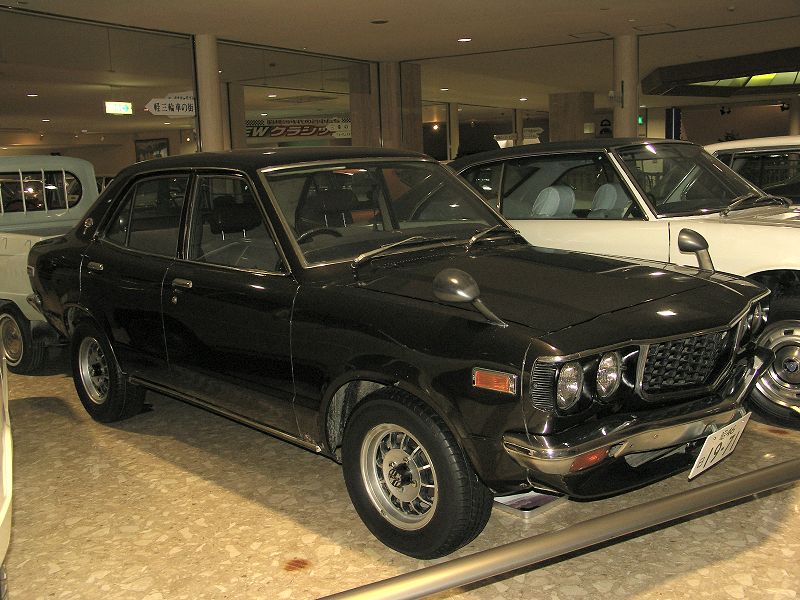
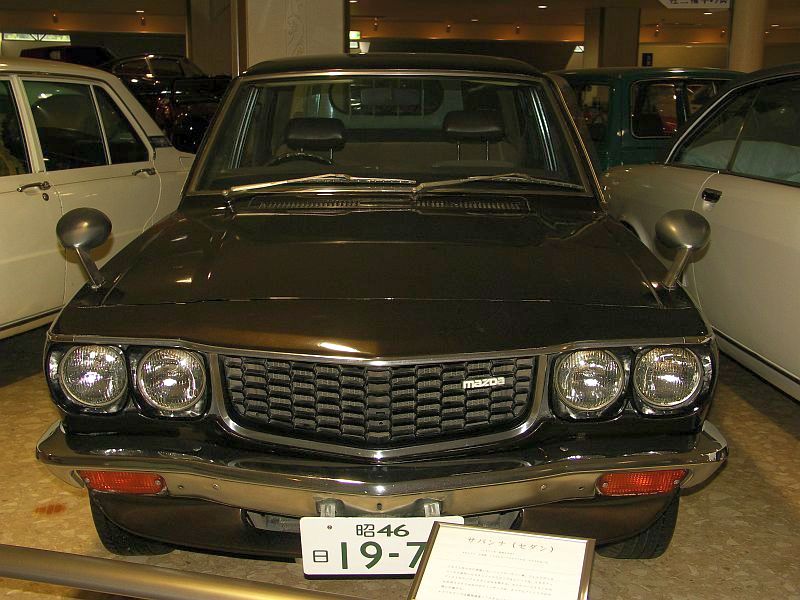
The Mazda RX-3 Savanna Sedan was one of the defining rotary-powered cars of the 1970s and a central model in Mazda’s effort to bring the Wankel engine to a global audience. Introduced in 1971 and sold alongside its piston-engined Grand Familia sibling, the Savanna Sedan offered the unique performance, refinement and character of Mazda’s rotary engine in a practical four-door body. While the coupé and racing versions tend to receive the most attention today, the Savanna Sedan played an equally important role, giving Mazda a credible family car that combined everyday usability with the smoothness and excitement that only a rotary engine could deliver.
At the heart of the RX-3 Savanna Sedan was Mazda’s 10A twin-rotor engine, a compact, sophisticated unit producing around 105 horsepower in period. This was a remarkable figure for a small displacement, especially when compared with similarly sized piston engines of its era. The 10A delivered its power with an effortless, turbine-like smoothness, eager revving and a distinctive rotary soundtrack. Later versions of the RX-3 were fitted with the larger 12A engine, which improved mid-range torque and gave the sedan more flexibility in everyday driving. Regardless of engine, power was sent to the rear wheels through a four-speed manual gearbox or, in some markets, an automatic transmission. The rotary’s compact size and lightness allowed for excellent weight distribution and gave the sedan an agility uncommon in ordinary family saloons of the early 1970s.
The chassis of the Savanna Sedan followed Mazda’s familiar layout of the time. Independent coil-spring front suspension and a leaf-sprung live rear axle provided a balance of stability, ride comfort and predictable handling. The braking system featured front discs on most rotary versions, an important upgrade over the drum-equipped piston models. The four-door body was slightly heavier than the coupé, but the rotary’s free-revving nature easily compensated, giving the Sedan a brisk, responsive personality that made it enjoyable to drive even in everyday traffic. The RX-3’s steering was light and direct, and the car’s compact dimensions gave it a nimble feel whether on city streets or winding country roads.
Styling was a key part of the RX-3’s appeal. The Savanna Sedan shared the sharp, sporty look of the full RX-3 range, with its twin round headlights, slender grille and clean shoulder line running from nose to tail. The four-door silhouette was practical and upright, but Mazda gave it just enough visual aggression to signal its rotary power. Subtle differences set the Savanna apart from its piston-engined Grand Familia relative, including unique badging, sportier trim and wheel designs that hinted at the performance beneath the surface. The RX-3 had a crisp, purposeful presence that made it stand out in an era dominated by more conservative compact sedans.
The interior was functional, tidy and well laid out. Clear round gauges, including a prominent tachometer, emphasised the rotary’s high-revving nature, and the dashboard featured straightforward switchgear typical of early-1970s Mazda design. The sedan offered comfortable seating for four adults, good visibility thanks to thin pillars and large windows, and enough luggage space to serve as a genuine family car. Though not luxurious, the Savanna’s cabin was durable and practical, designed to appeal to buyers who wanted a sporting edge without sacrificing everyday usability.
On the road, the RX-3 Savanna Sedan delivered a unique blend of refinement and enthusiasm. The rotary engine gave it smooth acceleration with no vibration, and its willingness to rev encouraged drivers to explore the upper reaches of the tachometer. The sedan chassis remained composed, and the lightness of the rotary engine over the front axle helped give the car an agile, balanced feel. While fuel consumption was higher than piston rivals, the performance advantage and distinctive driving experience more than compensated for many owners. The Savanna Sedan excelled in urban driving, suburban commuting and country-road touring alike, making it one of the most versatile rotary models Mazda ever produced.
The RX-3 family gained international fame for its motorsport success, particularly in touring-car racing during the early 1970s. While the coupés took centre stage on track, the shared mechanical foundation ensured that the sedan benefited from the same engineering focus and performance potential. The RX-3 soon earned a reputation for being tough, responsive and surprisingly quick, helping Mazda establish its rotary technology in markets worldwide.
Production continued into the late 1970s, after which the RX-3 line gave way to the RX-7. The Savanna Sedan, however, retained a devoted following among rotary enthusiasts for its blend of practicality and character.
Today, the Mazda RX-3 Savanna Sedan is highly sought after in classic Japanese-car circles. Far rarer than the coupé in many regions, surviving sedans are admired for their clean lines, mechanical purity and unmistakable rotary personality. As one of the key models that helped Mazda carry the rotary engine into mainstream motoring, the Savanna Sedan remains an important and charming classic — a family saloon with the heart of a high-revving rotary sports car.