Description
The Mazda RX-4 Rotary Coupé was one of Mazda’s most charismatic rotary-powered grand-touring cars of the 1970s, combining the smooth performance of the Wankel engine with bold styling and a distinctive fastback coupé shape. Introduced in 1973 as part of the second-generation Luce/RX-4 family, the Rotary Coupé sat alongside the RX-4 Sedan and Station Wagon but stood out as the most dramatic and sporting body style. It was designed to offer a more refined, long-legged alternative to the smaller RX-3, while still delivering the unmistakable rotary character that set Mazda apart during this period.
Power came from Mazda’s 12A twin-rotor engine in early models and, in some markets and later production, from the larger 13B unit. In its common 12A form the engine produced around 120 horsepower, making the RX-4 Coupé one of the more powerful Japanese cars of its day. The rotary’s smooth, linear delivery and willingness to rev gave the car turbine-like acceleration, and the lightweight nature of the engine helped maintain good weight distribution. A four-speed manual gearbox was standard, offering clean, mechanical shifts that suited the engine’s free-revving character. Buyers could also choose a three-speed automatic, which emphasised the coupé’s grand-touring side by providing relaxed and seamless cruising.
The chassis was designed for comfort and steadiness rather than sharp, sporting dynamics. Independent front suspension with MacPherson struts, combined with a coil-sprung and well-located live rear axle, produced predictable handling and a stable ride at higher speeds. The longer wheelbase and wider track compared with smaller rotary models made the RX-4 Coupé feel more planted on the open road, and Mazda tuned the suspension with long-distance refinement in mind. Front disc brakes were standard on most variants, giving the car strong stopping capability for its era. The result was a rotary-powered coupé that excelled in smoothness and composure rather than raw cornering aggression.
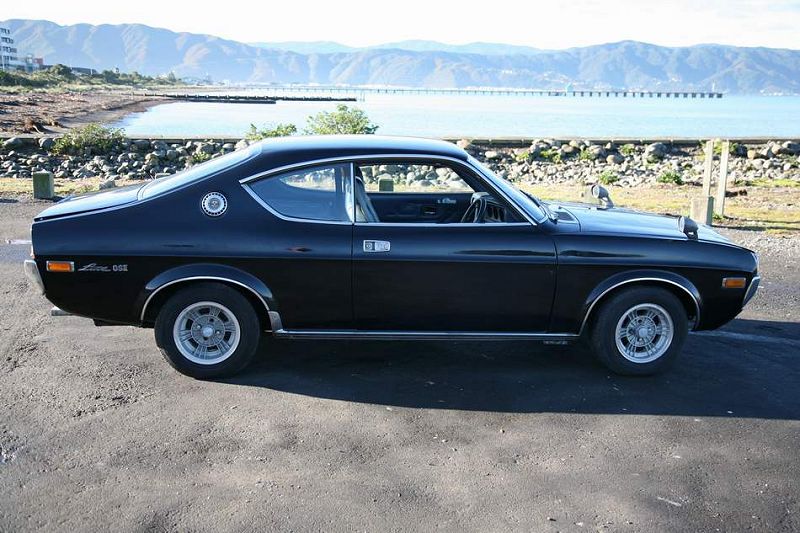
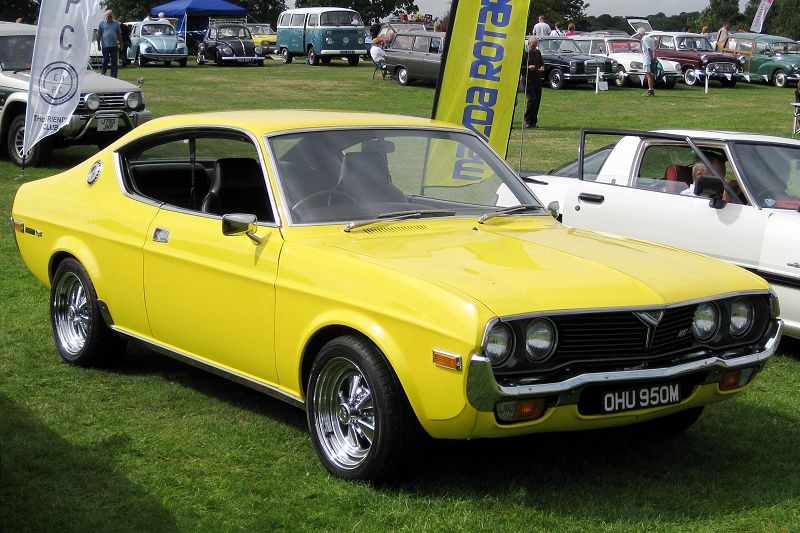
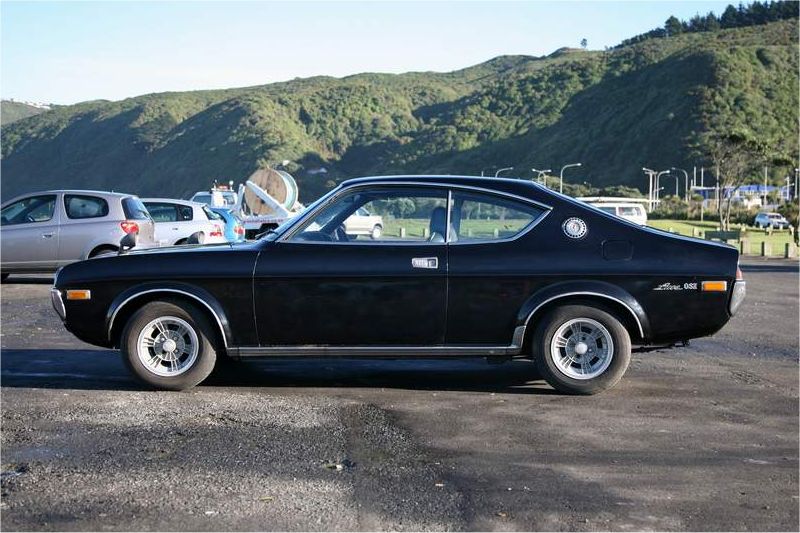
Styling was one of the RX-4 Rotary Coupé’s great strengths. Mazda gave it a bold, striking look that blended Japanese sharpness with influences from American fastback designs of the early 1970s. The long bonnet, sweeping roofline and strongly defined rear quarters gave the car real presence. A broad grille and quad headlamps provided a confident, slightly muscular front end, while the coupé profile emphasised the car’s grand-touring intent. Clean body sides, crisp panel lines and a subtle tail treatment added to its refined but purposeful character. In period the RX-4 Coupé was considered one of Mazda’s most stylish models, and today its fastback proportions remain highly admired.
Inside, the car offered a spacious, comfortable and well-trimmed cabin. The dashboard featured large, clear instruments — including the prominent tachometer essential in a rotary — alongside wood-tone accents and well-placed controls. Seat comfort was good for a sports-oriented coupé, with wide, padded front seats and usable rear seating for passengers. Many models included upgraded trim, integrated radios, vinyl or cloth upholstery depending on specification, and bright metal or wood-effect details that gave the cabin a more premium feel than the RX-3. The interior design reflected Mazda’s ambition to position the RX-4 as an upscale GT rather than a stripped-back sports car.
On the road, the Mazda RX-4 Rotary Coupé delivered the smooth, refined driving experience that defined Mazda’s larger rotary models. The engine’s vibration-free nature made it exceptionally pleasant in everyday driving, and the car accelerated with a quiet, effortless flow. The suspension favoured comfort over immediacy, giving the RX-4 a relaxed, cruising-oriented character. At motorway speeds the car felt stable and confident, and the rotary engine maintained its power without strain. While the RX-4 would not match the sharper agility of the smaller RX-3 or the sporting purity of the later RX-7, it offered a more mature and long-legged personality suited to touring and everyday refinement.
The RX-4 Rotary Coupé played an important role in Mazda’s broader rotary programme. It demonstrated that rotary power could be integrated into a larger, more luxurious car with genuine grand-touring qualities, helping to broaden the appeal of the technology beyond compact sporting models. The RX-4 also contributed to Mazda’s international growth during the 1970s, with strong sales in markets such as Australia, New Zealand and parts of Europe.
Today the Mazda RX-4 Rotary Coupé is a sought-after classic, especially among rotary enthusiasts who appreciate its distinctive styling, smooth performance and importance in Mazda’s rotary heritage. Surviving examples are increasingly rare, and well-preserved cars are valued for their elegant fastback design and their place as one of Mazda’s most charismatic early GT machines.