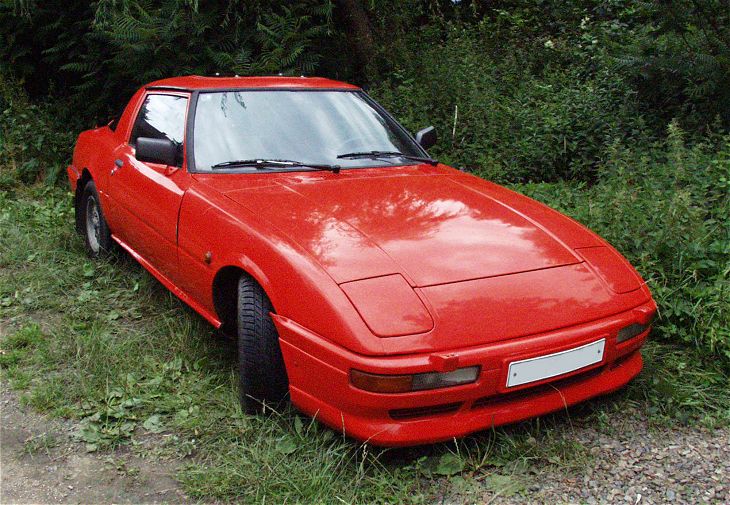
Description
The Mazda RX-7 was Mazda’s definitive rotary-powered sports car and one of the most important performance models ever to come out of Japan. Produced across three generations between 1978 and 2002, the RX-7 became a global icon for its lightweight engineering, innovative twin-rotor engines and beautifully balanced rear-wheel-drive handling. Each generation refined Mazda’s rotary philosophy, but all shared the same core identity — compact size, smooth rotary power, and a chassis tuned for agility and driver involvement rather than brute strength.
The first-generation RX-7 (SA22C/FB), introduced in 1978, set the tone for the series. It used Mazda’s 12A twin-rotor Wankel engine, mounted low and far back to optimise weight distribution. Producing around 100–135 horsepower depending on market, the 12A delivered smooth, rev-happy performance and a distinctly turbine-like character. The car was lightweight — just over 1,000 kg — and its near-perfect balance made it agile and forgiving on twisty roads. With independent front suspension, a well-located live rear axle and sharp steering, the early RX-7 became known for playful, confidence-inspiring handling. Its styling combined a long bonnet, compact cabin and flowing fastback profile with distinctive wraparound glass, creating a modern sports-car silhouette for the era.
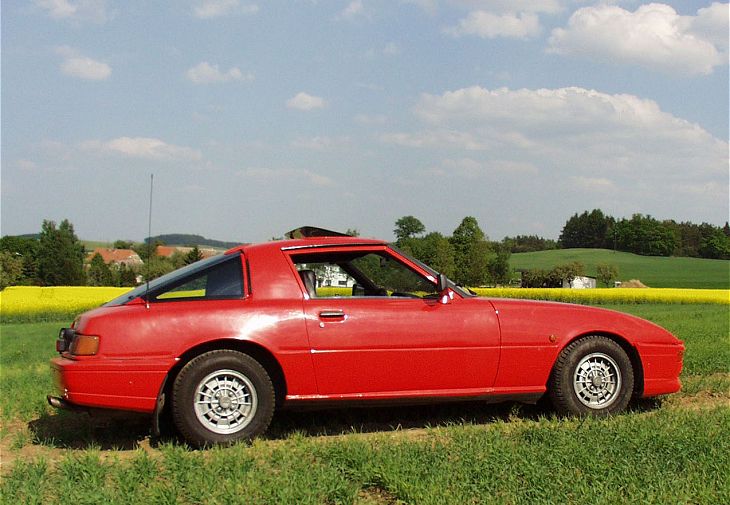
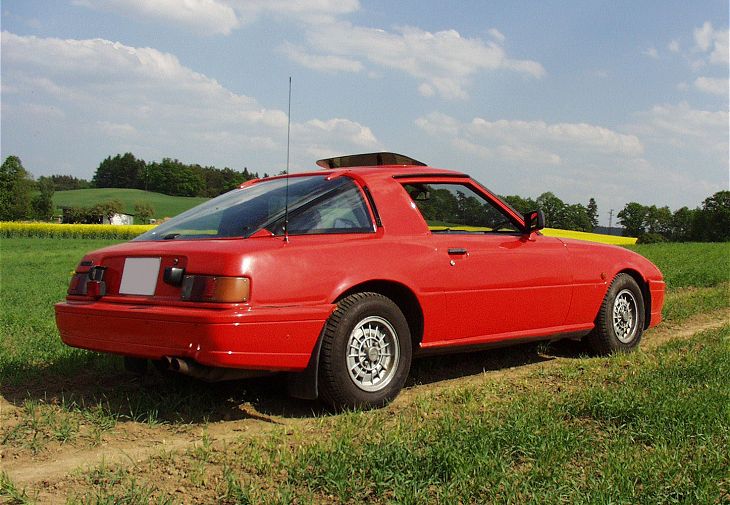
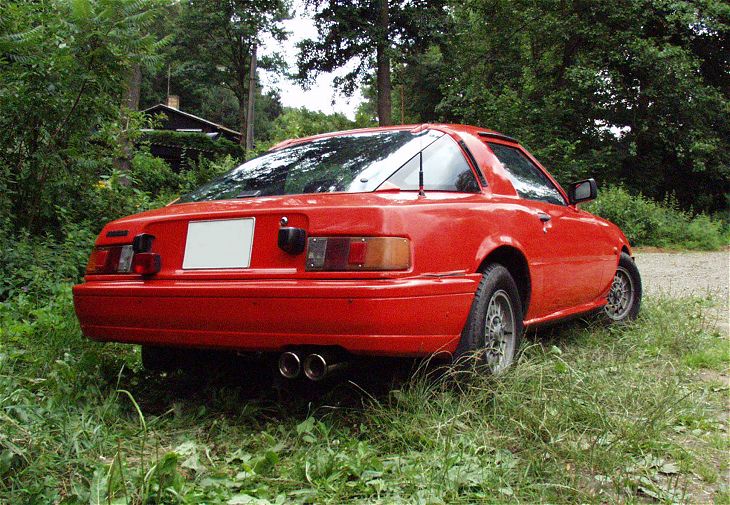
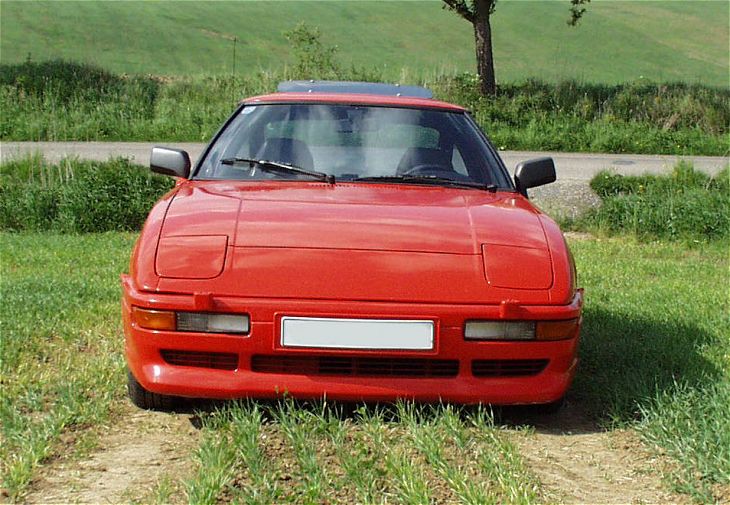
The second-generation RX-7 (FC), launched in 1985, moved the model into a more refined and sophisticated territory, borrowing elements of its design and driving character from European sports cars. The car grew larger and more substantial, with smoother aerodynamics and a more mature grand-touring feel. It introduced turbocharging for the rotary engine in many markets, and the 13B-T version produced significantly stronger mid-range torque and higher performance. Suspension became fully independent at the rear, and Mazda fitted advanced technologies such as adjustable dampers, improved aerodynamics and optional rear-steer systems in certain models. While heavier than its predecessor, the FC retained excellent balance and offered a more composed, high-speed personality.
The third-generation RX-7 (FD), introduced in 1992, represented the peak of Mazda’s rotary engineering. It returned to the lightweight ethos, with a compact, deeply sculpted body and a kerb weight typically around 1,250 kg — impressive given its high level of performance. Under the bonnet sat the 13B-REW twin-rotor engine with sequential twin turbochargers, creating one of the most advanced production powertrains of the 1990s. Output varied by market, generally between 255 and 280 horsepower, and the engine delivered immediate low-rpm response followed by a powerful surge as the second turbo came online. The FD’s suspension was a sophisticated double-wishbone system front and rear, giving the car razor-sharp handling, beautifully linear steering and exceptional composure at speed. Its design — low, wide and taut — remains one of the most admired sports-car shapes of its era.
Across all three generations, the interior philosophy stayed consistent: simple, driver-focused and purposeful. Early cars used a straightforward dashboard with clear analogue gauges, while later models gained more modern ergonomics, improved materials and sportier seating. The FD, especially in higher-spec variants, delivered a cockpit that wrapped around the driver, enhancing the sense of precision and intent.
On the road, every RX-7 shared the same essential traits: smooth rotary power, fast-revving response and a balanced chassis that encouraged enthusiastic driving. The rotary engine’s compactness allowed Mazda to place it low and far back, giving all RX-7 models excellent weight distribution. This made them agile, predictable and rewarding cars whether driven on tight backroads, on the track or at high speed. The FD, in particular, delivered a level of purity and responsiveness that placed it among the world’s finest driver’s cars, capable of matching or exceeding contemporary rivals from Porsche and Nissan.
The RX-7 played a major role in motorsport as well. From IMSA GTU dominance in the 1980s to rallying, touring cars and endurance racing, the RX-7 became one of the most successful rotary-powered platforms in competition. The FD later achieved cult status in drift culture and tuning communities, where its lightweight design and potent rotary engine made it a favourite for high-performance builds.
Today, all generations of the Mazda RX-7 are considered modern classics. Enthusiasts value them for their unique engines, engaging driving dynamics and iconic styling. Early SA22C models are appreciated for their purity, the FC for its blend of refinement and turbocharged power, and the FD for its world-class performance and timeless design. As the last mass-produced rotary sports car line, the RX-7 stands as one of Mazda’s greatest achievements — a bold, innovative series of lightweight machines that remain among the most distinctive and beloved sports cars ever built.