Description
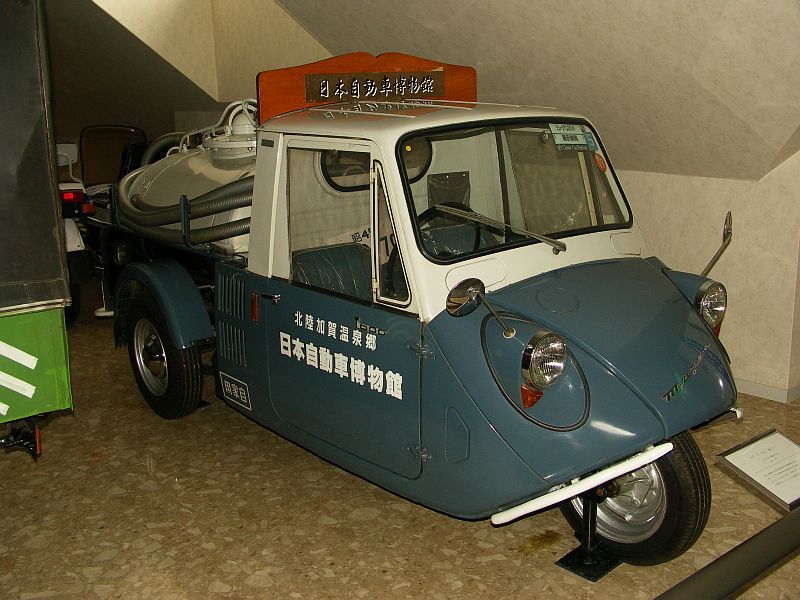
The Mazda T-600 was one of Mazda’s early three-wheeled commercial trucks, designed during Japan’s post-war industrial expansion as a compact, affordable and highly manoeuvrable work vehicle for small businesses. Introduced in the early 1960s, the T-600 occupied an important place in Mazda’s commercial lineup, sitting between the smaller T-150/T-200 series and the larger T-1100 models. Its combination of a lightweight chassis, simple engineering and dependable performance made it a popular choice among urban delivery operators, market vendors and tradesmen who needed a low-cost vehicle capable of navigating Japan’s crowded city streets.
Power came from Mazda’s air-cooled 577 cc single-cylinder or twin-cylinder engine, depending on year and configuration. Although modest in output, the engine provided enough torque for the vehicle’s intended use, offering steady acceleration and strong low-speed pulling power. The unit was simple, rugged and designed for ease of maintenance, which was a crucial factor for small business owners. Paired with a manual transmission, the drivetrain prioritized durability, fuel economy and reliability over outright performance. The engine’s light weight helped keep the overall vehicle agile, and its uncomplicated design made it well suited to daily commercial duty.
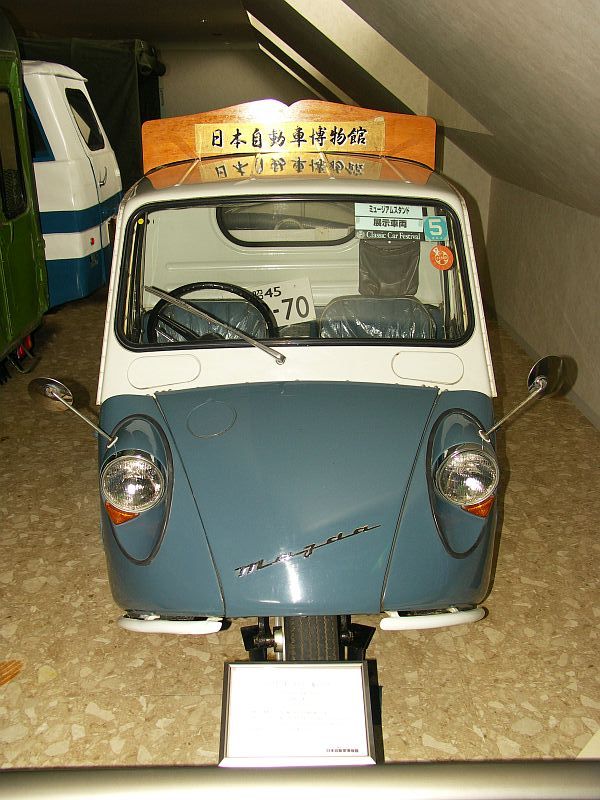
The chassis followed Mazda’s traditional three-wheeler format of the era, with two driven rear wheels and a single steerable front wheel mounted under the nose. This layout gave the T-600 an exceptionally tight turning circle, allowing it to weave through narrow alleys, crowded markets and tight industrial yards far more easily than four-wheeled trucks. The lightweight steel frame was designed to withstand daily loading while keeping manufacturing costs low. Suspension was simple but effective, giving the T-600 a comfortable ride at low speeds and helping maintain stability under load. Its rear-wheel-drive layout provided dependable traction, especially when carrying weight in the bed.
Styling was functional and typical of Japanese three-wheel trucks of the period. The T-600 featured a compact cab with a rounded front section that housed the steering and controls, topped by a small windshield and minimal bodywork. The shape was intentionally simple to reduce manufacturing costs and to keep the vehicle light. Large side openings and thin pillars provided excellent visibility, essential for navigating busy urban streets. The rear bed was offered in various configurations, including open flatbeds and box-type beds, depending on the needs of the operator. The design prioritised practicality and ease of loading rather than aesthetics.
Inside, the T-600 was extremely basic, with minimal instrumentation, a simple steel dashboard and durable seating for the driver and sometimes a passenger. Comfort levels were modest, but the upright driving position and straightforward controls made the vehicle easy to operate, even for inexperienced drivers. The cabin was designed to be easy to clean and maintain, reflecting the truck’s working-vehicle purpose. Its functionality and simplicity were key to its appeal.
On the road, the Mazda T-600 offered predictable, steady performance that matched its commercial role. Acceleration was gentle but sufficient for city deliveries. The vehicle’s small size and three-wheel steering made it exceptionally manoeuvrable, and its light weight allowed the modest engine to perform effectively. The suspension soaked up bumps adequately, and the truck felt stable when loaded appropriately. While it was not designed for high-speed travel or long-distance hauling, it excelled in tight urban environments where agility and reliability were essential.
The Mazda T-600 played an important part in Mazda’s evolution as a manufacturer of practical commercial vehicles. It helped provide mobility to thousands of small enterprises during a period of rapid economic growth in Japan. Its simple engineering and low operating costs made it a trusted tool for everyday work, and it contributed to Mazda’s reputation for producing dependable, user-friendly light-commercial vehicles.
Today, surviving Mazda T-600s are rare and appreciated mostly by collectors of early Japanese commercial machinery. Their quirky three-wheel configuration, historical significance and utilitarian charm make them appealing to enthusiasts who value the roots of Japan’s post-war automotive industry. As an early chapter in Mazda’s long history of building practical and inventive work vehicles, the T-600 remains an important and characterful milestone.