Description
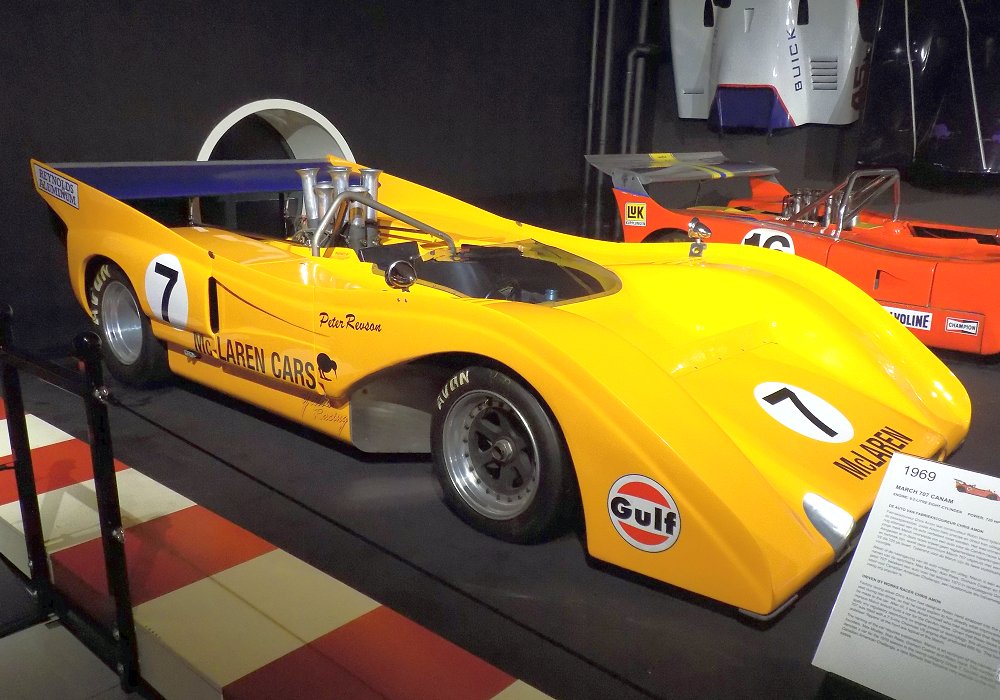
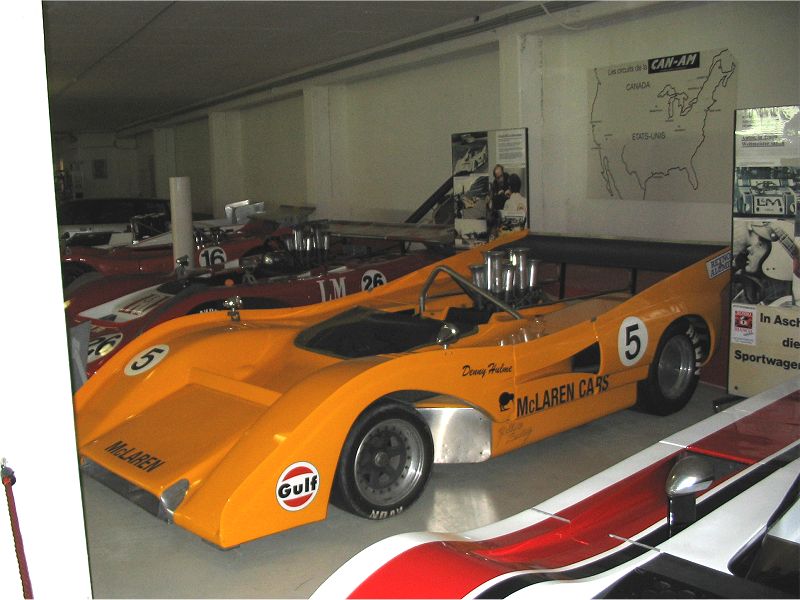
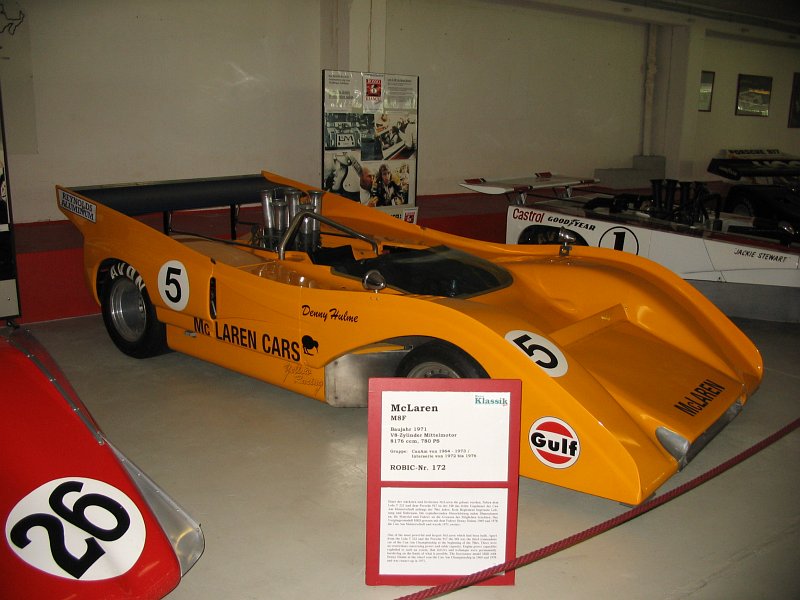
The McLaren M8F was the final and most extreme evolution of McLaren’s dominant Can-Am dynasty, introduced for the 1971 season as the successor to the M8D. It represented the peak of what unrestricted Group 7 engineering could achieve: enormous power, refined aerodynamics and a chassis capable of absorbing the massive loads generated at Can-Am speeds. The M8F was one of the fastest and most powerful sports-racing cars of its era and remains a defining example of big-engine, no-rules motorsport.
The heart of the M8F was a Chevrolet big-block V8, further enlarged and refined over the engines used in the M8D. Displacement typically reached 8.1 litres, and in race tune these engines produced figures approaching 750 to 800 horsepower. Torque was immense across the rev range, giving the M8F astonishing acceleration even in higher gears. McLaren focused heavily on cooling efficiency and lubrication management, ensuring the engine could endure the brutal stresses of Can-Am racing. The combination of vast displacement, simplicity and brute force made the V8 one of the defining weapons of the McLaren programme.
The chassis remained an aluminium monocoque, but it was strengthened and widened to handle greater aerodynamic loads and the rapidly escalating power levels. The structure provided exceptional stiffness while keeping the overall mass low. Suspension continued to use double wishbones with coil-spring dampers, but component strength was increased and geometry refined. The M8F rode wider, with a broader track that improved cornering grip and stability. Braking came from large ventilated discs designed to cope with repeated high-speed braking zones.
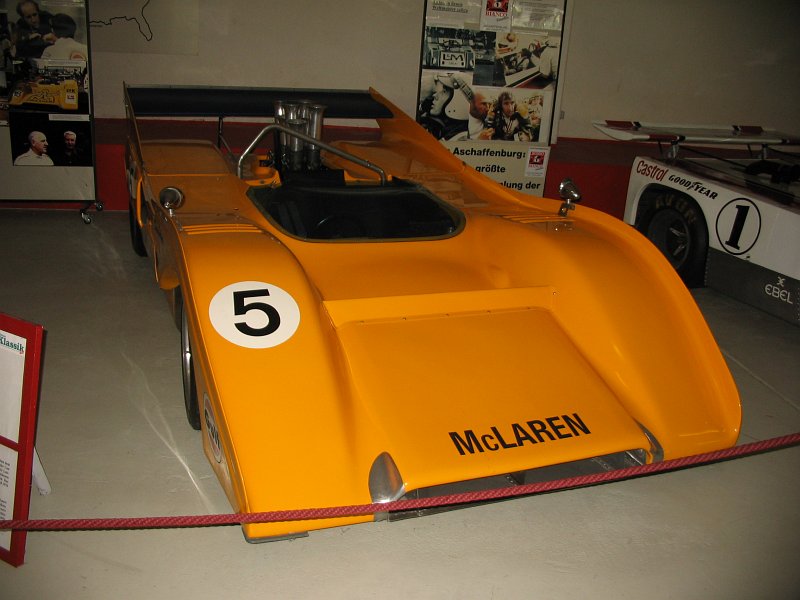
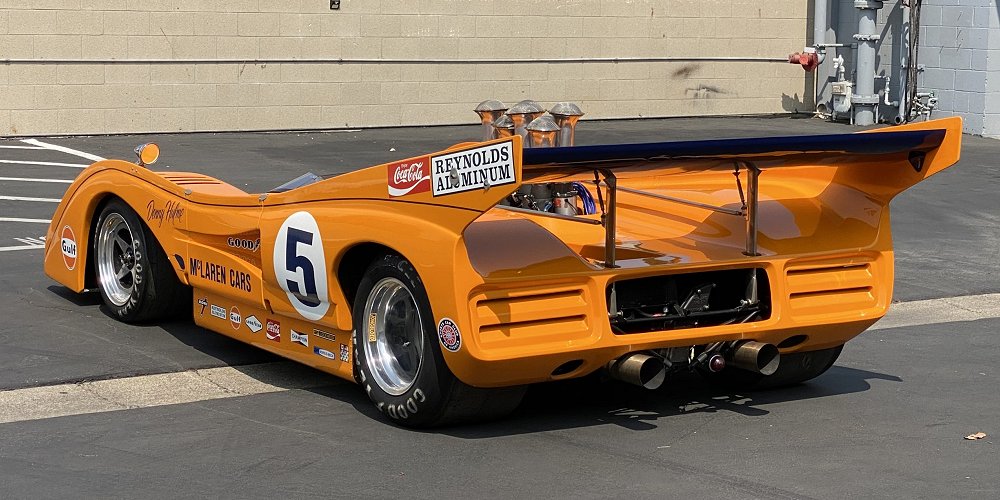
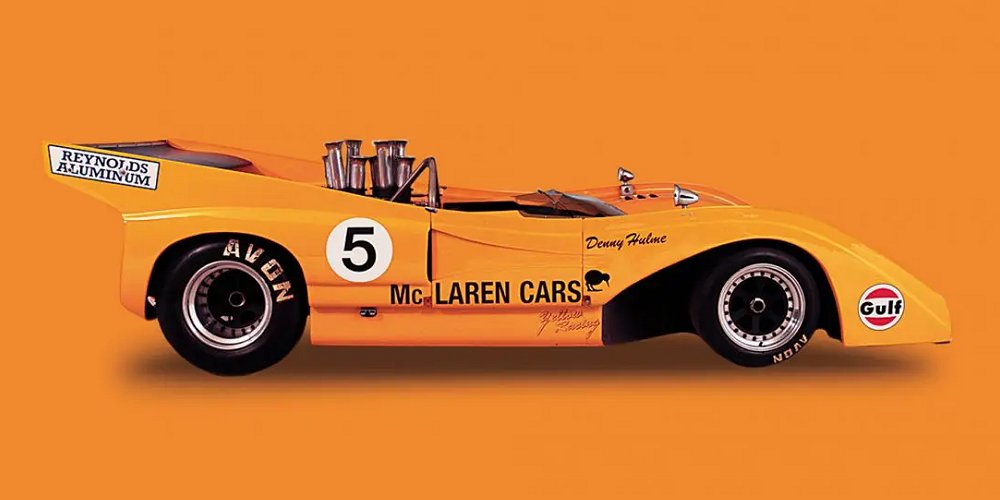
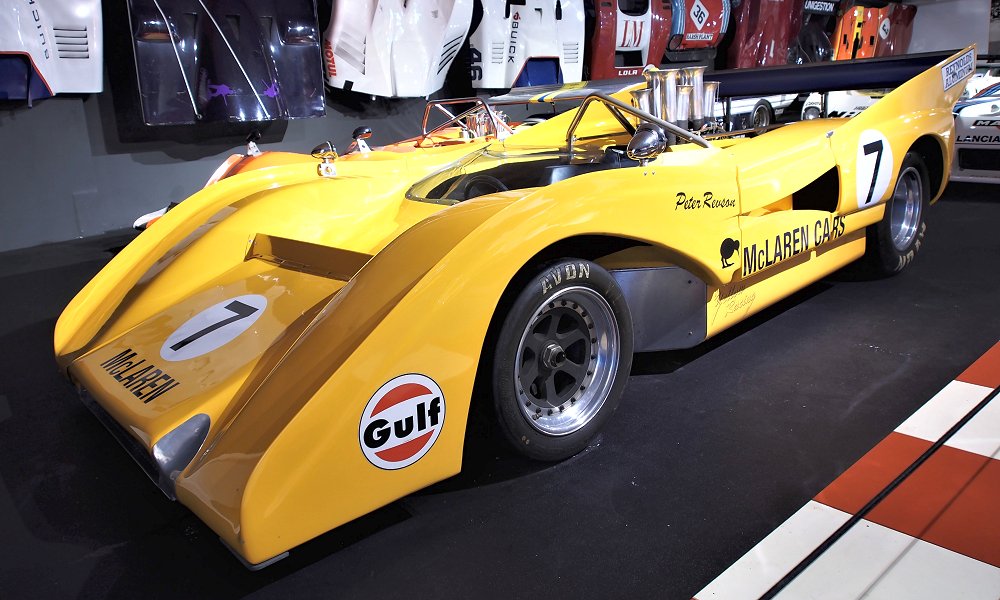
Aerodynamic development was one of the M8F’s key advances. The car featured a wider and more sophisticated front body section, incorporating better airflow control, enlarged intakes and smoother upper surfaces. The rear wing was larger and mounted higher than on the M8D, generating substantial downforce while minimising drag penalties. The tail section was lengthened and reshaped to provide improved stability at extreme speeds. The overall package made the M8F the most planted and aerodynamically balanced of all the McLaren Can-Am machines.
Visually, the M8F was more aggressive than earlier M8 cars. Its wider stance, deeper bodywork and larger wing gave it a formidable presence on track. As with the M8A, M8B and M8D, the car wore McLaren’s famous papaya orange livery, by now a symbol of Can-Am dominance.
Inside, the cockpit remained a pure racing environment. It was narrow and functional, built around the requirements of endurance-length sprint races. The monocoque walls were exposed, and only essential gauges and switches were included. The driving position was designed for control and visibility in a car capable of reaching extreme speeds.
On the track, the M8F was blisteringly fast. It combined raw power with refined aerodynamics and strong mechanical grip, producing lap times unmatched by most competitors. It was particularly effective on high-speed circuits, where its stability and enormous torque allowed drivers to exploit its performance advantage. For the 1971 season, Denny Hulme drove the M8F to multiple victories, and the car remained competitive even when rival manufacturers attempted to match McLaren’s formula.
By this time, however, major factory teams such as Porsche and Lola were increasing their involvement in Can-Am, and the championship was transitioning toward more advanced technologies, including turbocharging. Even so, the M8F maintained McLaren’s position at the front of the field thanks to its sheer power, reliability and engineering refinement. It represented the last of McLaren’s traditional big-block, naturally aspirated Can-Am cars before the series evolved into a more complex and increasingly expensive technological arms race.
Today the McLaren M8F is seen as the ultimate expression of the original McLaren Can-Am philosophy: lightweight construction, massive V8 power, simple mechanical robustness and effective aerodynamics. It is one of the most revered Can-Am machines ever built, prized by collectors and a highlight of historic racing events. Its significance lies not only in its performance but in its status as the pinnacle of a golden era when McLaren reigned supreme in one of motorsport’s most demanding and thrilling racing series.