Description
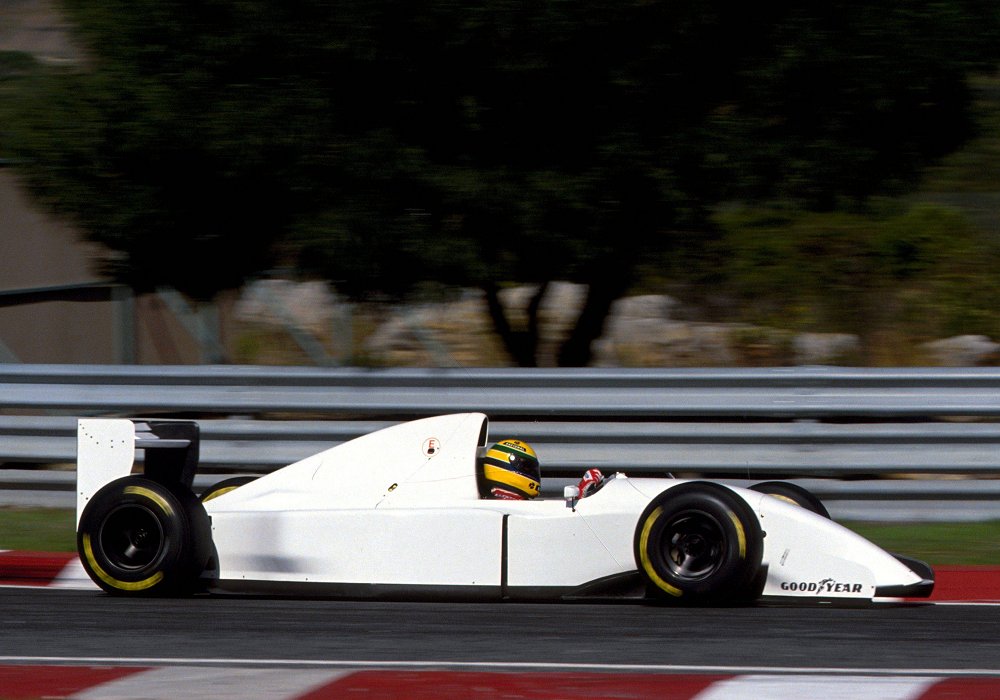
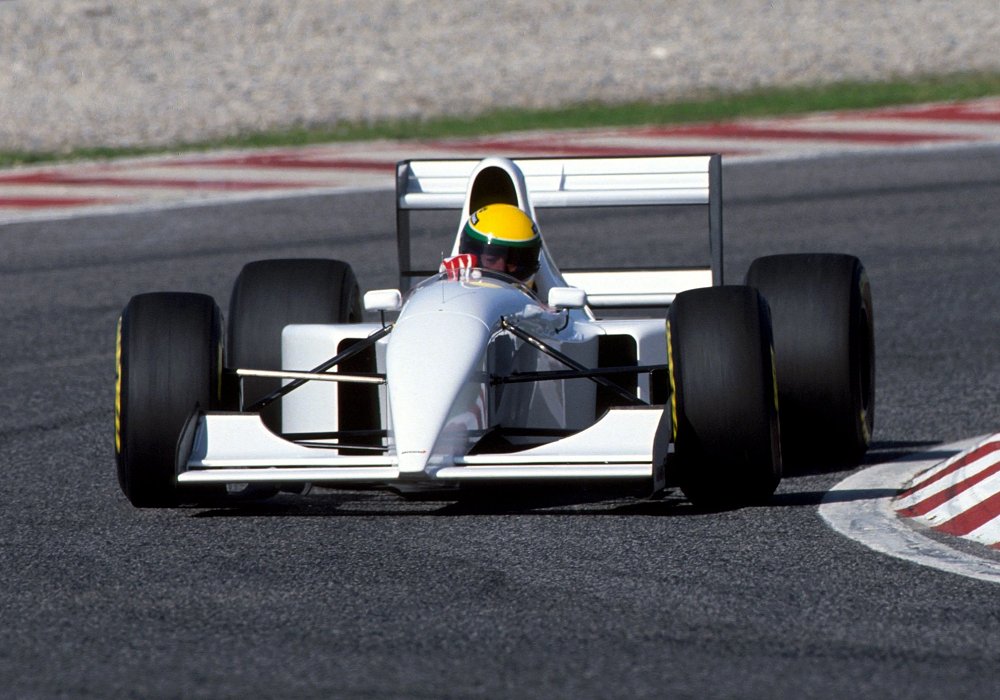
The McLaren MP4/8B Lamborghini was one of the most fascinating “what-might-have-been” cars in McLaren’s history. Built and tested in 1993, it was not a race-entry chassis but an experimental development of the MP4/8 fitted with a Lamborghini V12 engine. Although it never competed in a Grand Prix, the MP4/8B became a significant footnote in Formula One history because it demonstrated performance potential that might have changed McLaren’s fortunes had the project progressed.
The MP4/8B used the same basic carbon-fibre monocoque as the MP4/8, a chassis designed by Neil Oatley with a strong focus on electronics and driveability. The standard MP4/8 had been powered by Ford’s Cosworth HB V8, a capable but ultimately underpowered unit compared with the V10s and V12s used by Williams and Ferrari. Throughout 1993, McLaren explored alternative engine suppliers, and Lamborghini—then owned by Chrysler—offered its F1-spec V12 as a possible option.
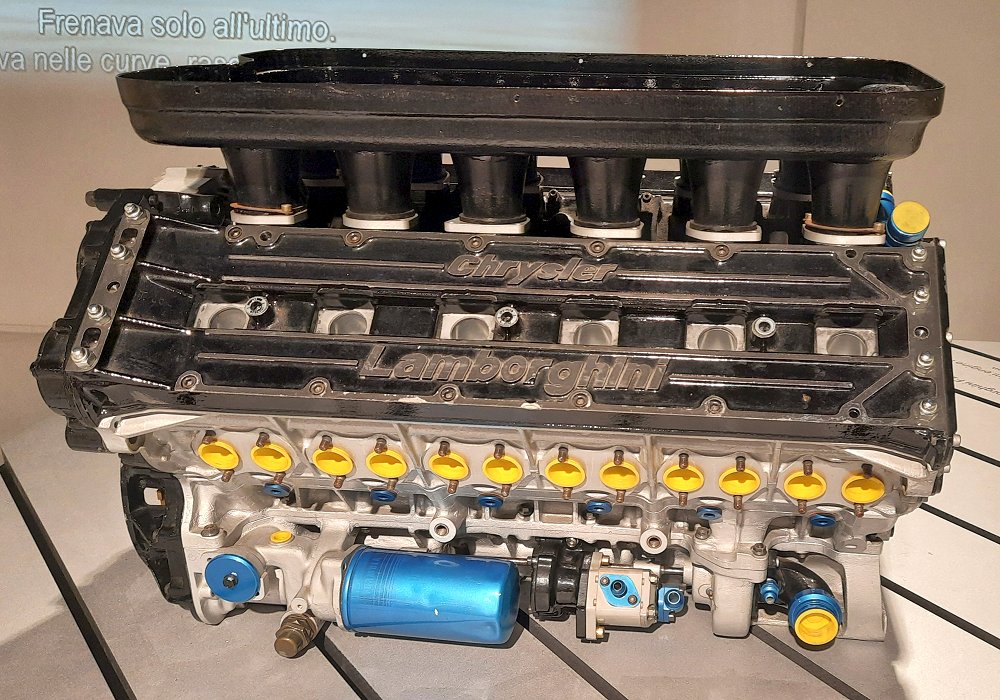
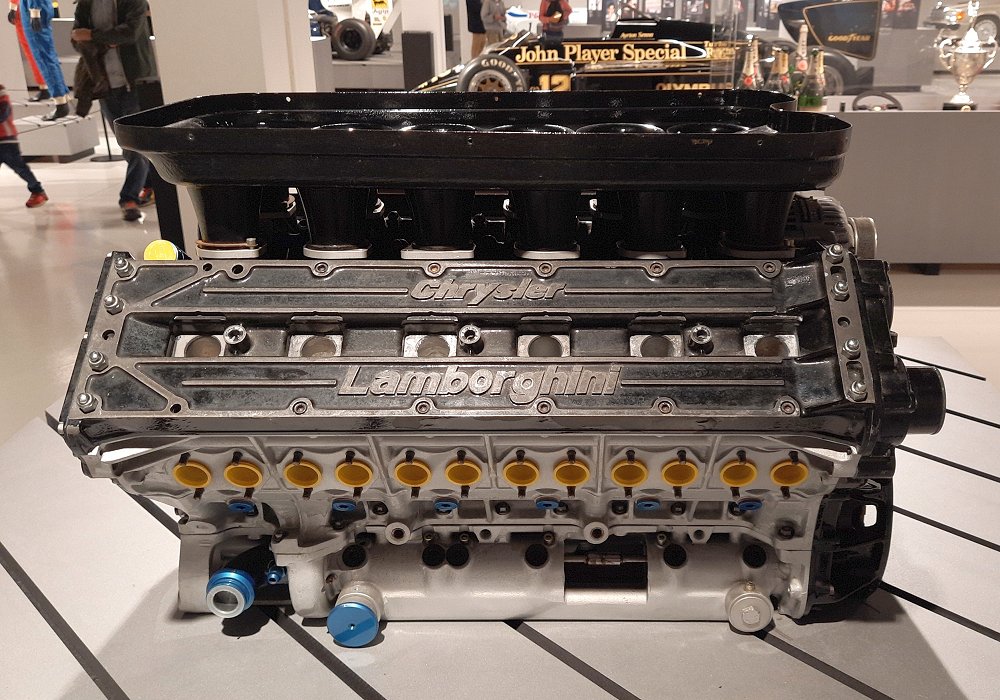
That engine, the Lamborghini LE3512, was a naturally aspirated 3.5-litre twelve-cylinder unit producing around 730 to 750 horsepower. It had a distinctive power curve, strong peak output and a deep, smooth delivery typical of V12s. Earlier teams using the engine had struggled due to packaging problems and unreliable ancillary systems, but McLaren’s integration work was far more refined. The MP4/8B’s installation allowed the V12 to breathe properly and maintain stable temperatures, making it the best-performing combination ever built with the LE3512.
The chassis was modified to accept the wider and heavier V12, requiring re-shaped sidepods, altered cooling ducting and a revised gearbox casing. Despite the bulk of the Lamborghini engine, the car’s balance remained well controlled thanks to careful weight distribution work. McLaren’s fully electronic systems—including advanced traction control, drive-by-wire throttle management and sophisticated onboard software—were retained, giving the MP4/8B highly predictable driving characteristics.
Aerodynamically, the MP4/8B followed the lines of the MP4/8 but was subtly adapted to feed the V12’s cooling needs. The wider upper body surfaces and enlarged radiator inlets produced slightly different airflow behaviour around the rear bodywork. Nevertheless, the car maintained the tidy, efficient aerodynamic profile that characterised McLaren’s early 1990s designs.
On track, the MP4/8B became something of a legend within the team. Ayrton Senna tested the car at Silverstone late in the 1993 season and was reportedly impressed, commenting that the Lamborghini V12 offered the power and top-end performance McLaren had lacked all year. The engine’s strong acceleration and high-revving character transformed the chassis, making it significantly faster on straights than the Ford-powered race car. Drivers and technicians also noted that the V12 sounded and felt smoother than the Ford V8, with more consistent torque delivery.
Despite the clear performance promise, the project never advanced. As Senna moved to Williams for 1994 and McLaren negotiated a long-term engine deal with Peugeot, the Lamborghini-powered program was quietly shelved. Lamborghini itself soon withdrew from Formula One entirely.
The MP4/8B remains a unique and intriguing engineering experiment—a car that offered a glimpse into an alternative future where McLaren might have fielded a V12-powered contender at the dawn of the 1994 season. Instead, it became a single test chassis, remembered for its potential rather than its competition history.
Today the MP4/8B Lamborghini stands as an important footnote in McLaren’s development story. It highlights the team’s willingness to explore unconventional solutions and experiment with different engine partnerships. Though it never raced, it remains one of the most interesting prototype F1 cars of the early 1990s: a rare combination of a refined McLaren chassis and a sonorous Italian V12 that, for a brief moment, hinted at a thrilling partnership that never came to be.