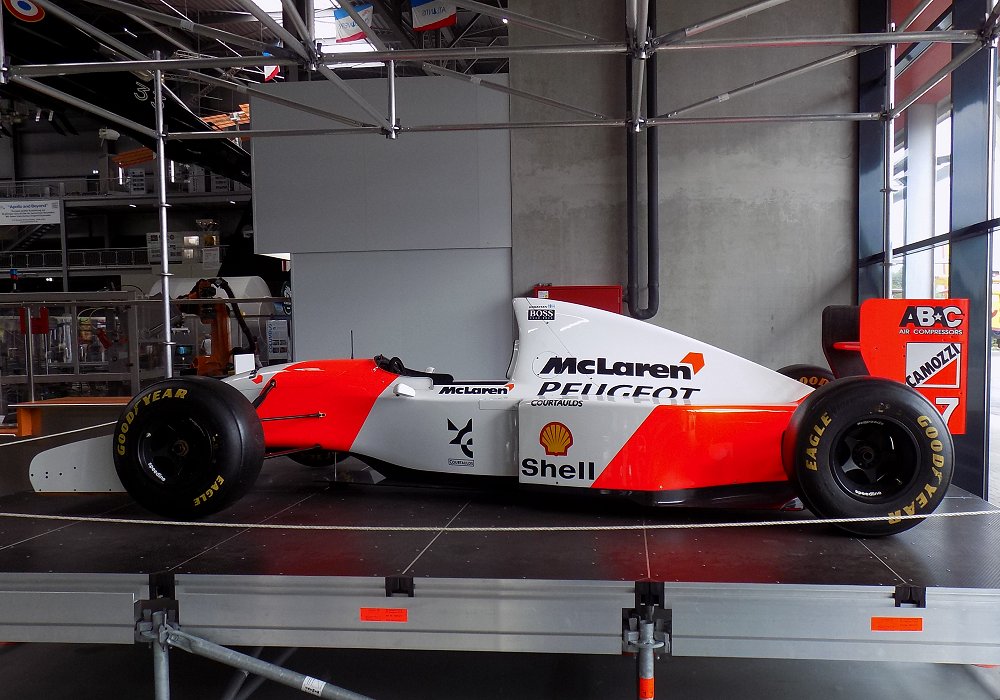
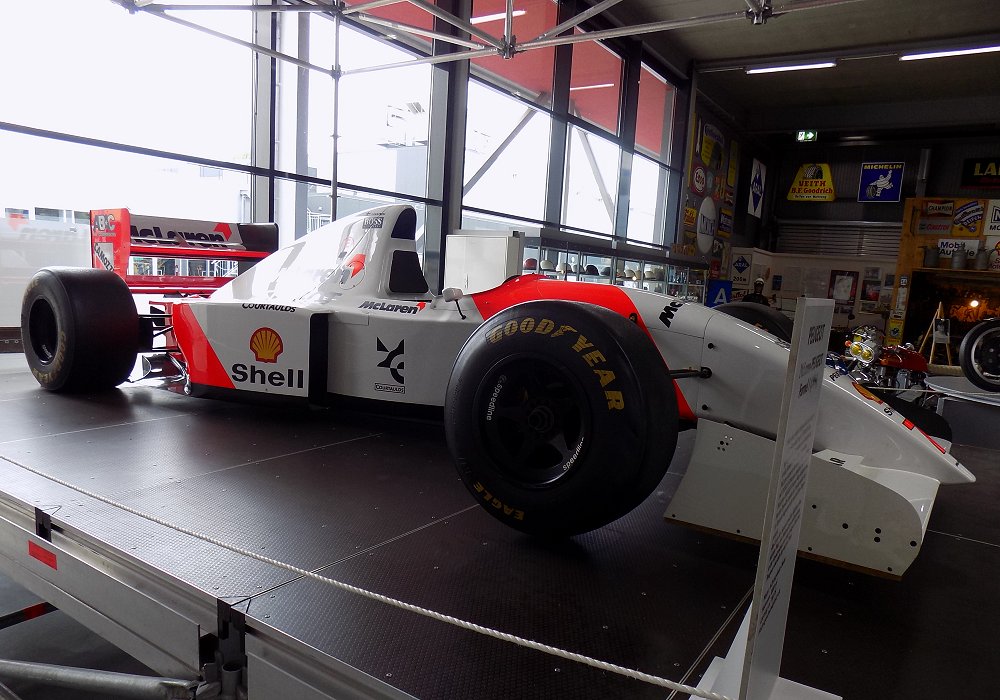
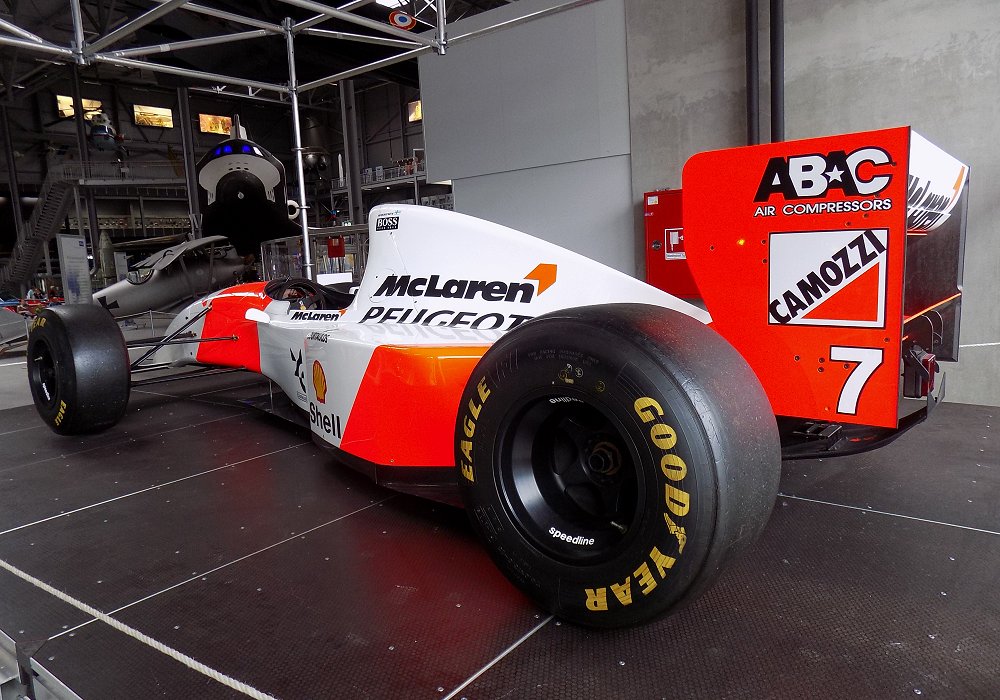
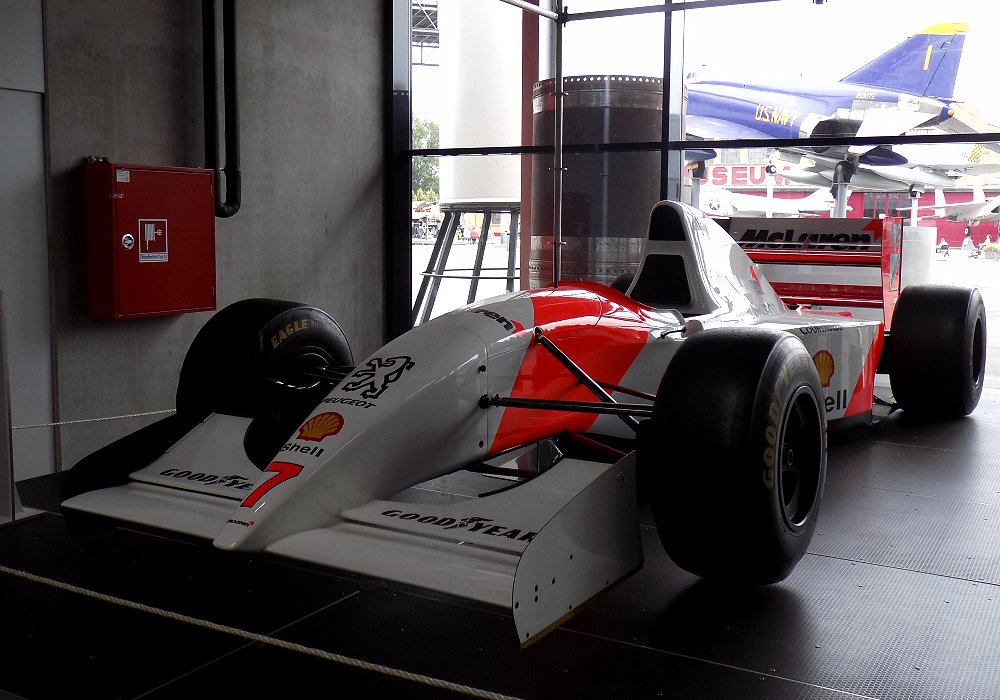
Description
The McLaren MP4/9 Peugeot was one of the most challenging and transitional cars in McLaren’s history, raced during the 1994 Formula One season. It marked the beginning of McLaren’s partnership with Peugeot and the end of the team’s long run of championship-contending form that had defined the Honda and Ford eras. The MP4/9 showed moments of real speed, but persistent engine reliability problems and the rapidly evolving competitive field meant the car struggled to achieve consistent results.
Power came from Peugeot’s A4 V10 engine, a 3.5-litre naturally aspirated unit derived from Peugeot Sport’s successful World Sportscar programme. In theory, the engine offered impressive power—around 740 to 760 horsepower in race trim, making it one of the most powerful on the grid. It was compact and free-revving, with strong peak output and a distinctive high-frequency exhaust note. However, the A4 had a reputation for being fragile, with repeated failures of the bottom end, lubrication issues and unpredictable vibration characteristics. These issues plagued McLaren throughout the season, undermining race strategy and driver confidence.
The chassis was a carbon-fibre monocoque developed under Neil Oatley, following McLaren’s traditional design philosophy of stiffness, precision and aerodynamic efficiency. The MP4/9 was an evolution of the MP4/8 concept, adapted to accommodate the larger V10 and more demanding cooling requirements. The sidepods were reshaped, the engine cover widened and the rear bodywork re-profiled to improve airflow to the Peugeot unit. Although the chassis itself was sound—responsive, predictable and well-balanced—its potential was rarely reached due to engine-related compromises.
Aerodynamics were tailored to the post-1994 regulation changes, which included reduced diffuser size and lower rear wing configurations aimed at limiting downforce. The MP4/9 featured a contemporary low nose, sculpted sidepods and a fine-tuned rear wing assembly. McLaren worked through the season to reduce drag and restore stability, especially at high-speed circuits. The car’s aero efficiency was competitive, but not class-leading, especially compared with the Benetton B194 and Williams FW16, which were rapidly pushing forward with new aerodynamic philosophies.
Suspension used pushrod-operated double wishbones front and rear, with mechanical systems only—active suspension had been banned after 1993. The MP4/9’s mechanical grip was respectable, and the chassis responded well on smooth circuits, where precision and balance mattered most. The gearbox was a McLaren-developed semi-automatic unit, integrated to match the V10’s characteristics, but vibration issues from the Peugeot engine sometimes caused shift-control problems.
Inside, the cockpit maintained McLaren’s disciplined, driver-centric layout. The seating position remained deeply reclined, and the steering wheel featured the now-standard multi-function controls. Footwell airflow and ergonomics were improved over the MP4/8, providing better comfort for long races. Despite the car’s mechanical unpredictability, drivers found the chassis itself reassuring at the limit.
On track, the MP4/9 produced a season of mixed results. Mika Häkkinen and Martin Brundle extracted competitive pace in qualifying and occasional race stints, but retirements were frequent. Peugeot’s engine failures became a defining narrative of the year, with several high-profile blow-ups occurring during races, sometimes dramatically. There were flashes of promise—Häkkinen’s podium finishes and Brundle’s strong drives showed what the chassis could achieve when the engine held together—but these moments were overshadowed by reliability concerns.
By mid-season, it became clear that the Peugeot partnership was unsustainable. McLaren ended the relationship after just one year, moving to Mercedes-Benz engines for 1995. Peugeot briefly continued in Formula One with Jordan before withdrawing from the sport entirely.
Today, the McLaren MP4/9 Peugeot is remembered as an intriguing but ultimately troubled car. Its chassis was solid, its aerodynamics were competitive and its drivers were capable of strong performances. The limiting factor was the Peugeot V10, which, despite its power, suffered structural issues that could not be overcome within a single season. The MP4/9 stands as a reminder of how crucial engine-chassis harmony is in Formula One and how even experienced teams can face major challenges during periods of technological transition.