
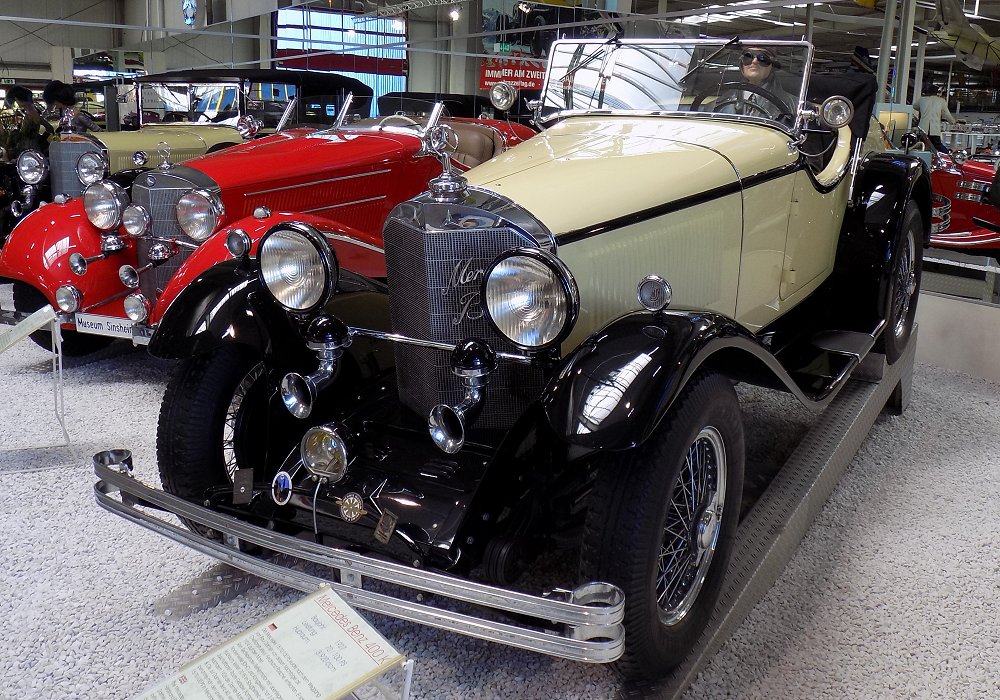
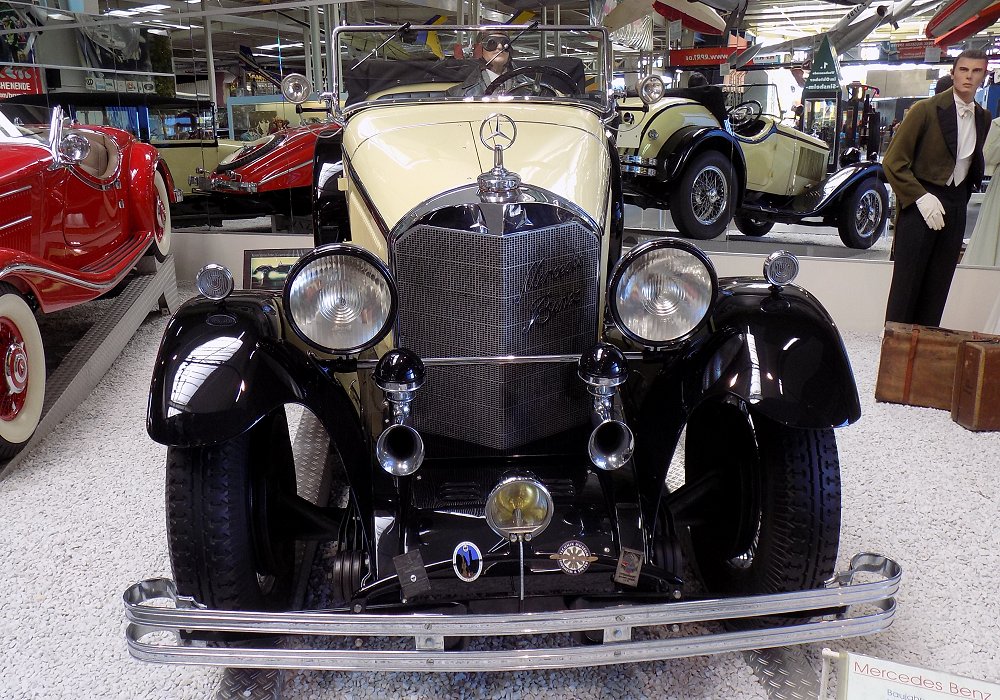
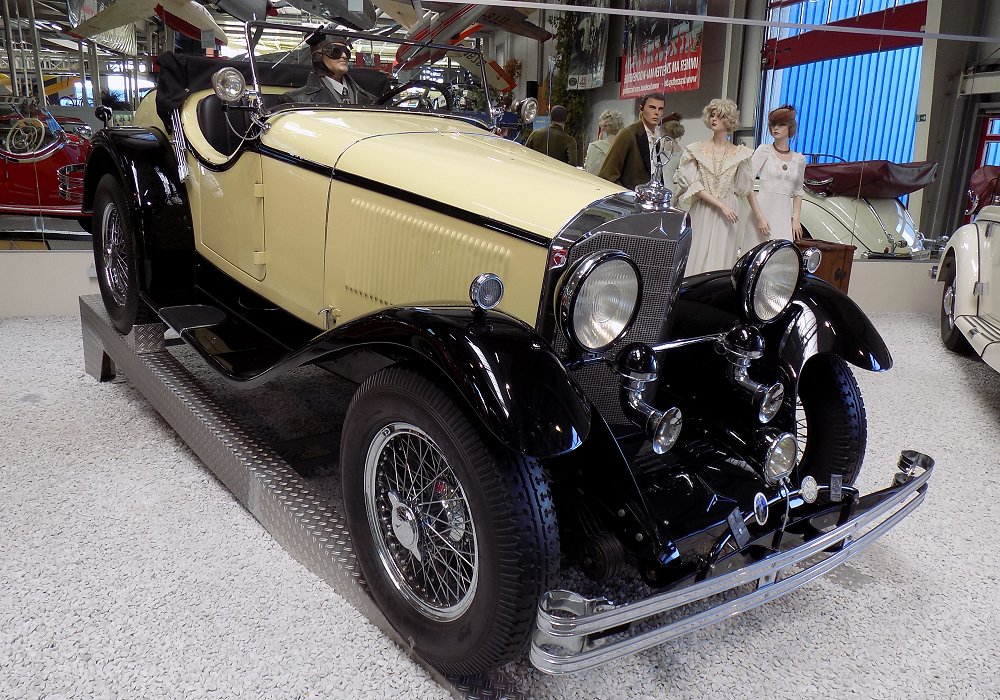
Description
The Mercedes-Benz 15/70/100 PS Typ 400 Roadster was one of the most distinguished sporting models of Mercedes in the early 1920s, representing a blend of refined engineering, powerful supercharged performance and elegant open-body craftsmanship. Built during a period when Mercedes was developing its reputation for producing high-performance touring and sporting cars, the 15/70/100 PS series stood at the forefront of early supercharged road vehicles and helped establish the engineering traditions that would shape the brand’s later S-, SS- and SSK-type machines.
The naming system reflected the car’s power characteristics: 15 tax horsepower for regulatory purposes, 70 horsepower in normal operation and up to 100 horsepower when the mechanical supercharger was engaged. The heart of the car was a 3.9-litre inline-six engine, equipped with Mercedes’ signature Kompressor system. When the driver pressed the throttle fully, the supercharger engaged mechanically, forcing additional air into the combustion chambers. This produced a dramatic surge in power and was one of the earliest examples of forced induction being used on a road-legal performance car. The engine offered strong torque at low speeds and impressive acceleration for its era, making it equally suited to spirited road driving and long-distance touring.
The chassis of the Typ 400 followed Mercedes’ established philosophy of durable ladder-frame construction paired with advanced-for-the-time running gear. The frame provided excellent rigidity for the Roadster body, while semi-elliptic leaf springs front and rear gave a compliant yet controlled ride. Cable-operated drum brakes on all four wheels provided confident stopping ability, a notable feature for the early 1920s when some rivals still used braking only on the rear axle. Steering was direct and mechanical, giving the car a precise, tactile feel on winding roads, though requiring physical effort at low speeds.
The Roadster body style was one of the most desirable configurations for the 15/70/100 PS. Light in weight and sporting in design, it featured a low windscreen, flowing wings and a compact two-seat cockpit positioned well behind the engine. Coachbuilders occasionally added subtle variations, but the general form followed the classic long-bonnet, short-tail proportion that became a hallmark of early Mercedes sporting models. The exposed spare wheel, external fuel tank and minimal weather equipment emphasised its purpose as a driver’s car rather than a luxury touring vehicle. The styling was elegant yet purposeful, communicating the car’s performance intentions.
Inside, the Roadster focused on functionality and classic sporting aesthetics. The dashboard typically carried a set of precise mechanical instruments, including oil pressure, water temperature, speedometer and the distinctive supercharger indicator. Seating was firm and supportive, trimmed in leather, with simple door panels and little in the way of luxury appointments. The car’s design philosophy centred on mechanical purity and direct engagement rather than comfort or ornamentation.
On the road, the Mercedes 15/70/100 PS Typ 400 Roadster delivered a lively and commanding performance. Without the supercharger engaged it was tractable and pleasant, but when the Kompressor was activated the car transformed into one of the most potent road vehicles of its day. Acceleration was strong, the engine note deepened dramatically and the car gained a level of urgency that placed it among the fastest machines of the mid-1920s. Its robust construction made it comfortable on long journeys, while the Roadster body’s low weight ensured responsive handling through bends.
The model was also associated with motorsport. Although not built exclusively as a racing car, the 15/70/100 PS series inspired and informed the development of later high-performance Mercedes models. The engineering principles refined here—supercharging, strong ladder-frame chassis, efficient cooling and durable mechanical components—would evolve directly into the legendary S-, SS- and SSK-series cars that dominated sports-car racing later in the decade.
Today, the Mercedes-Benz 15/70/100 PS Typ 400 Roadster is highly prized among collectors for its technical importance, its early use of supercharging and its elegant sporting character. Surviving examples are rare and often restored with great care, reflecting the car’s status as a key precursor to some of Mercedes’ most iconic performance automobiles. It stands as a milestone in the brand’s early engineering achievements and remains a captivating machine from the formative era of supercharged motoring.