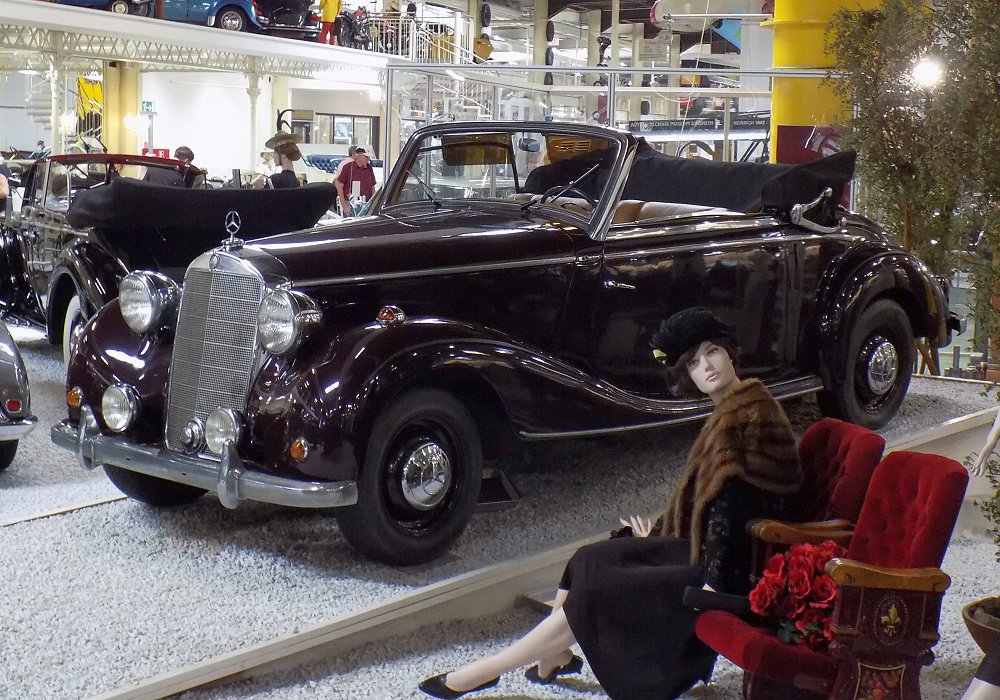
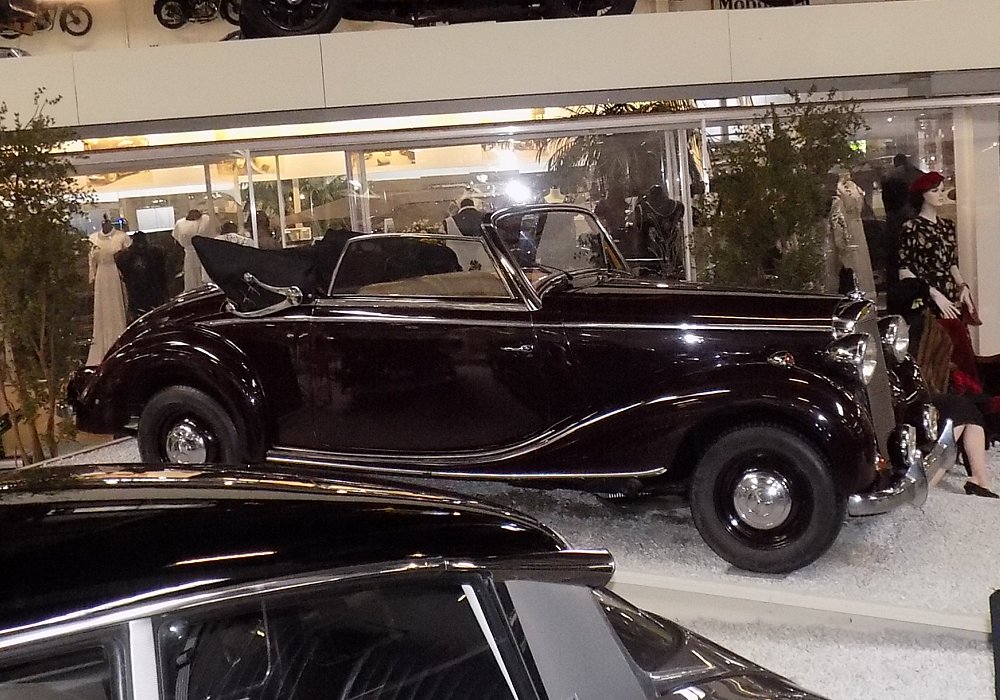

Description
The Mercedes-Benz 170 Da was a diesel-powered evolution of the 170 series, introduced in the early post-war period as Mercedes-Benz expanded the use of compression-ignition technology in passenger cars. Based on the W136 platform, the 170 Da followed the earlier 170 D and reflected the company’s belief that diesel engines could offer meaningful advantages in economy, durability and operating range at a time when fuel costs and availability were major concerns. It was aimed at professional users and private owners who prioritised efficiency and longevity over performance.
Power came from a 1.8-litre inline four-cylinder diesel engine, producing approximately 40 horsepower. While output was modest, the engine delivered strong low-speed torque and excellent fuel economy compared with petrol-powered equivalents. The diesel unit was renowned for its robustness and ability to cover very high mileages with minimal internal wear, making it especially attractive to taxi operators, doctors, tradespeople and businesses that depended on dependable daily transport. A four-speed manual gearbox transmitted power to the rear wheels, with ratios chosen to suit the diesel engine’s narrow but usable power band.
The chassis of the 170 Da remained the proven ladder-frame construction used across the 170 range. Independent front suspension with coil springs provided stable handling and reasonable comfort, while the rear axle used leaf springs designed for durability and consistent behaviour under load. Hydraulic drum brakes on all four wheels offered reliable stopping performance and reflected Mercedes-Benz’s steady post-war technical refinement. The overall driving character was calm and deliberate, well matched to the diesel engine’s relaxed operating style.
Externally, the Mercedes-Benz 170 Da was almost indistinguishable from petrol-engined versions of the 170 series. Styling was conservative and upright, with separate wings, a tall radiator grille and restrained chrome detailing. This understated appearance suited the car’s role as a professional and practical vehicle rather than a status symbol. Minor badging differences identified diesel variants, but otherwise the emphasis was on continuity and familiarity.
Inside, the 170 Da offered a functional and well-constructed cabin. Seating was upright and comfortable, trimmed in durable materials designed to withstand frequent use. The dashboard layout was simple and logical, with clear instrumentation focused on essential information. Noise levels were higher than in petrol models, particularly at idle and under acceleration, but buyers generally accepted this as a trade-off for superior economy and longevity.
In everyday use, the 170 Da excelled as a long-distance and high-mileage vehicle. Its diesel engine consumed significantly less fuel than comparable petrol cars and was less sensitive to fuel quality, an important advantage in post-war Europe. Acceleration was slow, and top speed was limited, but the car’s predictable handling and mechanical reliability made it a dependable companion for demanding daily use. Owners valued its ability to operate continuously with minimal downtime.
The Mercedes-Benz 170 Da played an important role in establishing diesel passenger cars as a viable mainstream option. At a time when most diesel engines were confined to trucks and buses, Mercedes-Benz demonstrated that diesel technology could be successfully adapted for private and professional passenger vehicles. The 170 Da helped lay the groundwork for the company’s long and influential history of diesel-powered cars.
Today, the Mercedes-Benz 170 Da is appreciated for its historical significance rather than its performance or refinement. Surviving examples are relatively rare and valued by enthusiasts who recognise their role in the early adoption of diesel technology. As such, the 170 Da stands as an important chapter in Mercedes-Benz history, representing durability, efficiency and engineering pragmatism during a critical period of post-war recovery.