Description
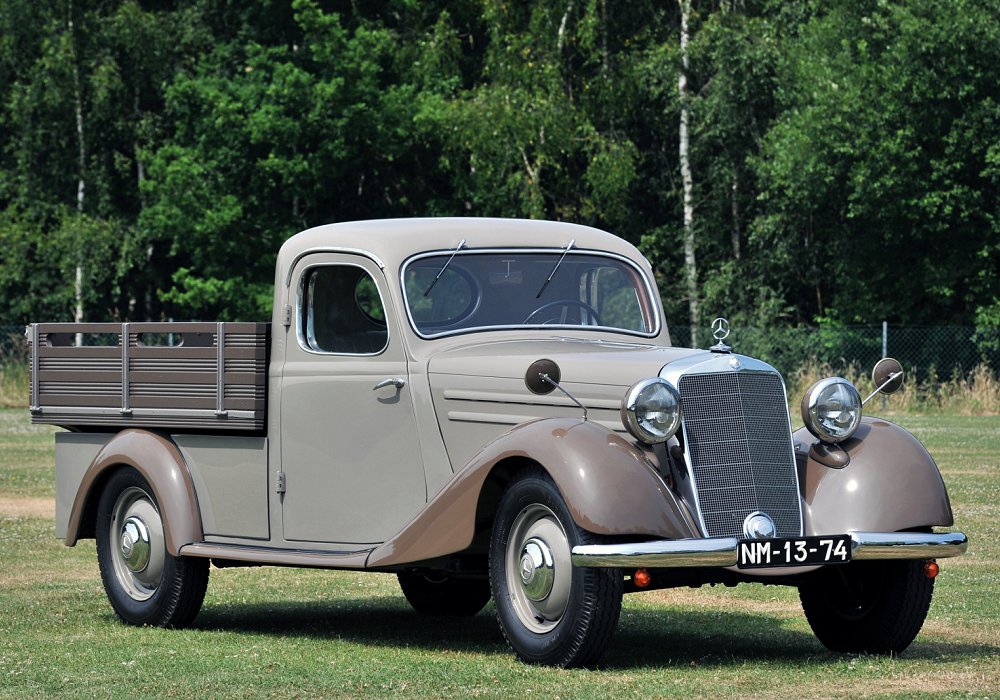
The Mercedes-Benz 170 Da Pick-Up was a light commercial variant of the diesel-powered 170 Da, developed to meet the practical transport needs of businesses and public services in the post-war years. Based on the W136 platform, it combined the economy and durability of Mercedes-Benz’s early passenger-car diesel technology with an open cargo bed, creating a compact and efficient utility vehicle at a time when fuel efficiency and reliability were of paramount importance.
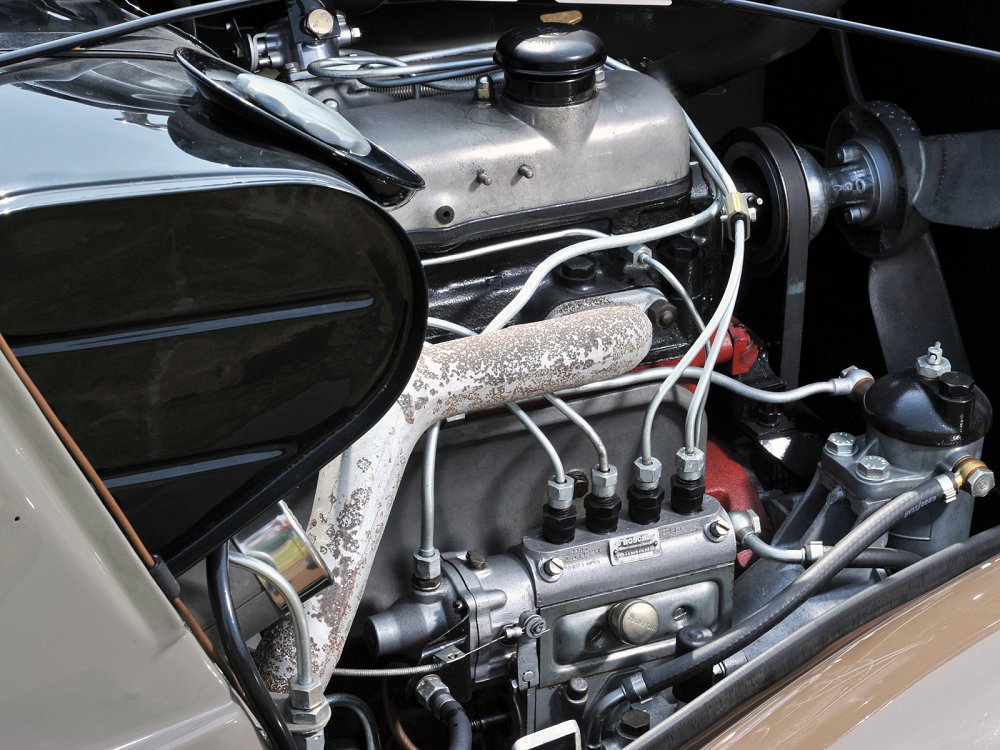
Power was supplied by the 1.8-litre inline four-cylinder diesel engine shared with the 170 Da saloon. Producing around 40 horsepower, the engine was not designed for speed, but for steady torque delivery and exceptional fuel economy. Its ability to run for long periods under load with minimal wear made it especially attractive to tradespeople, farmers and municipal operators. A four-speed manual gearbox drove the rear wheels, with gearing optimised for hauling modest loads rather than achieving high cruising speeds.
The chassis remained the proven ladder-frame construction used across the 170 series. Independent front suspension with coil springs provided relatively good ride comfort and steering precision for a utility vehicle, while the rear axle was fitted with reinforced leaf springs to support cargo loads in the open bed. Hydraulic drum brakes on all four wheels delivered dependable stopping power, even when the vehicle was fully laden, reflecting Mercedes-Benz’s focus on safety and durability.
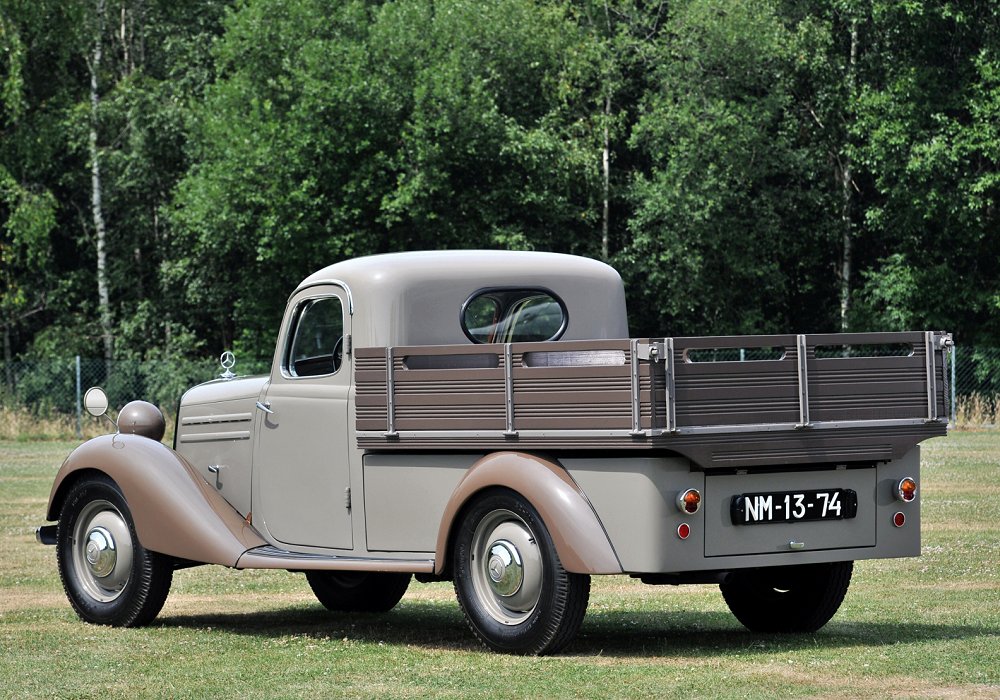
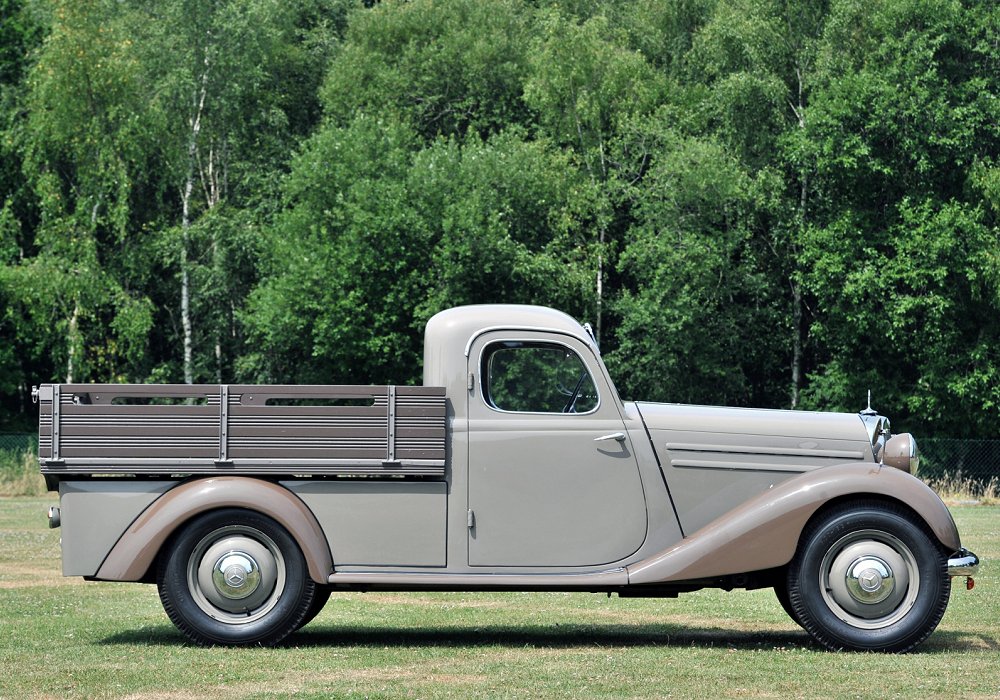
The Pick-Up body was simple and functional. It typically featured a two-door cab with an open rear load bed, allowing easy loading and unloading of goods, tools or agricultural produce. The bed could be left open or fitted with simple wooden or metal side panels, depending on the customer’s requirements. The overall design prioritised practicality and ease of maintenance, with minimal ornamentation and robust construction suited to hard daily use.
Inside, the cab of the Mercedes-Benz 170 Da Pick-Up was utilitarian and straightforward. Seating was basic but supportive, trimmed in durable materials intended to withstand workwear and frequent use. The dashboard layout mirrored that of the saloon, with clear instrumentation and logically arranged controls. Comfort was secondary to function, but the driving position offered good visibility and ease of operation, particularly important in tight working environments.
In service, the 170 Da Pick-Up proved to be a dependable and economical workhorse. Its diesel engine consumed significantly less fuel than petrol-powered equivalents, making it especially valuable in the resource-constrained conditions of post-war Europe. While acceleration was slow and top speed limited, the vehicle excelled in reliability and low running costs. It was well suited to short- and medium-distance transport tasks, deliveries and light agricultural work.
The use of a diesel engine in a light pick-up was relatively unusual at the time and highlighted Mercedes-Benz’s confidence in compression-ignition technology beyond heavy commercial vehicles. The 170 Da Pick-Up helped demonstrate that diesel power could be practical even in small utility vehicles, reinforcing the brand’s reputation for engineering innovation and pragmatism.
Today, the Mercedes-Benz 170 Da Pick-Up is extremely rare, as most examples were worked hard and eventually scrapped after long service lives. Surviving vehicles are valued for their historical significance and understated industrial character. They provide a glimpse into the early adoption of diesel technology in light commercial vehicles and stand as a testament to Mercedes-Benz’s role in supporting economic recovery through dependable, efficient transport solutions.