Description
The Mercedes-Benz 170 H was the most advanced and fully realised of Mercedes-Benz’s pre-war rear-engined models, introduced in 1936 as a complement to the front-engined 170 V. While the 170 V would go on to become Mercedes’ post-war backbone, the 170 H represented the company’s bold attempt to bring a modern, streamlined, rear-engined concept into mainstream production—several years before similar ideas became widely associated with the Volkswagen Beetle and later the Porsche line.
It was powered by a rear-mounted 1.7-litre inline-four engine producing around 38–40 horsepower. Although the output matched that of the 170 V, the driving character was entirely different. With the engine mounted behind the rear axle, the 170 H offered excellent traction and unusually quiet running, as much of the noise and vibration occurred behind the passengers. Power went through a four-speed manual gearbox integrated with the rear axle assembly. With its lighter body and more aerodynamic shape, the 170 H could reach top speeds of about 110 km/h, making it perfectly adequate for touring and fast road use in the late 1930s.
The chassis was built around a central tubular frame that supported the rear-engine layout. Independent suspension was used at all four corners: double wishbones with a transverse leaf spring at the front, and swing axles with coil springs at the rear. This provided a smooth ride and good stability at moderate speeds. Like all early swing-axle cars, the 170 H required careful driving when pushed hard, as sudden weight transfer could produce oversteer. But within its intended performance envelope, the car felt modern, supple and unusually refined for a compact family vehicle.
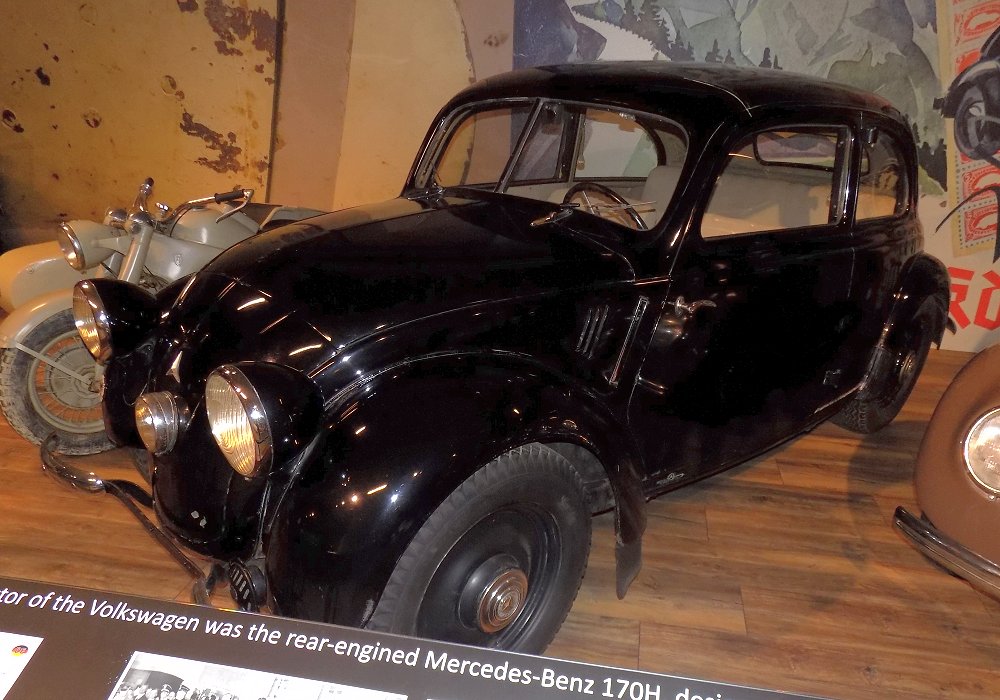
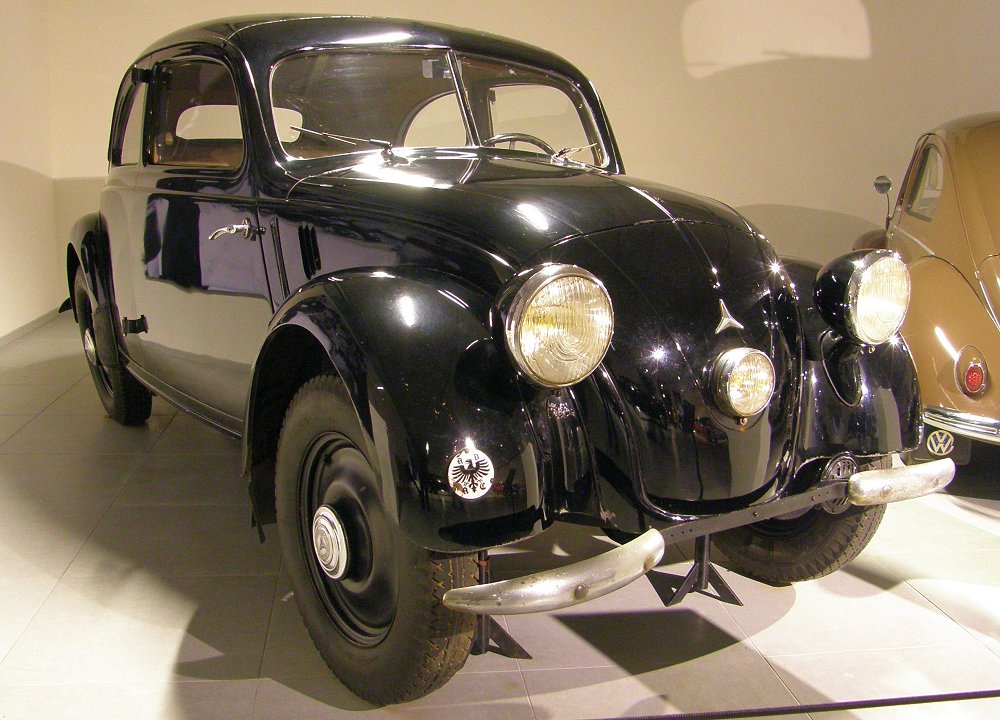
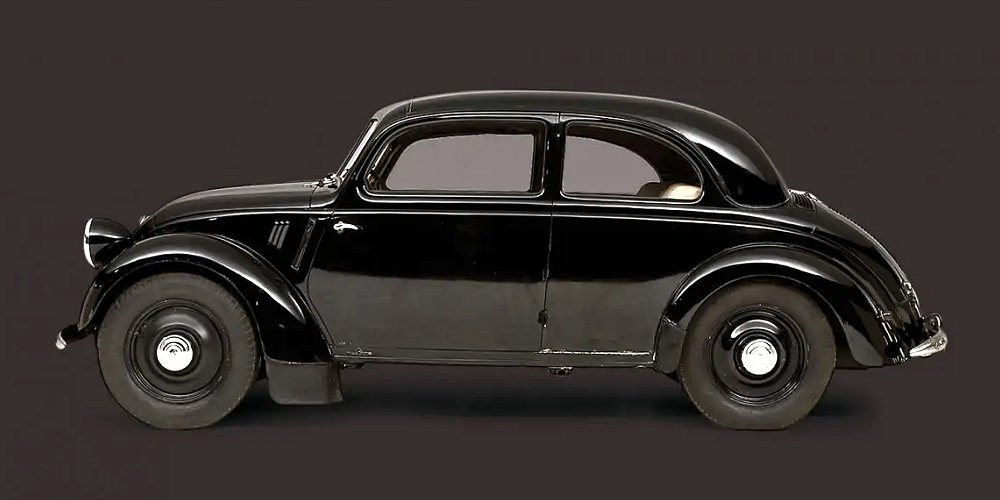
The body of the 170 H was one of the most distinctive designs to come out of Mercedes’ pre-war programme. With no engine in the front, the car adopted a sleek, rounded silhouette with a short nose, a curved roofline and a fully enclosed, gently tapering tail. This aerodynamic fastback profile was far ahead of typical small-car styling of the period and gave the 170 H a forward-looking, almost futuristic appearance. The body was available mainly as a streamlined two-door saloon, though a few specialised variants were built in small numbers.
Inside, the 170 H offered a surprisingly spacious and comfortable cabin. With no engine at the front, the passenger compartment could be pushed forward, improving legroom and forward visibility. Seating and trim were similar to the 170 V, with well-padded seats, neatly arranged controls and durable upholstery. The dashboard was simple but well finished, reflecting Mercedes’ emphasis on craftsmanship even in experimental models. The rear-engine layout also allowed for a front luggage compartment, adding to the car’s practicality.
On the road, the 170 H delivered a driving experience unlike any other Mercedes of its era. The rear engine provided excellent low-speed traction and a distinctive, slightly muted sound character. Steering effort was light once moving, the ride quality was smooth and the compact body made the car nimble in tight streets and urban environments. While its handling could become lively if pushed beyond its limits, for normal driving the car felt modern and comfortable, particularly on long straight roads where the aerodynamic shape and quiet running made it a relaxing tourer.
Commercially, the 170 H was not a major success. Many buyers were unfamiliar with rear-engine dynamics, and the more conventional 170 V was preferred for taxi use, business fleets and family transport. Its unconventional layout, higher price and unusual driving behaviour limited its market appeal. Nevertheless, the 170 H represented one of the most sophisticated applications of rear-engine technology before the war and demonstrated Mercedes-Benz’s continued interest in advanced engineering concepts.
Today, the Mercedes-Benz 170 H is regarded as one of the most fascinating and historically significant models in the company’s early small-car development. Its rarity—only a few thousand were built—and its remarkable engineering make it a sought-after collector’s car. More importantly, it stands as a clear predecessor to the rear-engined German automotive philosophy that would flourish in the decades that followed. It remains one of the most distinctive and forward-thinking vehicles produced by Mercedes-Benz in the 1930s.