Description
The Mercedes-Benz 170 S was a more refined and upmarket evolution of the successful 170 series, introduced in 1949 as Mercedes-Benz sought to re-establish itself in the luxury passenger car market after the Second World War. Based on the W136 platform but significantly upgraded in both appearance and comfort, the 170 S was positioned above the utilitarian 170 V and its derivatives. It offered greater performance, improved interior quality and more elegant styling, appealing to private buyers who wanted traditional Mercedes-Benz prestige in a restrained, conservative form.
Power for the 170 S came from an enlarged 1.8-litre inline four-cylinder petrol engine, producing approximately 52 horsepower. This represented a substantial increase over the 170 V and Va models and gave the 170 S noticeably better performance, particularly at cruising speeds. The engine was smooth and flexible, well suited to relaxed long-distance driving. A four-speed manual gearbox transmitted power to the rear wheels, and the gearing was chosen to complement the engine’s improved torque and refinement.
The chassis retained the proven ladder-frame construction of the 170 series, but suspension and braking were improved to match the car’s more luxurious intent. Independent front suspension with coil springs provided good ride comfort and stable handling, while the rear axle used leaf springs tuned for a smoother ride rather than heavy load carrying. Hydraulic drum brakes on all four wheels offered reliable stopping power and reflected the gradual modernisation of Mercedes-Benz passenger cars during this period.
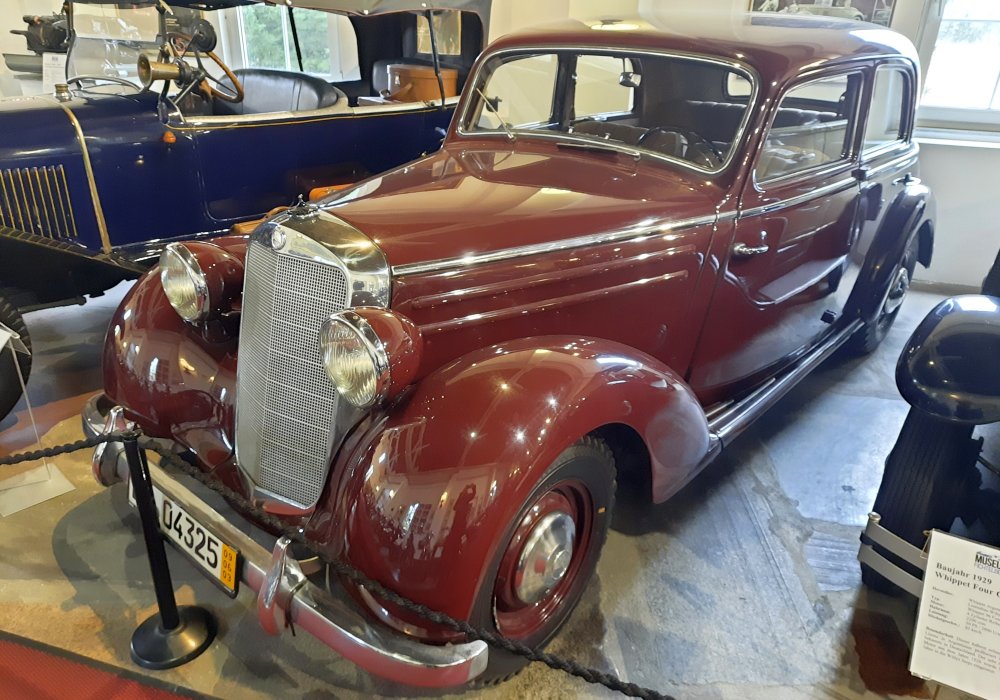
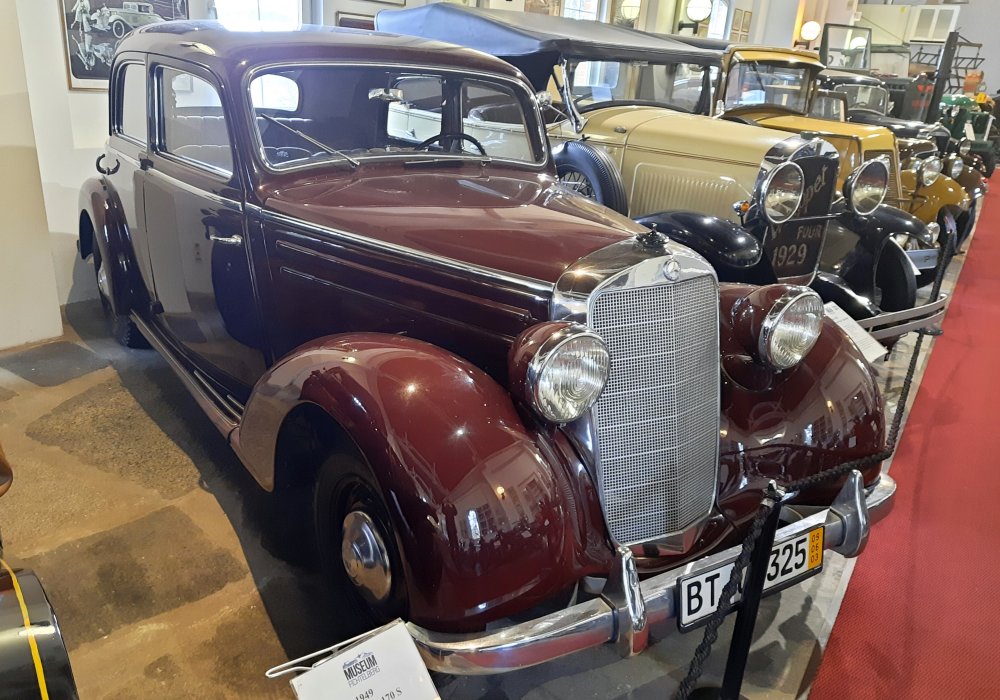
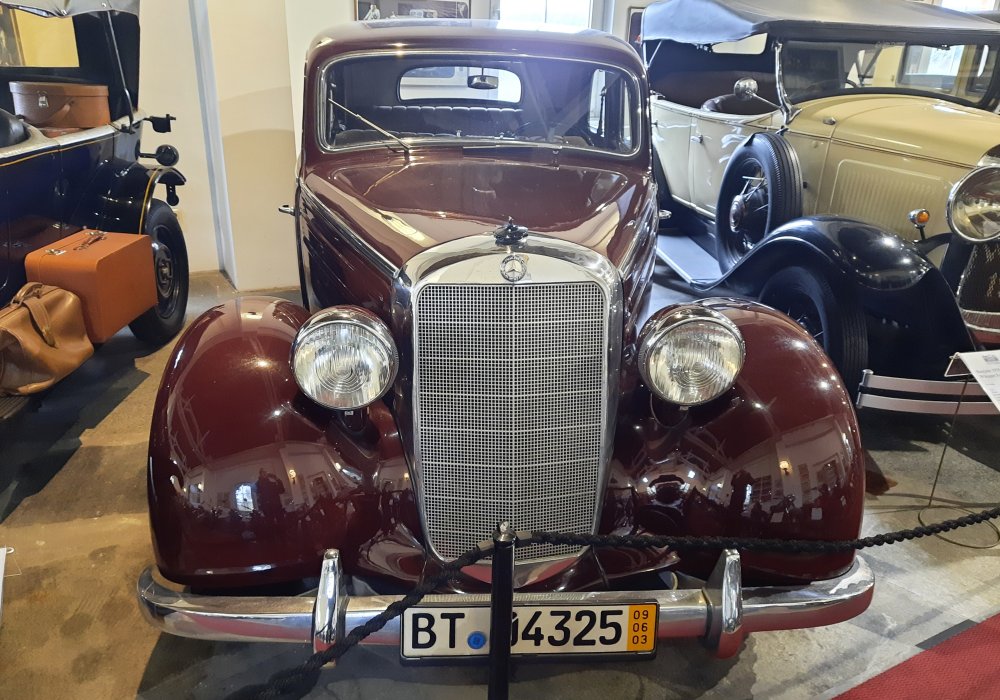
Visually, the Mercedes-Benz 170 S was more elegant than the 170 V. The body featured wider and more integrated front and rear wings, a longer bonnet and a more balanced overall profile. Chrome detailing was more generous, particularly around the grille and trim, giving the car a dignified but understated presence. While still conservative in design, the 170 S conveyed a sense of quality and status that aligned with Mercedes-Benz’s pre-war traditions.
Inside, the 170 S offered a significantly improved interior compared with its more utilitarian siblings. Seating was more generously padded and upholstered in higher-quality materials, often featuring finer cloth or leather depending on specification. The dashboard was more refined, with improved instrumentation and better finishes. Noise insulation was enhanced, contributing to a quieter and more comfortable driving experience. Overall, the cabin was designed to provide a sense of calm, solidity and craftsmanship rather than overt luxury.
In everyday use, the 170 S was valued for its balance of comfort, reliability and respectable performance. It was well suited to both urban driving and longer journeys, offering predictable handling and a relaxed cruising character. Owners appreciated its mechanical robustness, ease of maintenance and the reassurance associated with the Mercedes-Benz name, particularly in the economically uncertain post-war years.
The 170 S was available in several body styles, including saloon, cabriolet and estate variants, allowing it to serve a wide range of roles from private family transport to professional and representational use. Its versatility and higher specification made it an important model in Mercedes-Benz’s rebuilding strategy, helping the company move back toward the premium segment it had dominated before the war.
Today, the Mercedes-Benz 170 S is regarded as a key post-war model that bridges the gap between pre-war luxury cars and the more modern Mercedes-Benz saloons of the 1950s. Surviving examples are valued for their understated elegance, historical significance and solid engineering. As such, the 170 S stands as an important step in the re-emergence of Mercedes-Benz as a leading manufacturer of refined, high-quality passenger cars.