
Description
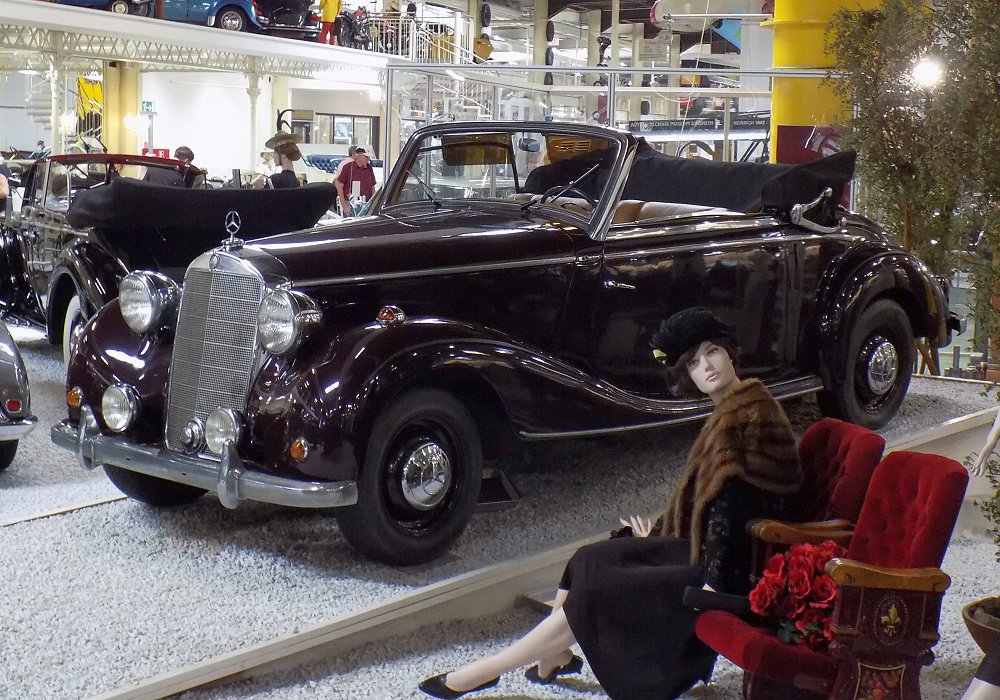
The Mercedes-Benz 170 S Cabriolet A was the most elegant and exclusive open version of the 170 S range, introduced in the early post-war years as Mercedes-Benz re-established its tradition of finely engineered luxury automobiles. Built on the W136 platform, the Cabriolet A combined the mechanical refinement of the 170 S with bespoke open coachwork, offering a refined four-seat touring car aimed at affluent private buyers. In a period marked by austerity and reconstruction, it stood out as a symbol of continuity with Mercedes-Benz’s pre-war craftsmanship and prestige.
Power came from the 1.8-litre inline four-cylinder petrol engine developed specifically for the 170 S. Producing approximately 52 horsepower, the engine offered a noticeable improvement over the earlier 170 V models and delivered smooth, flexible performance well suited to relaxed touring. While not a sporting car, the Cabriolet A provided confident cruising ability and dependable everyday usability. A four-speed manual gearbox transmitted power to the rear wheels, with gearing chosen to complement the engine’s torque and refined character.
The chassis retained the robust ladder-frame construction common to the 170 series, valued for its strength and durability. Independent front suspension with coil springs provided a comfortable and controlled ride, while the rear axle used leaf springs tuned more for passenger comfort than load carrying. Hydraulic drum brakes on all four wheels delivered reliable stopping power, reflecting Mercedes-Benz’s steady move toward modern braking systems in the post-war period. The overall driving experience was composed and predictable, prioritising comfort and stability over performance.
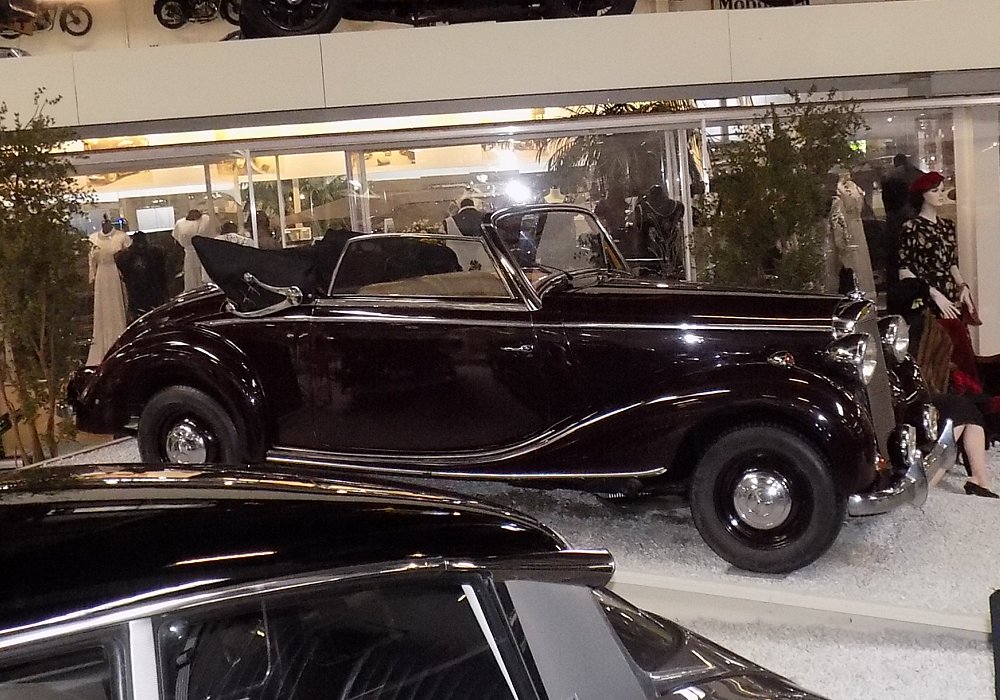
What distinguished the Cabriolet A was its bodywork. As the most luxurious cabriolet in the 170 S lineup, it featured a full four-seat layout with a well-tailored folding fabric roof. The proportions were balanced and dignified, with a long bonnet, flowing wings and restrained chrome detailing. When raised, the hood provided effective weather protection and a clean roofline; when lowered, it revealed a graceful open profile that echoed Mercedes-Benz cabriolets of the 1930s. Build quality was exceptionally high, with careful attention paid to panel fit, roof operation and structural rigidity.
Inside, the Mercedes-Benz 170 S Cabriolet A offered a refined and comfortable cabin. Seating was generously padded and typically upholstered in high-quality leather or fine cloth, with rear seats suitable for adult passengers, unlike many contemporary open cars. The dashboard was neatly laid out with clear instrumentation and improved finishes compared with the more utilitarian 170 V models. Carpeting, door trim and fittings reflected the car’s upmarket positioning, creating an atmosphere of understated luxury rather than extravagance.
On the road, the Cabriolet A delivered relaxed and dignified motoring. The open body encouraged unhurried touring, with the engine’s smooth power delivery and the chassis’s stable handling making it well suited to scenic driving and longer journeys. Steering was precise if relatively heavy at low speeds, and the suspension absorbed poor road surfaces effectively, an important consideration in post-war Europe. The car rewarded smooth driving and offered a calm, refined experience rather than excitement.
Production numbers of the Mercedes-Benz 170 S Cabriolet A were limited, reflecting both its high price and the economic conditions of the time. As a result, it was never a common sight, even when new. It was typically purchased by professionals, business owners or officials who desired an elegant open car with traditional Mercedes-Benz values rather than flamboyance.
Today, the Mercedes-Benz 170 S Cabriolet A is regarded as one of the most desirable variants of the 170 series. Surviving examples are rare and highly valued for their craftsmanship, elegance and historical importance. They represent a bridge between pre-war luxury motoring and the more modern Mercedes-Benz cabriolets that would follow in the 1950s, standing as a refined reminder of the marque’s ability to produce dignified, high-quality open cars even during a period of recovery and restraint.