Description
The Mercedes-Benz 170 S Cabriolet B was a more practical and accessible open version of the 170 S range, positioned below the Cabriolet A but still firmly within Mercedes-Benz’s tradition of refined post-war motoring. Introduced in the late 1940s on the W136 platform, the Cabriolet B combined the improved performance and comfort of the 170 S with a simpler, more utilitarian open body. It was aimed at buyers who wanted the pleasure of open-air driving with Mercedes-Benz quality, but at a lower cost and with greater everyday usability than the more luxurious Cabriolet A.
Power was provided by the 1.8-litre inline four-cylinder petrol engine developed for the 170 S, producing around 52 horsepower. This engine offered a clear improvement over the earlier 170 V units, delivering smoother running and better cruising ability. While performance was modest, it was well matched to the car’s touring character and provided dependable, relaxed motoring. A four-speed manual gearbox drove the rear wheels, with ratios chosen to emphasise flexibility and comfort rather than speed.
The chassis was shared with other 170 S models and featured a sturdy ladder-frame construction. Independent front suspension with coil springs contributed to good ride quality and stable handling, while the rear axle used leaf springs tuned for passenger comfort. Hydraulic drum brakes on all four wheels provided reliable stopping power and reflected Mercedes-Benz’s steady post-war technical refinement. The overall driving experience was calm and predictable, prioritising confidence and durability over sporting intent.
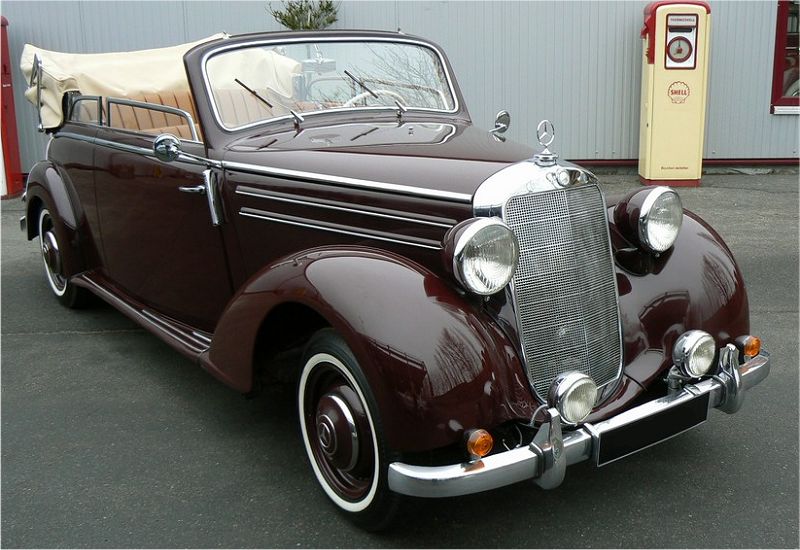
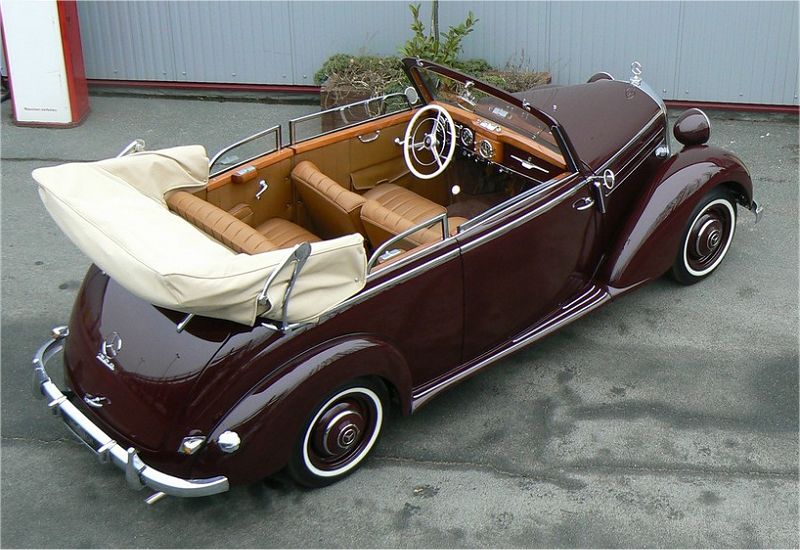
The Cabriolet B body differed significantly from the Cabriolet A. It was typically a two-door, four-seat open car with a simpler folding fabric roof and less elaborate structural reinforcement. The roof design was lighter and easier to operate, though it offered slightly less weather protection and refinement than the Cabriolet A. Styling remained conservative and dignified, with flowing wings, restrained chrome detailing and well-balanced proportions. The emphasis was on practicality and affordability rather than exclusivity.
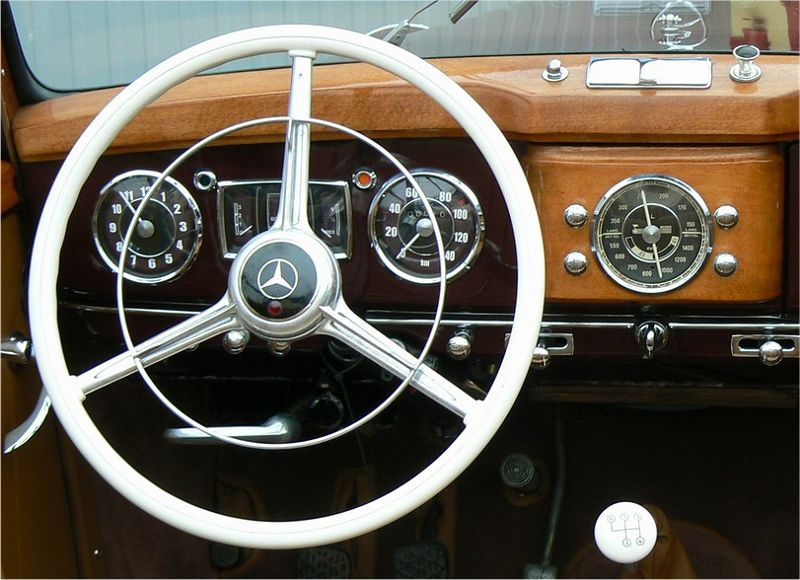
Inside, the Mercedes-Benz 170 S Cabriolet B offered a well-finished but less lavish interior than the Cabriolet A. Seating was comfortable and suitably upholstered, often in durable cloth rather than leather, and the rear seats were usable for passengers on shorter journeys. The dashboard was straightforward, with clear instrumentation and logical control placement. Trim materials were of good quality but chosen for durability and ease of maintenance rather than luxury.
On the road, the Cabriolet B delivered an enjoyable and relaxed open-air driving experience. Its lighter body compared with the Cabriolet A gave it a slightly more responsive feel, though outright performance remained modest. The car was well suited to leisurely touring, city driving and weekend use, particularly in fair weather. Steering was precise but heavy at low speeds, and the suspension coped well with the uneven road surfaces common in post-war Europe.
Production of the Mercedes-Benz 170 S Cabriolet B was limited, but higher than that of the Cabriolet A due to its lower price and broader appeal. It found buyers among professionals and families who wanted an open car with traditional Mercedes-Benz values but without the cost and formality of the top-tier cabriolet.
Today, the Mercedes-Benz 170 S Cabriolet B is appreciated as a charming and historically important model. It represents Mercedes-Benz’s effort to offer open motoring during a period of economic recovery, balancing quality, practicality and restrained elegance. Surviving examples are valued for their authenticity and usability, and they stand as a reminder that post-war Mercedes-Benz luxury was defined as much by engineering integrity and understatement as by prestige.