Description
The Mercedes-Benz 170 S-D was the diesel-powered counterpart to the 170 S and represented an important step in Mercedes-Benz’s post-war strategy of combining improved comfort with the exceptional economy and durability of diesel technology. Introduced in the early 1950s on the W136 platform, the 170 S-D was positioned above the utilitarian 170 V and 170 D, offering a more refined driving experience while retaining the advantages that made diesel engines attractive in a period of fuel scarcity and economic recovery.
Power came from a 1.8-litre inline four-cylinder diesel engine producing approximately 40 horsepower. Although modest in output, the engine was valued for its strong low-speed torque, outstanding fuel economy and remarkable longevity. These characteristics made the 170 S-D especially appealing to professional users such as taxi operators, doctors and business owners who required dependable transport capable of covering high mileages with minimal running costs. A four-speed manual gearbox transmitted power to the rear wheels, with ratios well matched to the diesel engine’s relaxed and steady operating range.
The chassis was shared with the petrol-powered 170 S and featured a robust ladder-frame construction. Independent front suspension with coil springs provided a comfortable and controlled ride, while the rear axle used leaf springs tuned more for passenger comfort than heavy load carrying. Hydraulic drum brakes on all four wheels delivered reliable stopping performance and reflected Mercedes-Benz’s gradual technical modernisation during the early 1950s.
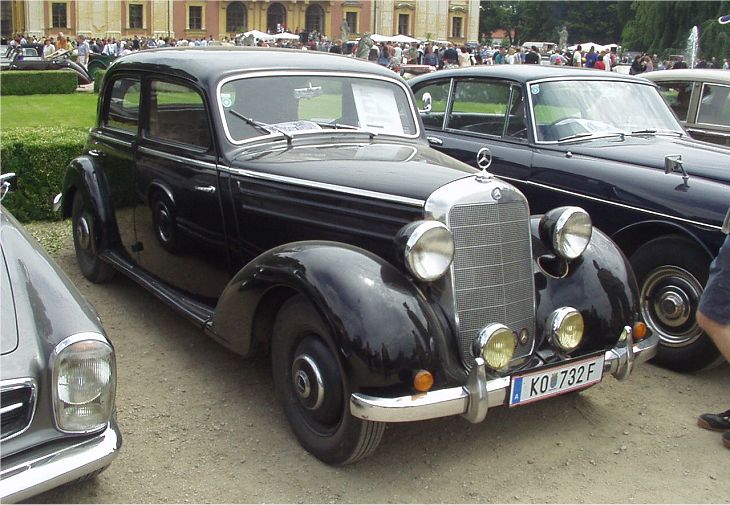
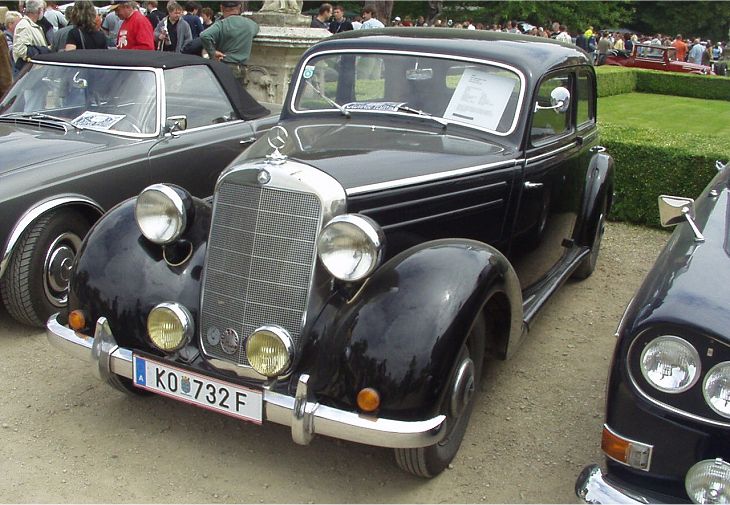
Externally, the Mercedes-Benz 170 S-D was almost indistinguishable from the petrol 170 S. It retained the more elegant bodywork of the S model, with wider and more integrated wings, tasteful chrome detailing and a balanced, dignified profile. This allowed diesel owners to enjoy the same understated prestige and visual refinement as petrol buyers, without the utilitarian appearance often associated with diesel vehicles of the era.
Inside, the 170 S-D offered a higher level of comfort and finish than earlier diesel Mercedes models. Seating was generously padded and trimmed in higher-quality materials, and improved sound insulation helped reduce, though not eliminate, the characteristic noise and vibration of the diesel engine. The dashboard layout was simple and functional, with clear instrumentation and durable fittings designed for long-term use. Overall, the interior reflected Mercedes-Benz’s philosophy of restrained luxury grounded in engineering integrity.
In everyday driving, the 170 S-D prioritised smooth, unhurried progress over speed. Acceleration was slow compared with petrol versions, and top speed was limited, but the car excelled in steady cruising and long-distance operation. Its predictable handling, stable ride and mechanical reliability made it well suited to the mixed road conditions of post-war Europe. Owners valued its ability to operate continuously with low fuel consumption and minimal maintenance demands.
The Mercedes-Benz 170 S-D played a key role in reinforcing the acceptance of diesel engines in passenger cars. By pairing diesel efficiency with the more refined and comfortable 170 S platform, Mercedes-Benz demonstrated that diesel power need not be confined to basic or commercial vehicles. This approach helped cement the brand’s reputation as a leader in diesel passenger car development, a position it would maintain for decades.
Today, the Mercedes-Benz 170 S-D is regarded as a historically significant model rather than a performance-oriented classic. Surviving examples are relatively rare and valued for their authenticity, durability and role in the evolution of diesel-powered saloons. As a bridge between utilitarian post-war transport and more refined passenger cars, the 170 S-D stands as an important chapter in Mercedes-Benz history, reflecting practicality, restraint and engineering foresight during a period of rebuilding and transition.