Description
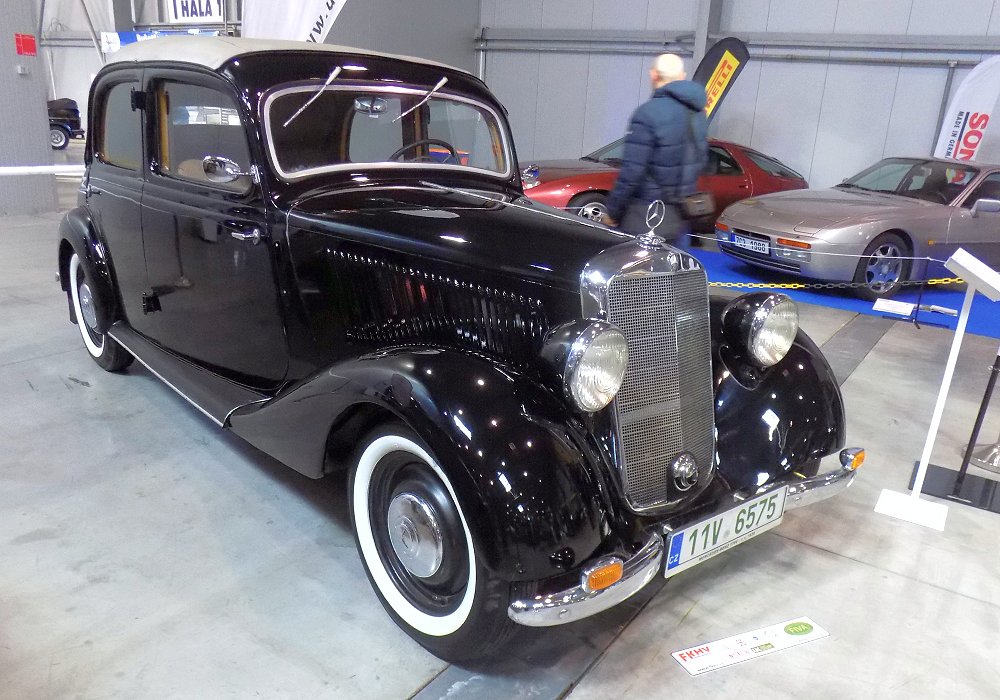
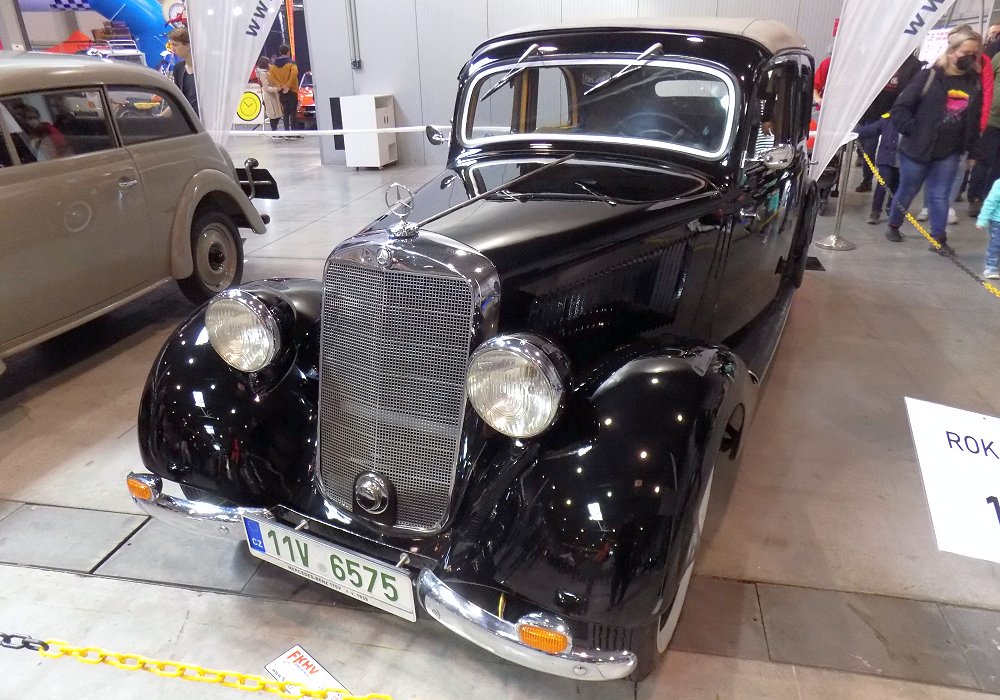
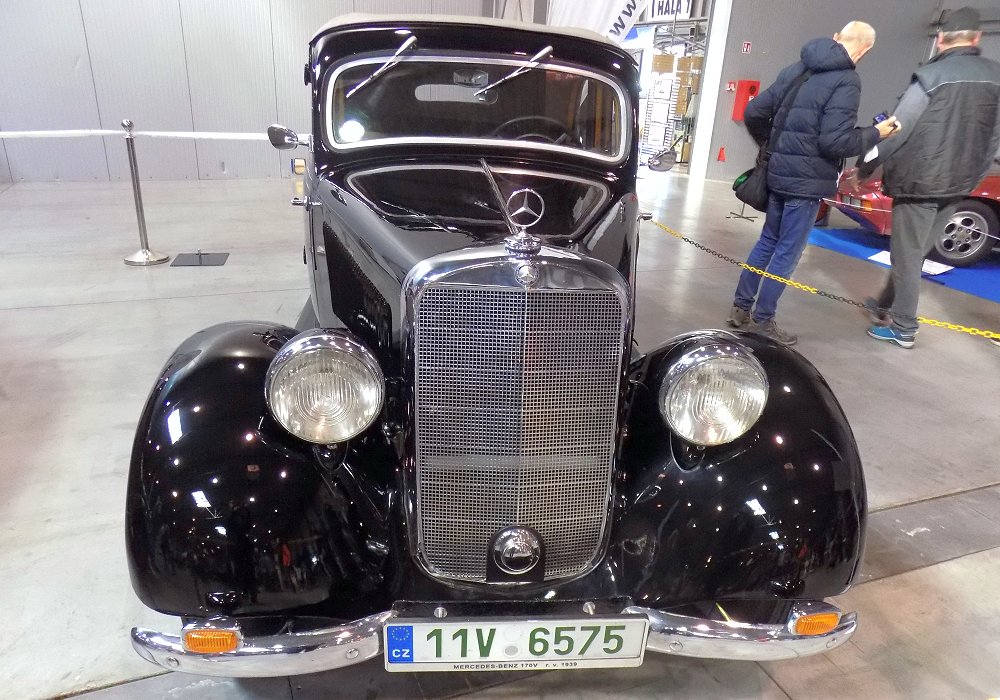
The Mercedes-Benz 170 V Cabrio-Limousine was one of the most attractive and versatile body styles offered on the 170 V chassis, blending the practicality of a closed saloon with the open-air pleasure of a cabriolet. Introduced alongside the main 170 V range in 1936, it reflected Mercedes-Benz’s intention to offer a refined small car that appealed not only to families and taxi operators but also to private buyers who wanted a touch of elegance and leisure in a compact, affordable package.
The Cabrio-Limousine was built on the same technical foundation as the standard 170 V. It used the dependable 1.7-litre inline-four engine capable of producing around 38–45 horsepower depending on specification and year. The engine delivered smooth, flexible power, characteristic quiet running and very good fuel economy for the time. Performance was modest but adequate, with top speeds around 100 km/h, making the car suitable for both urban driving and relaxed touring. Power was transmitted through a robust four-speed manual gearbox, known for its clean shifting and long-term durability.
The chassis used Mercedes’ advanced X-shaped oval-tube frame, a significant departure from the earlier ladder-frame designs. This construction improved rigidity, reduced noise and vibration and offered excellent crash resistance for a small car of the era. The independent front suspension with double wishbones and coil springs gave the 170 V a modern, comfortable ride, while the swing-axle rear layout with coil springs ensured decent traction and predictable handling. Mechanical drum brakes on all four wheels provided reliable stopping power.
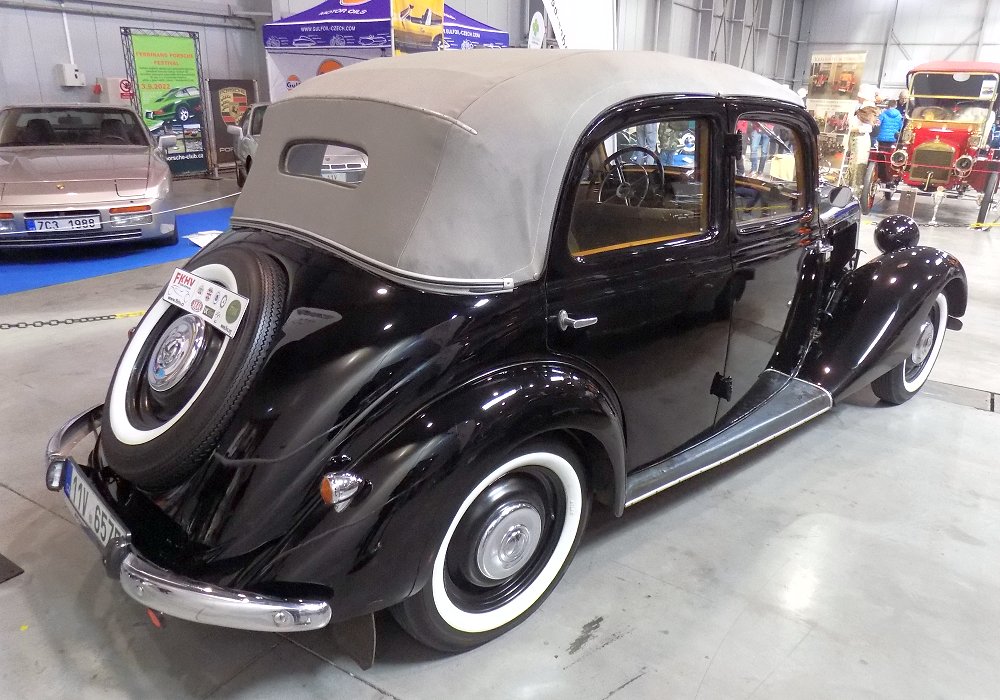
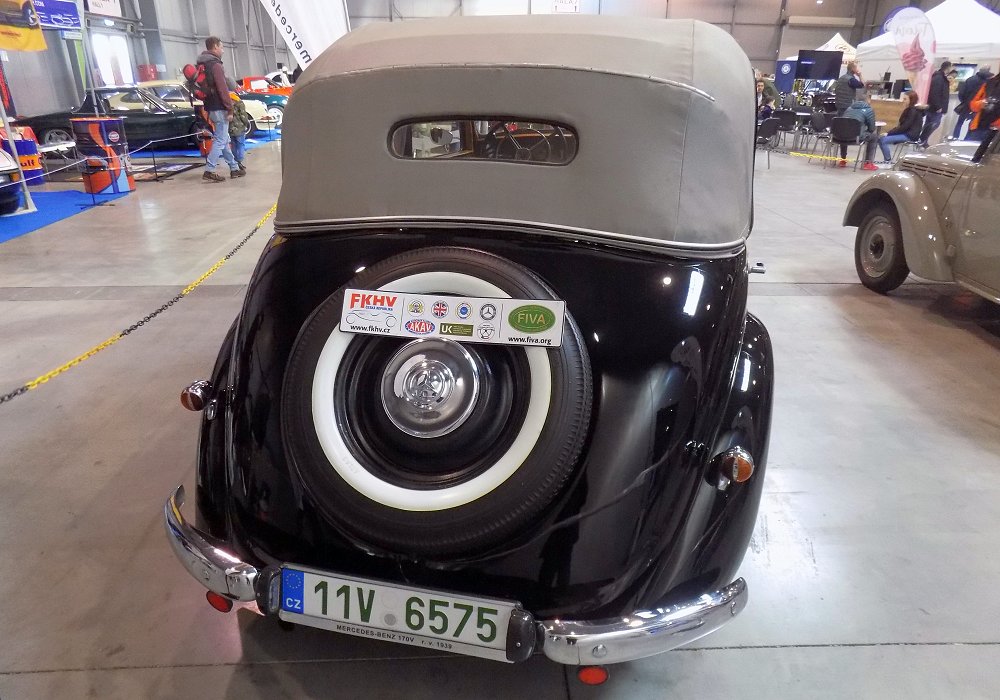
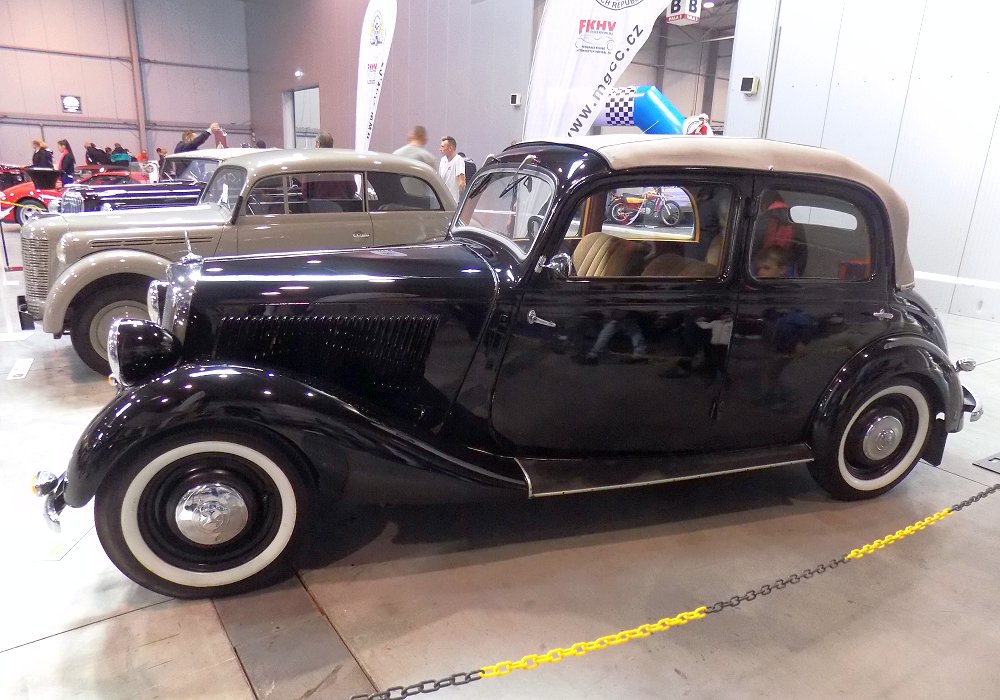
Where the Cabrio-Limousine distinguished itself was in its body design. It combined a fixed body structure with a large, foldable fabric roof section that extended from the windscreen all the way to the rear window. This allowed the car to transform from a conventional saloon into an open-top vehicle in moments, providing fresh-air driving without losing the practicality of four doors and a full steel body frame. This style was especially popular in German-speaking markets, where it offered the best of both worlds: year-round usability with the charm of an open tourer when the weather permitted.
Visually, the car had the same balanced proportions as the standard 170 V saloon. It featured a tall, upright radiator grille, gracefully rounded wings, a gently sloped rear body section and simple, elegant detailing. With the roof folded back, the Cabrio-Limousine took on a more relaxed, leisurely character, making it appealing to private buyers who wanted something more stylish than the basic saloon. The folding top itself was well constructed and insulated, ensuring proper weather protection when closed.
Inside, the 170 V Cabrio-Limousine offered the same thoughtful, practical cabin layout found in other versions of the model. Seats were upright, supportive and trimmed in durable cloth or optional leather. The dashboard featured a neatly arranged cluster of clear instruments, and the interior trim used carefully finished wood or painted metal depending on specification. The cabin felt solid, well assembled and comfortable, reflecting the Mercedes commitment to quality even in its most affordable products. Four passengers could travel comfortably, and the open-roof configuration made the interior feel airy and inviting.
On the road, the Cabrio-Limousine delivered the same composed, modern driving experience as the standard saloon. The independent suspension smoothed out rough surfaces, the steering was reasonably light once moving and the engine offered steady, dependable torque. With the roof open, the car provided a pleasant touring atmosphere, particularly suited to countryside drives or urban motoring in warm weather. With the roof closed, it functioned just like a standard saloon, quiet and well protected from the elements.
The 170 V Cabrio-Limousine enjoyed popularity before the war as a stylish yet practical choice for private motorists. After the war, it was one of the body styles reintroduced when Mercedes-Benz resumed production in 1946, though in limited numbers compared with the saloons and commercial variants. Its appeal lay in its versatility, combining elegance, practicality and mechanical reliability in a compact format that suited the needs of a wide range of buyers.
Today, the Mercedes-Benz 170 V Cabrio-Limousine is highly regarded among collectors for its charm, rarity and usability. It offers an authentic pre-war and early post-war driving experience with the added pleasure of open-top motoring. Its combination of advanced engineering, thoughtful design and understated elegance makes it one of the most desirable variants of the 170 V series and an important piece of Mercedes-Benz history.