Description
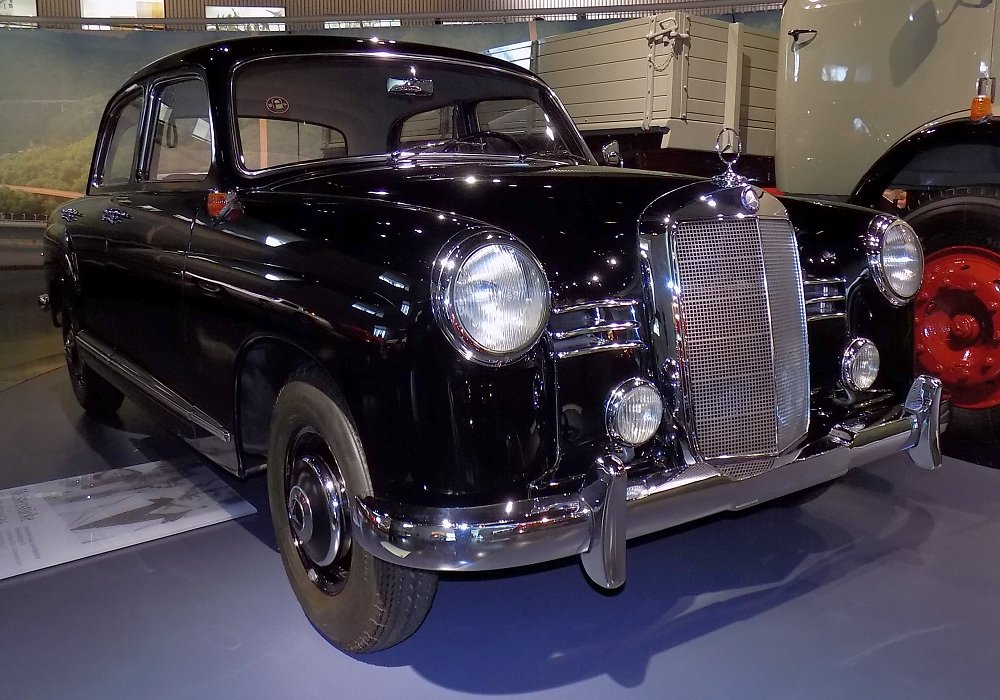
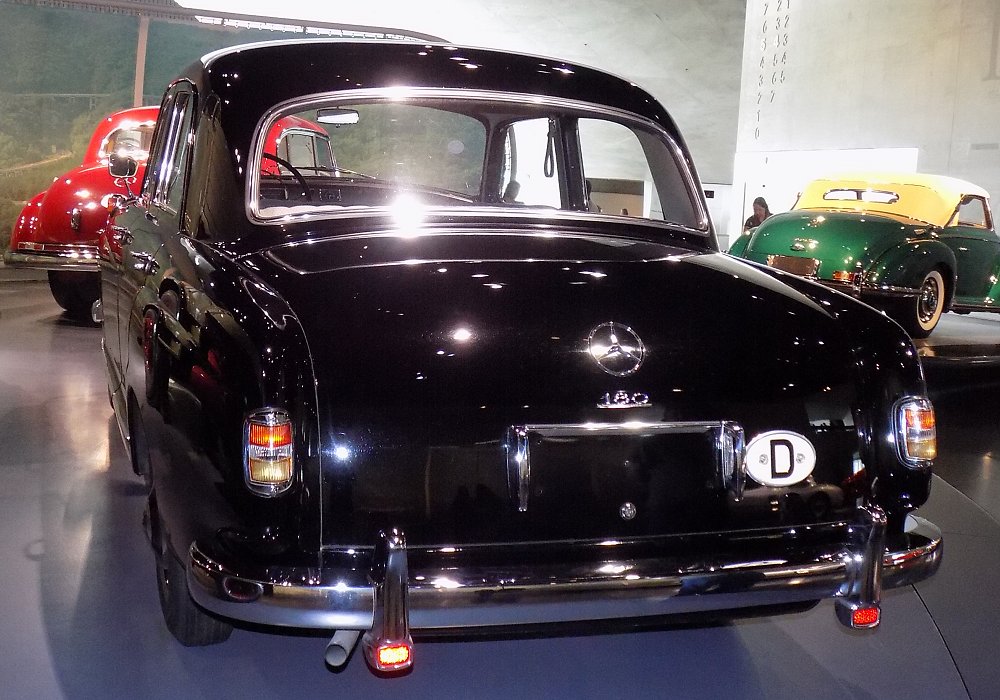
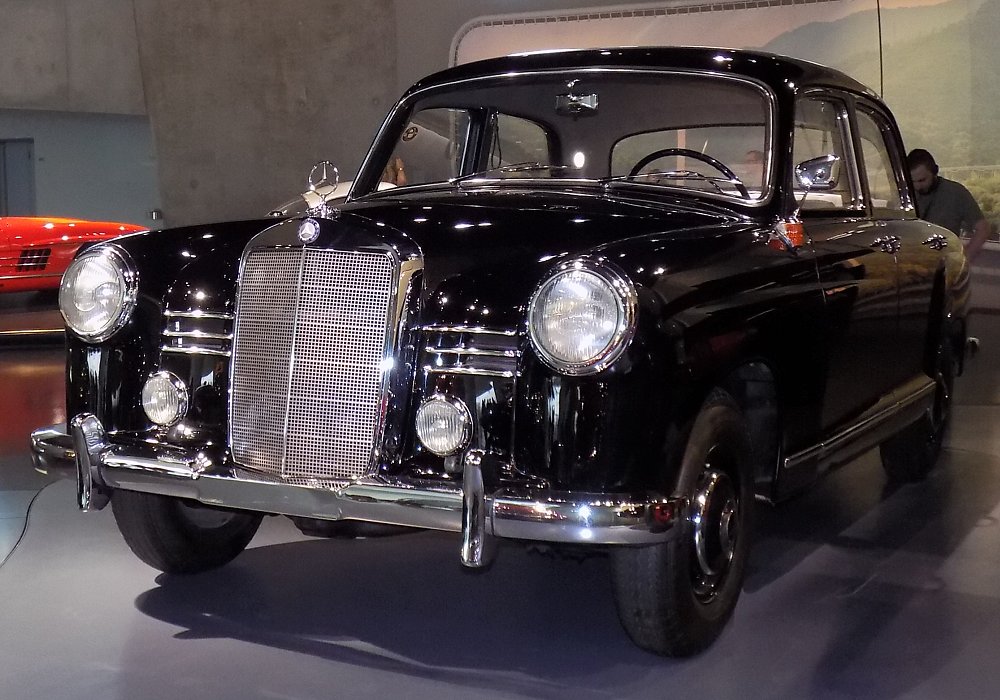
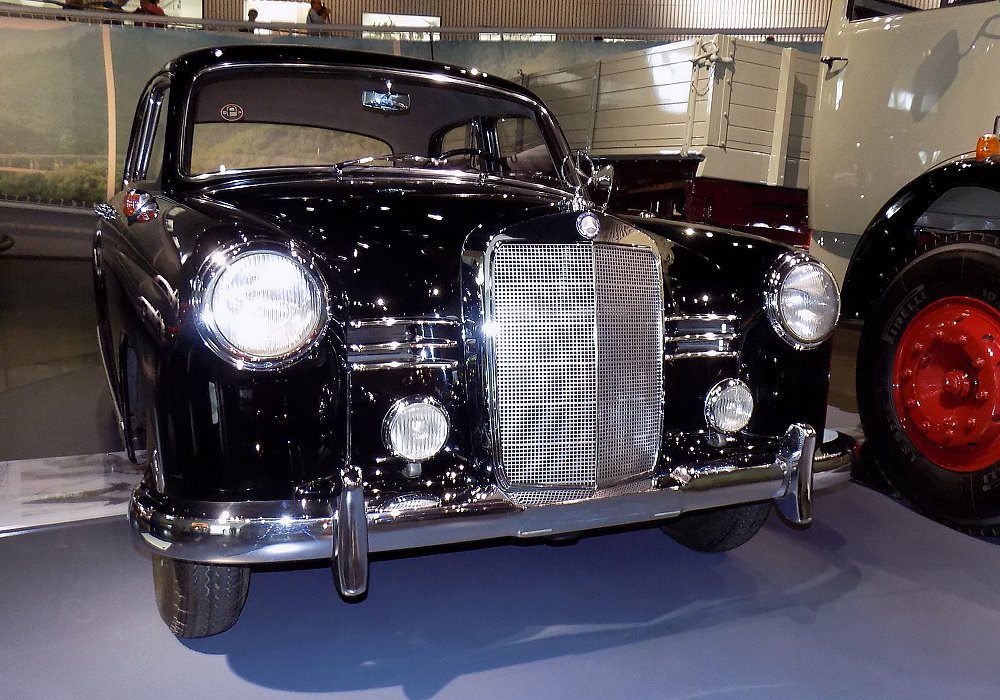
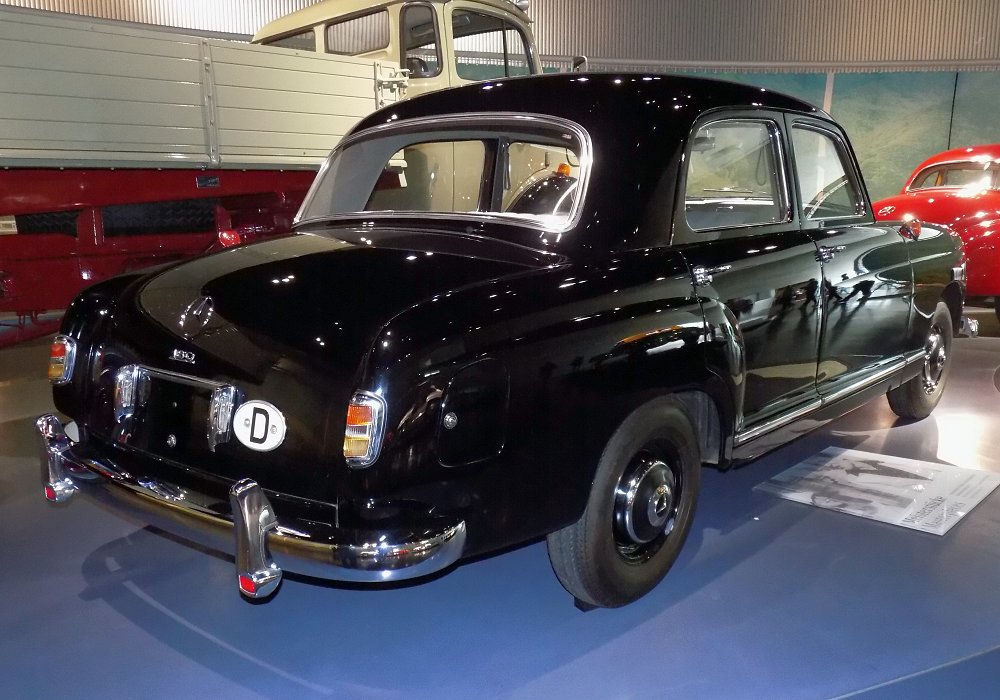
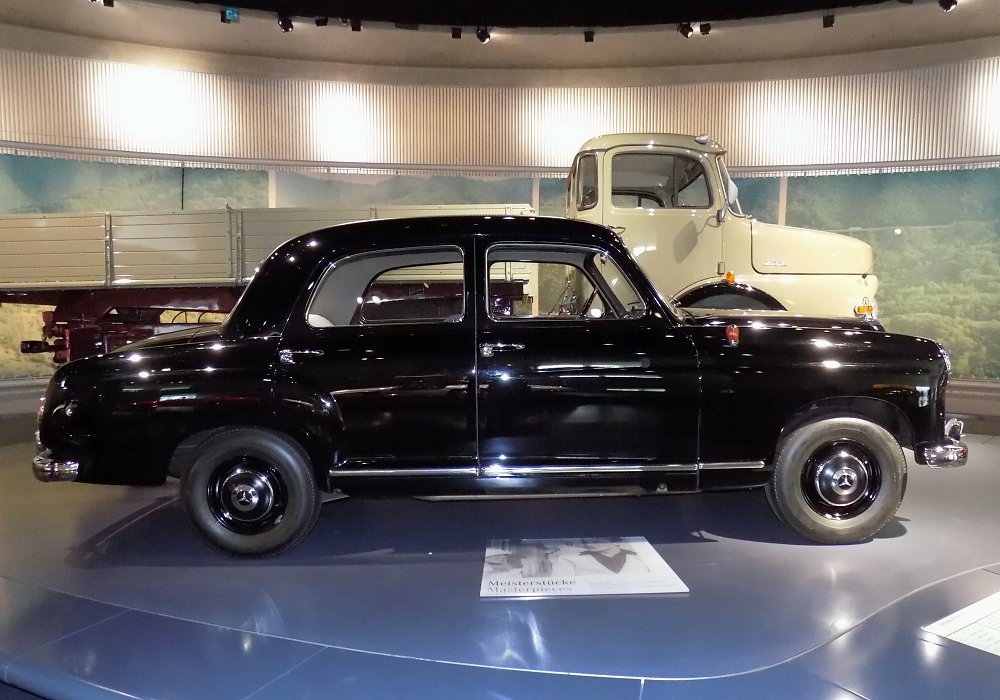
The Mercedes-Benz 180 was a landmark model for Mercedes-Benz and one of the most important cars in the company’s post-war history. Introduced in 1953 under the internal designation W120, it was the first Mercedes-Benz passenger car to feature unitary body construction, marking a decisive break from the traditional ladder-frame designs that had defined the marque’s earlier vehicles. The 180 ushered in the era of the “Ponton” Mercedes, setting the design and engineering direction that would define the brand throughout the 1950s and beyond.
Power for the Mercedes-Benz 180 came from a newly developed 1.8-litre inline four-cylinder petrol engine producing approximately 52 horsepower. While modest in output, the engine was smooth, reliable and well suited to the car’s role as a comfortable family and business saloon. Performance was adequate rather than brisk, but the emphasis was on durability, fuel efficiency and relaxed cruising. A four-speed manual gearbox drove the rear wheels, and the drivetrain was engineered for quiet operation and long service life rather than sporting character.
The most significant innovation of the 180 lay in its structure. The W120 adopted a self-supporting monocoque body, eliminating the separate chassis used on earlier Mercedes-Benz models. This construction method reduced weight, improved rigidity and enhanced safety, while also allowing for a lower floor and more efficient use of interior space. Independent front suspension with double wishbones and coil springs provided good ride comfort and stable handling, while the rear used a swing-axle layout with coil springs. Hydraulic drum brakes on all four wheels delivered reliable stopping power consistent with the car’s performance and era.
Styling of the Mercedes-Benz 180 was a major departure from earlier designs. The integrated “ponton” body eliminated separate wings, resulting in a smooth, unified shape that looked thoroughly modern in the early 1950s. The upright grille and restrained chrome detailing maintained a clear Mercedes-Benz identity, while the clean body lines gave the car a solid, contemporary presence. This design not only improved aerodynamics but also influenced passenger car styling across Europe during the decade.
Inside, the 180 offered a spacious and well-organised cabin. Thanks to the monocoque construction, interior space was generous for a car of its external dimensions. Seating was upright and comfortable, trimmed in durable cloth or optional higher-grade materials. The dashboard was simple and functional, with clear instrumentation and logically arranged controls. While luxury features were limited, the emphasis was on quality, clarity and long-term usability, reflecting Mercedes-Benz’s engineering-led philosophy.
In everyday use, the Mercedes-Benz 180 quickly earned a reputation for reliability, comfort and solid road manners. Its predictable handling and robust mechanical components made it well suited to a wide range of driving conditions, from urban commuting to long-distance travel. The car was particularly popular with professionals, families and fleet users who valued durability and understated quality over performance or fashion.
The 180 formed the foundation of a broader model range that would later include more powerful petrol and diesel variants, establishing the Ponton series as a cornerstone of Mercedes-Benz’s lineup throughout the 1950s. Its success helped secure the company’s financial stability and reinforced its reputation as a manufacturer of well-engineered, dependable passenger cars.
Today, the Mercedes-Benz 180 is regarded as a historically significant model rather than a high-performance or luxury icon. Surviving examples are valued for their role in introducing monocoque construction to Mercedes-Benz passenger cars and for setting the template for decades of future designs. As the car that marked Mercedes-Benz’s full transition into the modern era, the 180 occupies a crucial place in the marque’s history.